


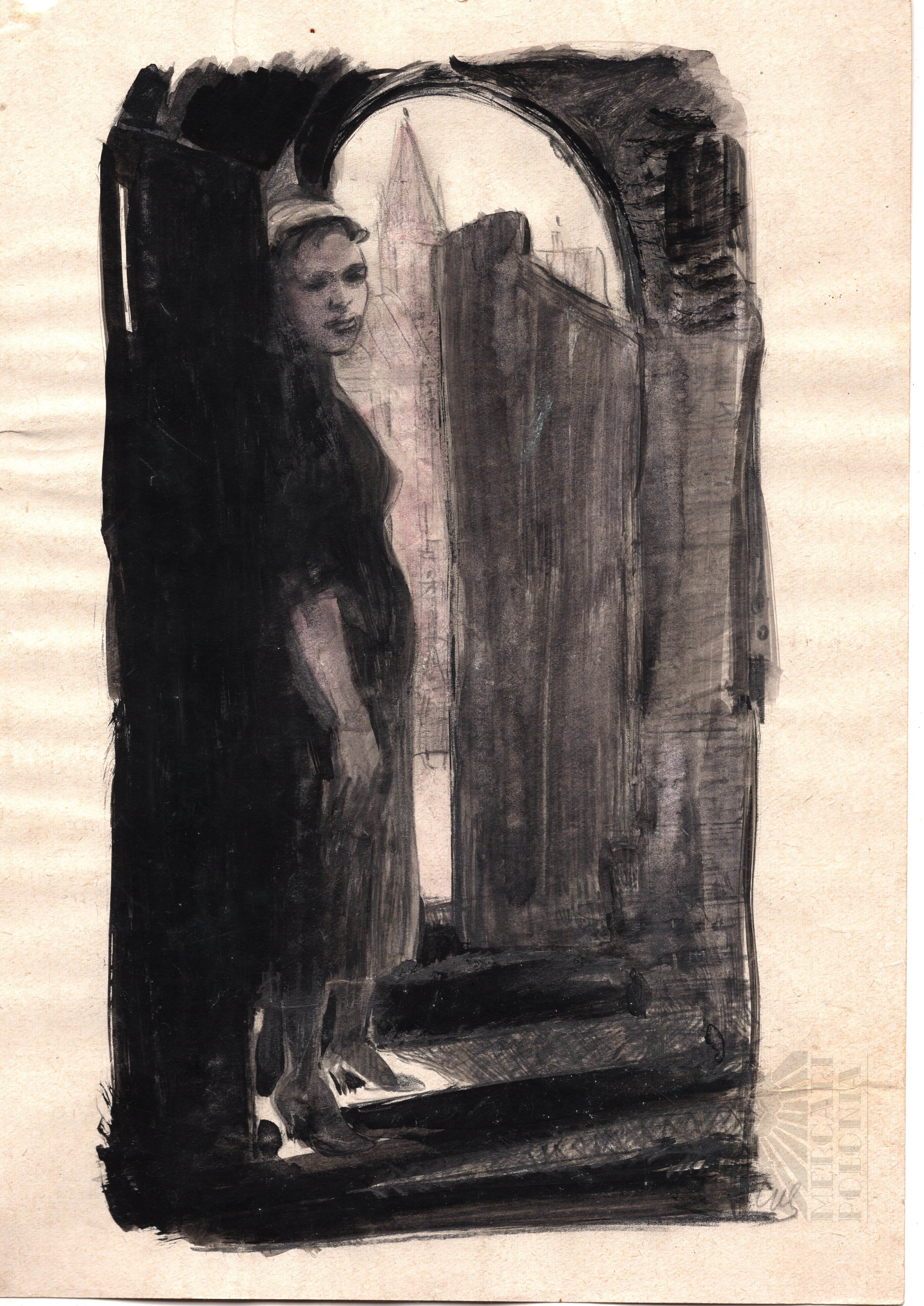
Composition made on paper using mixed technique. In the left part of the representation is a female figure standing in half shadow, framed in a slight foreshortening, partially facing the viewer. The figure is slender, simplified, with softly defined facial features. The figure is dressed in dark clothing, which blends with the background through broad, black brushstrokes.
The central part of the composition is occupied by a tall, vertical architectural form - a fragment of a wall or pillar - separating the foreground from the background. Above it, the arch of the gate is visible, forming a frame for the further plan. In the background, through the architectural clearance, elements of urban buildings are outlined, including a slender, soaring form resembling a church tower.
The whole composition is maintained in a limited monochromatic range of black and gray, with subtle paper clearances. The lower part of the composition contains the outline of a staircase or platform. An illegible signature is visible in the lower right corner.
Pencil drawing lavaged in ink and watercolor on paper,
Dimensions: approx. 24.5 x 18 cm.
Condition as in photos.
This work represents the trend of emotionally charged sketches characteristic of World War II, in which synthetic form and a limited palette of expressive means are used to build mood. The juxtaposition of a lone female figure with a monumental, simplified architectural background may suggest a reflection on the condition of the individual in urban space.
The presumed location - Warsaw - and the possible reference to St. John's Cathedral inscribe the work in the iconography of the capital as a prelude to dramatic changes. The shot through the arch of the gate creates a framing effect, giving the scene the character of a "hidden" observation or a fragment of a larger whole.
In terms of attribution, the work remains ambiguous. An illegible signature and a link to a collection of works signed "W.S." allow it to be hypothetically linked to one creative circle; the indication of Wladyslaw Strumilla's name, however, remains only a suggestion requiring further research.
Regardless of its authorship, the object has high collector value as an example of Polish war drawing, distinguished by its synthetic form, conscious construction of the composition and suggestive, almost symbolic approach to the subject.







Paskutiniai peržiūrėti
Prisijunkite, jei norite pamatyti pozicijų sąrašą
Mėgstami
Prisijunkite, jei norite pamatyti pozicijų sąrašą