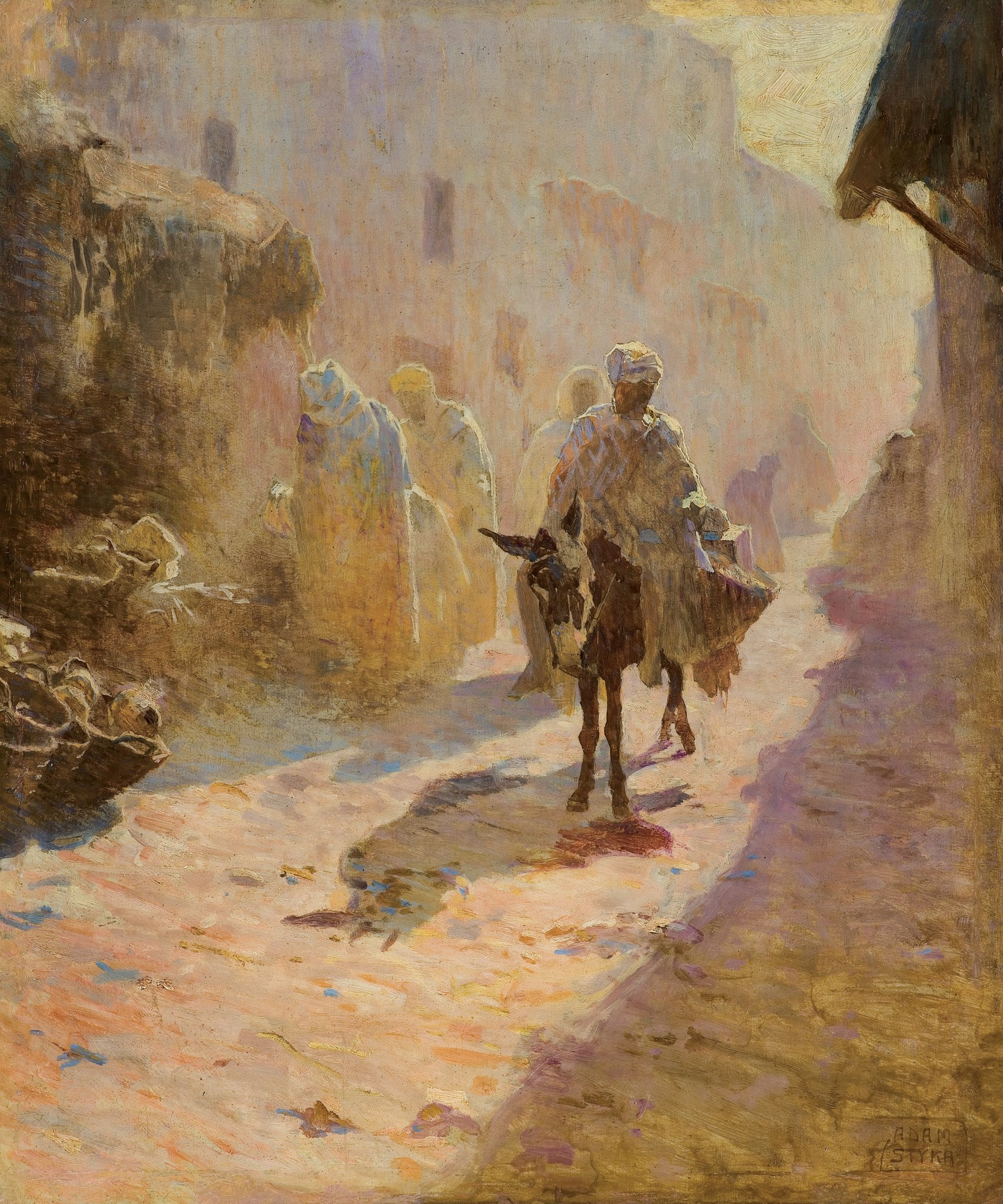
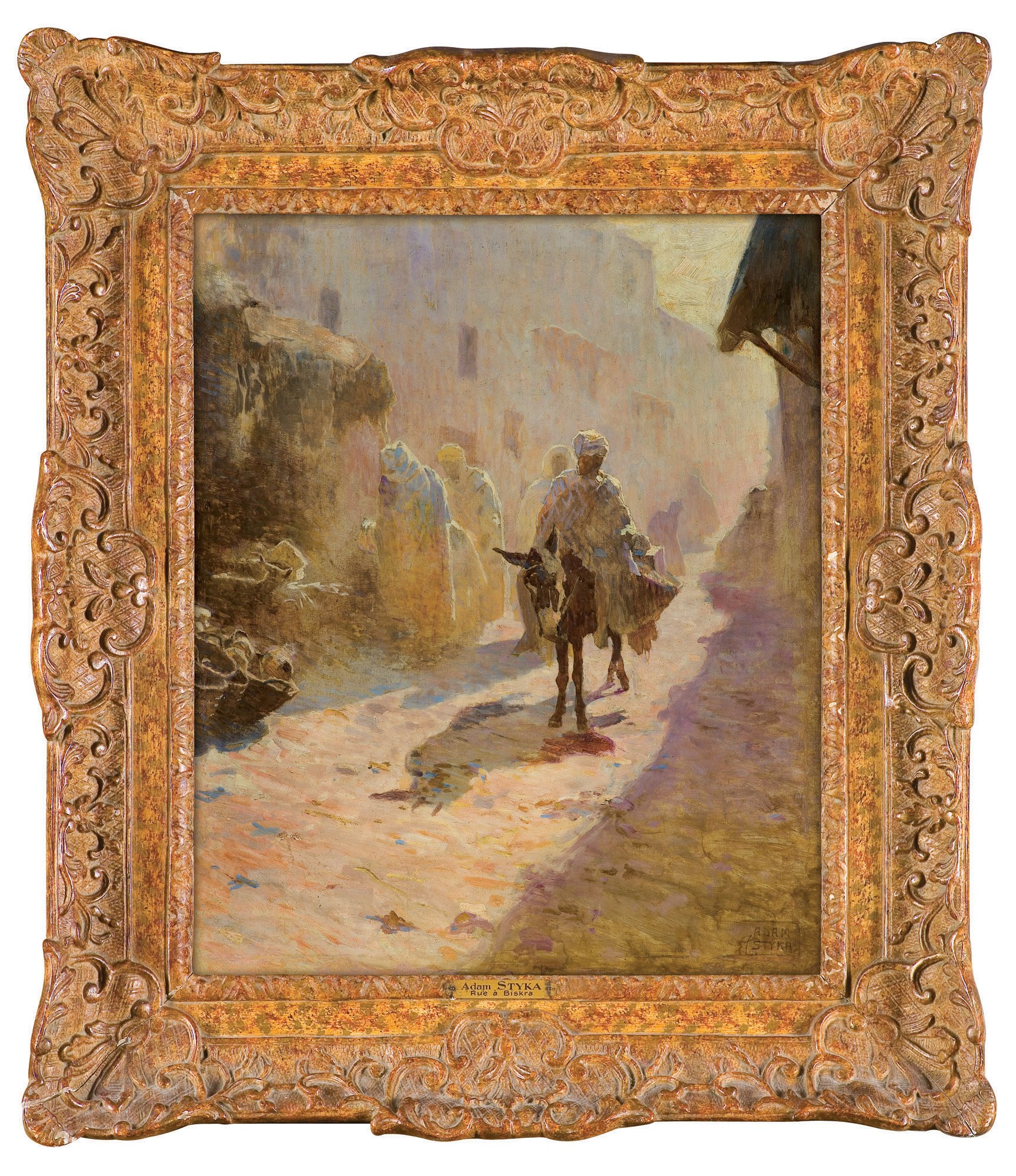
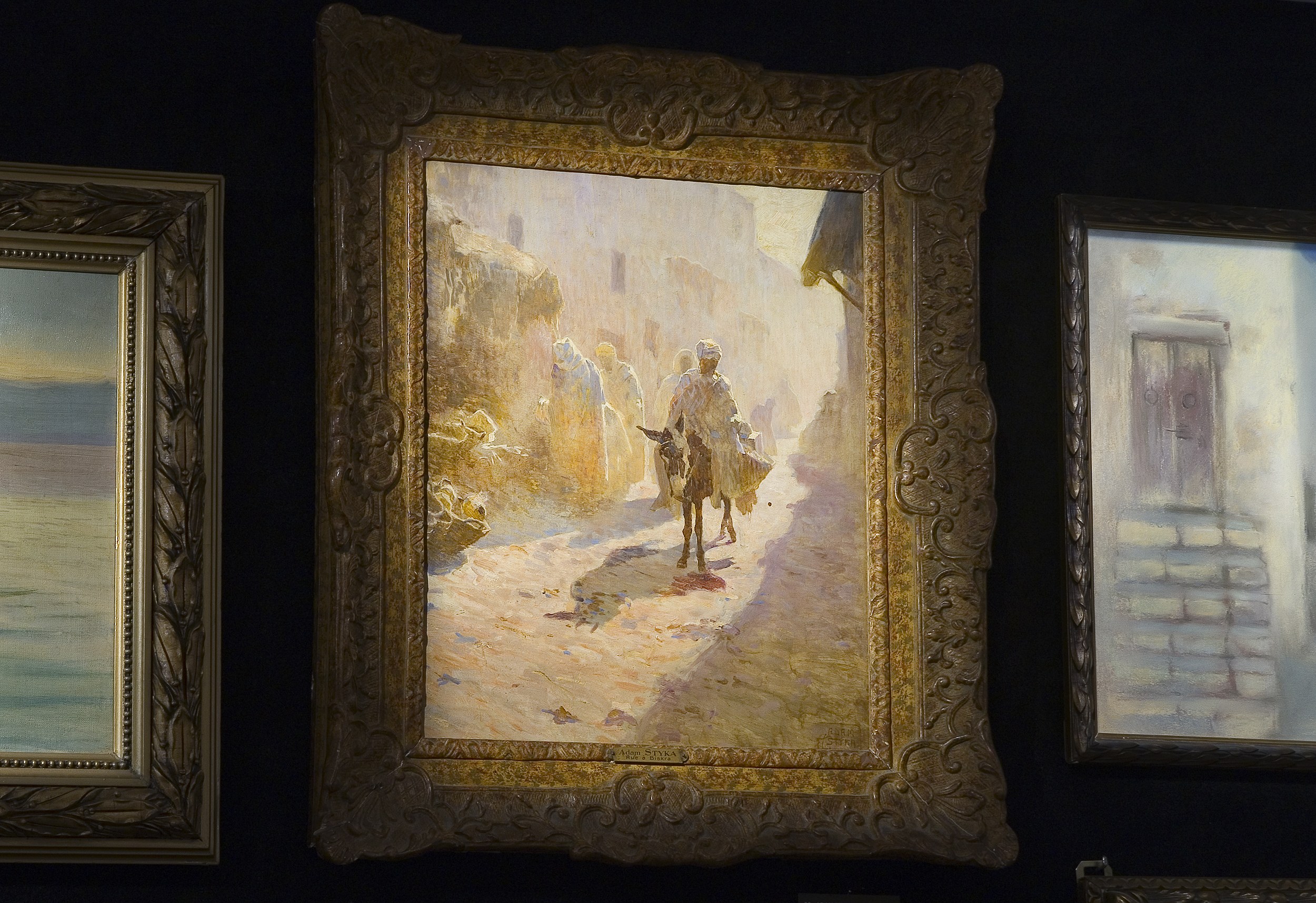
oil, cardboard glued on plywood, 55 x 46 cm
Adam Styka (Kielce 1890 - New York 1959) - son of painter Jan and younger brother of Tadeusz Styka - was an Orientalist painter. Initially studying mathematics and engineering, he later began his studies at the École Nationale des Beaux Arts in Paris (1908-1912). During World War I he served in General J. Haller's Blue Army - first in France (medal for the Battle of Verdun), then in Poland. As a painter, he began with genre scenes, but after a trip to North Africa, he created mainly oriental paintings. He found motifs during, repeatedly, trips to Morocco, Algiers, Tunis and Egypt. He exhibited his works mainly abroad, but in the interwar period he also had several exhibitions in Poland, including at Warsaw's Zachęta Gallery. These shows were always very popular with the public, and the exhibited paintings found many willing buyers. Adam Styka also painted religious paintings (the well-known painting of Christ the King; 1944; for the Palotine Fathers in Warsaw; destroyed in a fire in 2007) and was involved in book illustration, including the illustrations for "In Desert and Wilderness" by H. Sienkiewicz. After World War II, the artist lived and worked in the United States - he painted landscapes and inhabitants of Mexico or Arizona, as well as - especially numerous - paintings of religious subjects. He also directed conservation work on the Golgotha panorama, the work of his father, Jan Styka (unveiled after restoration in 1951 in Los Angeles).