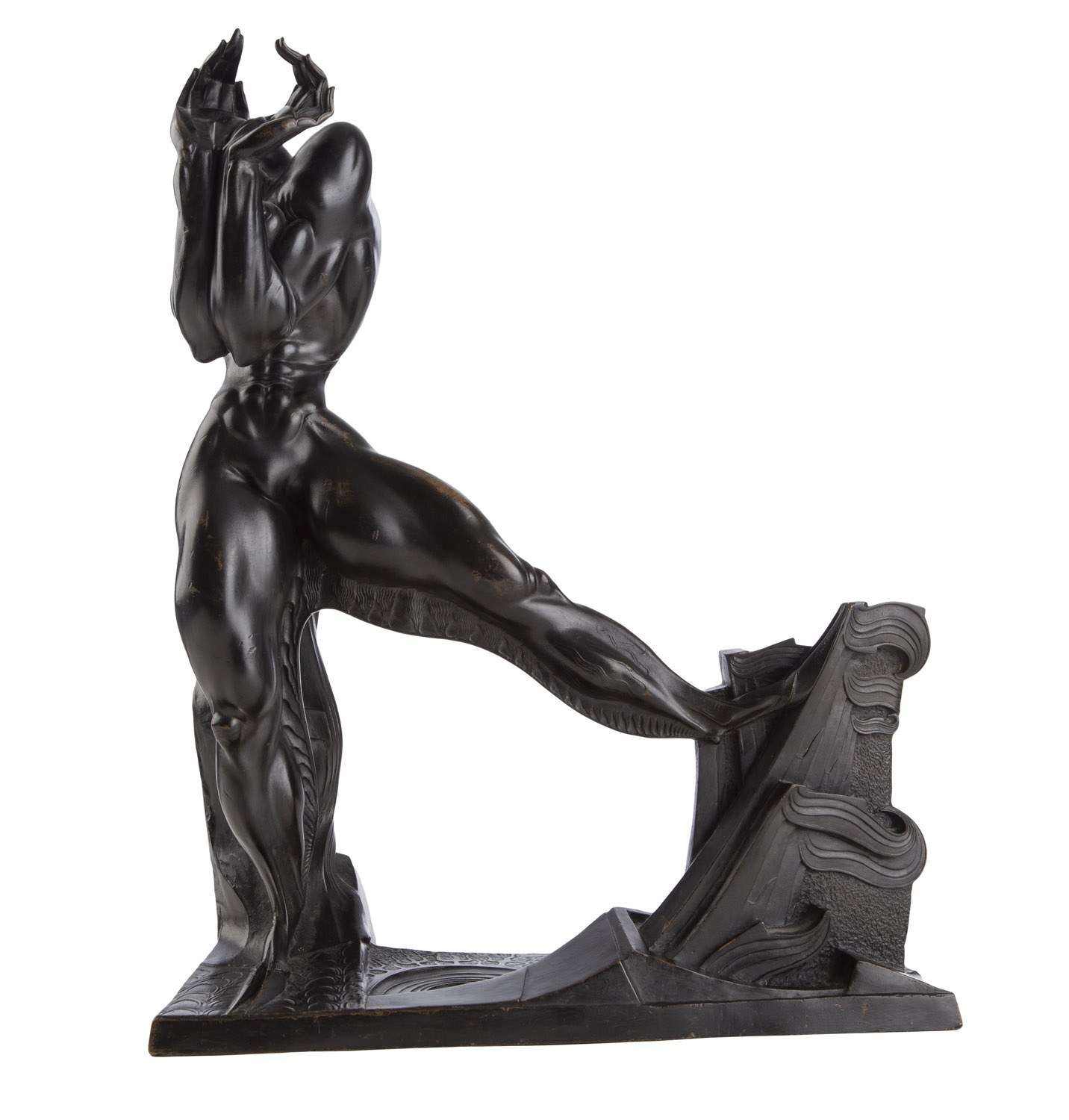
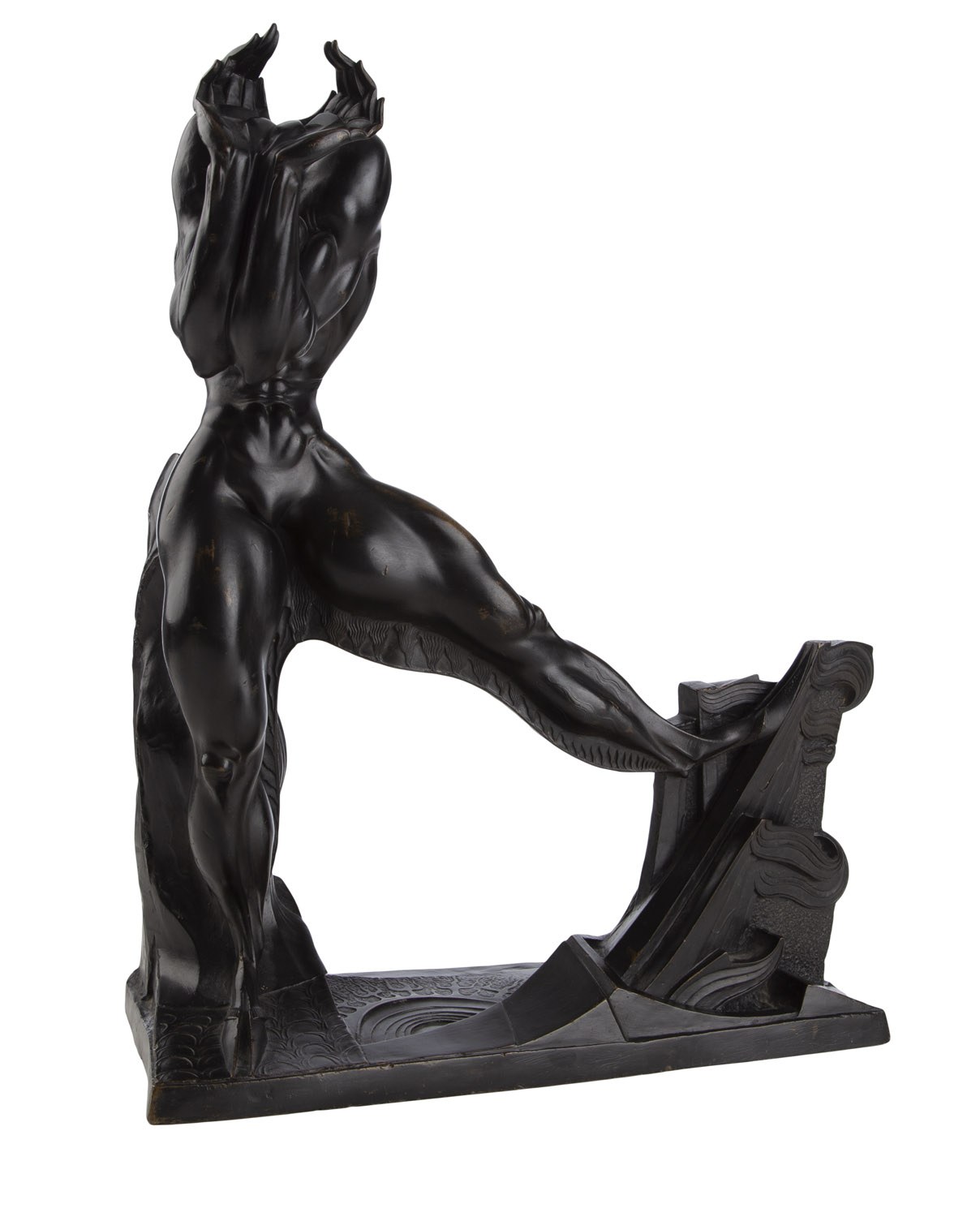
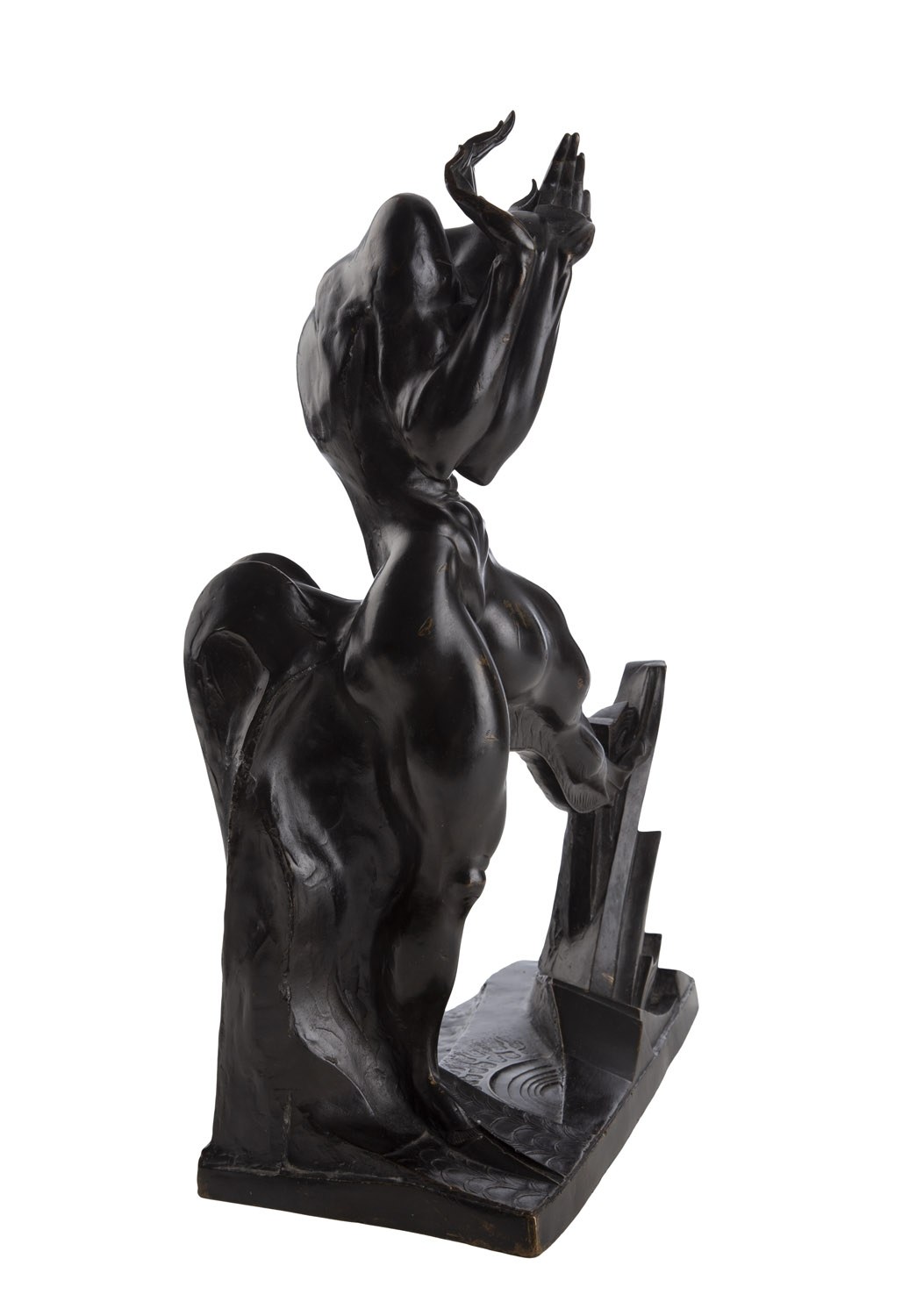
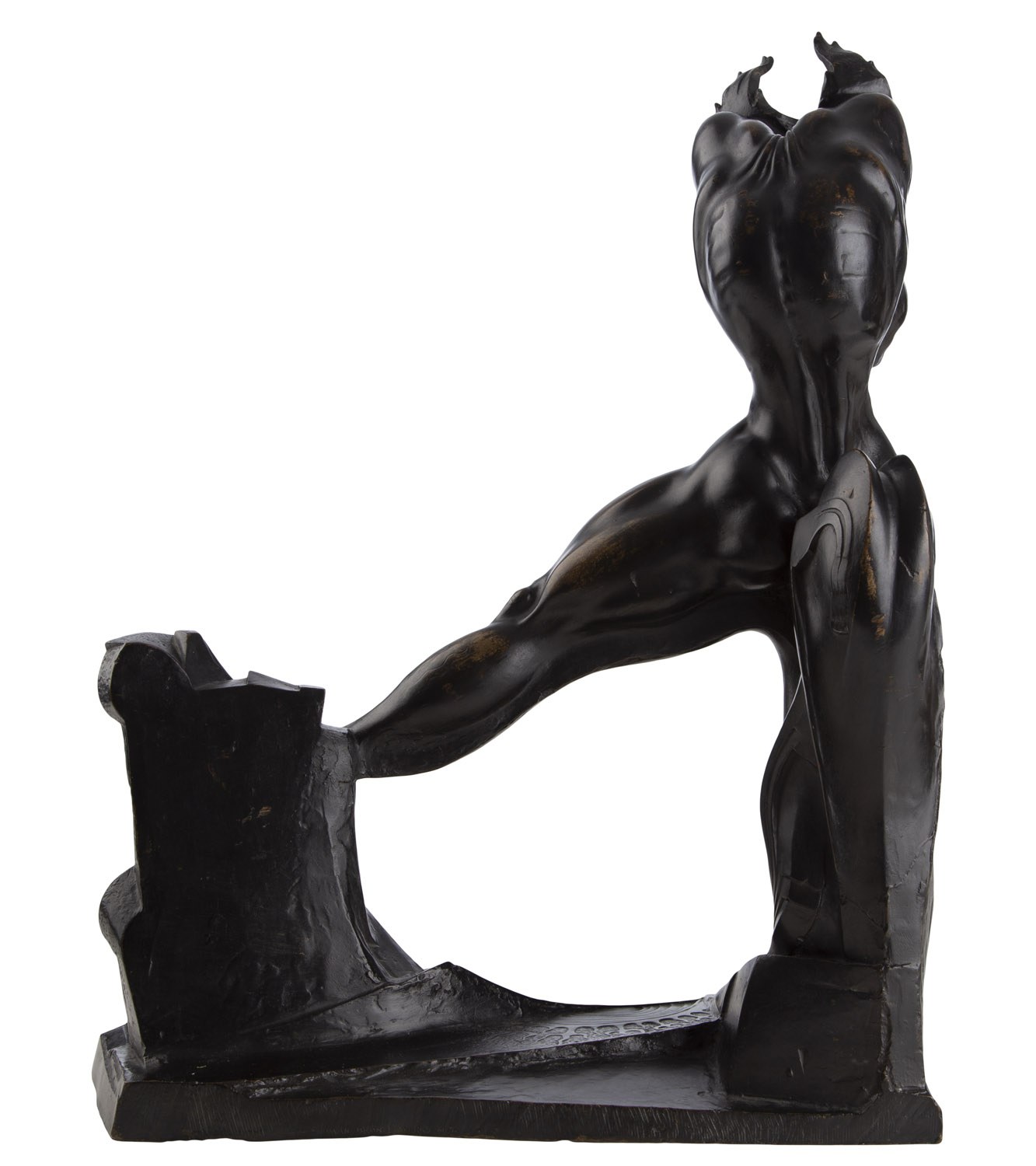
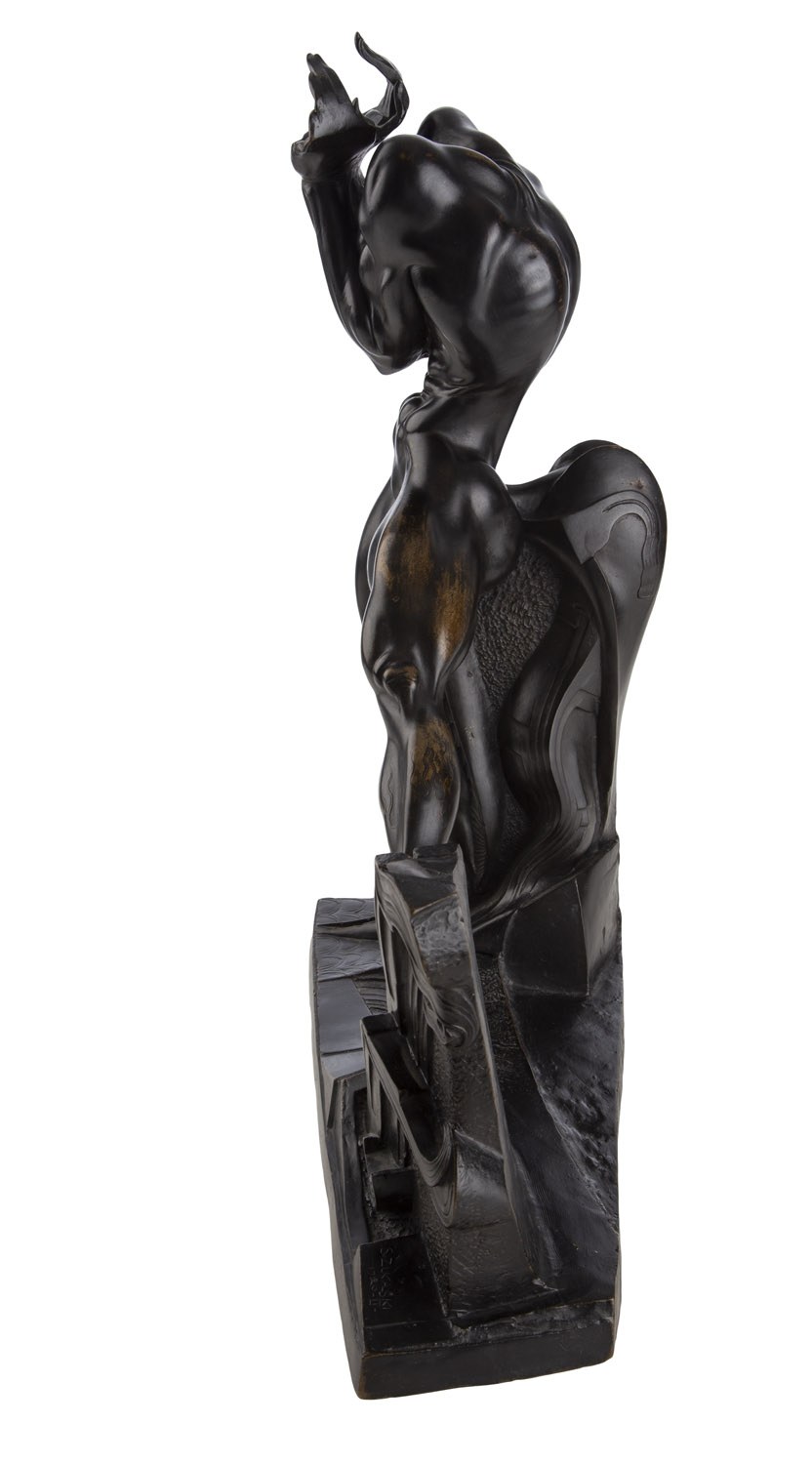
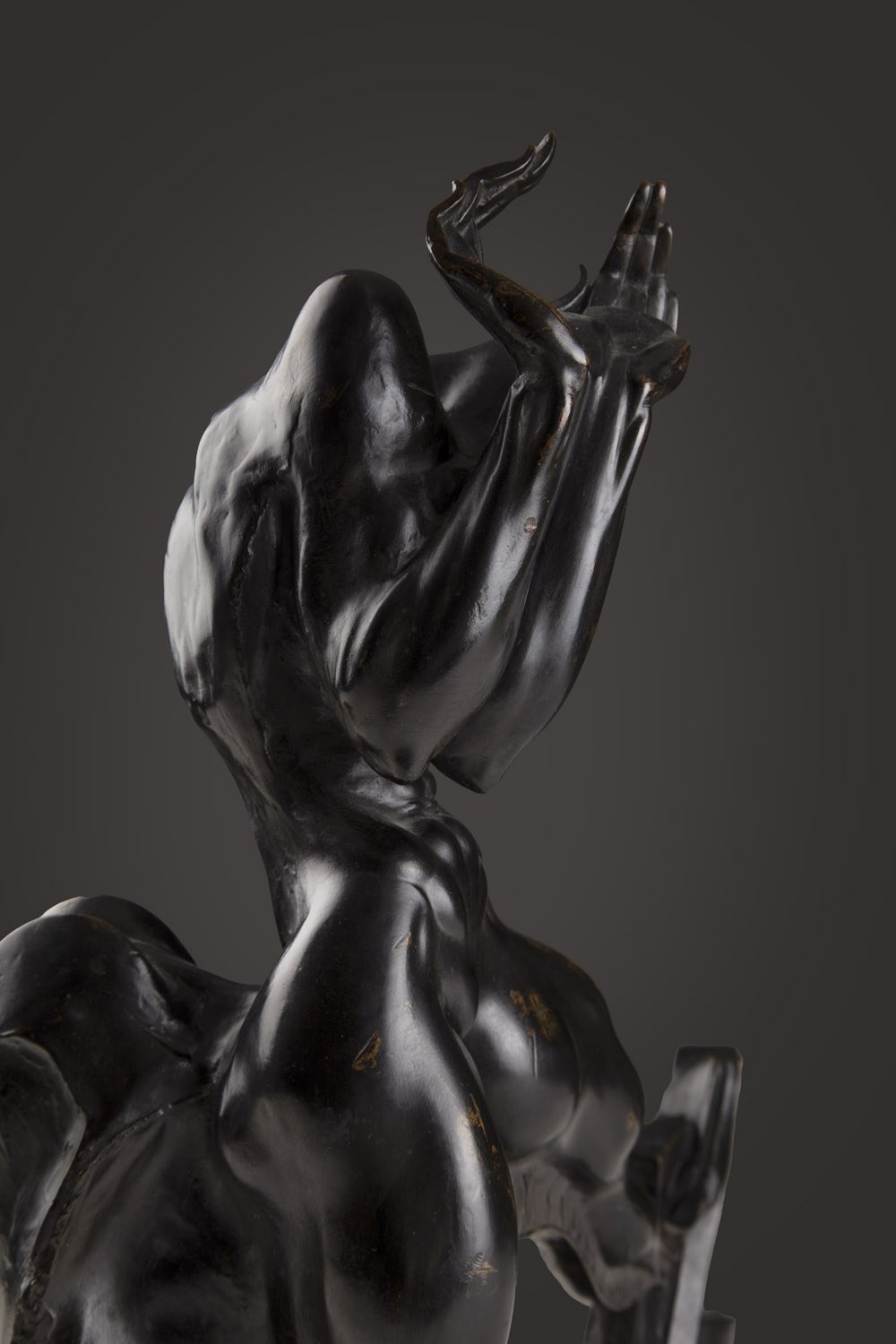
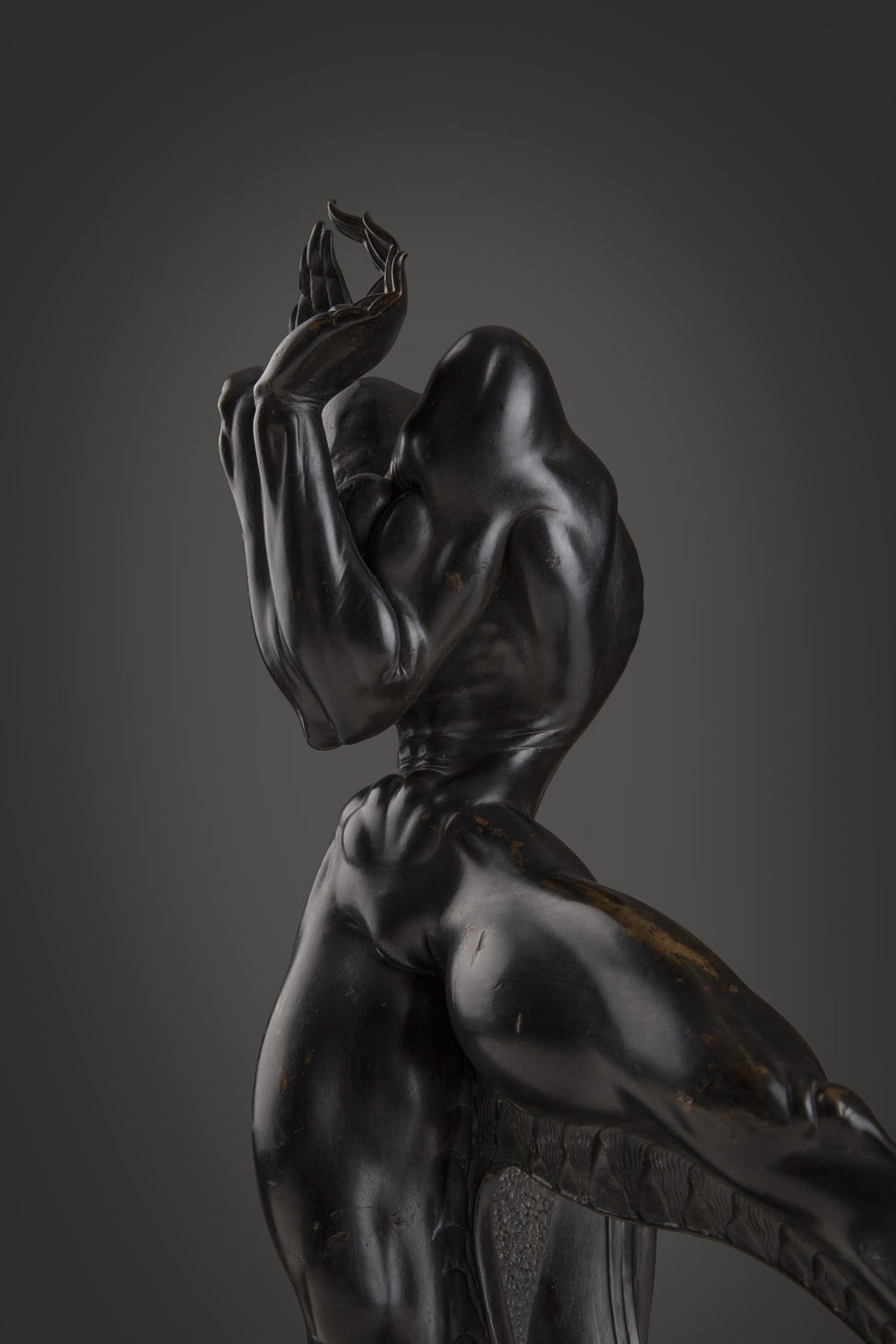
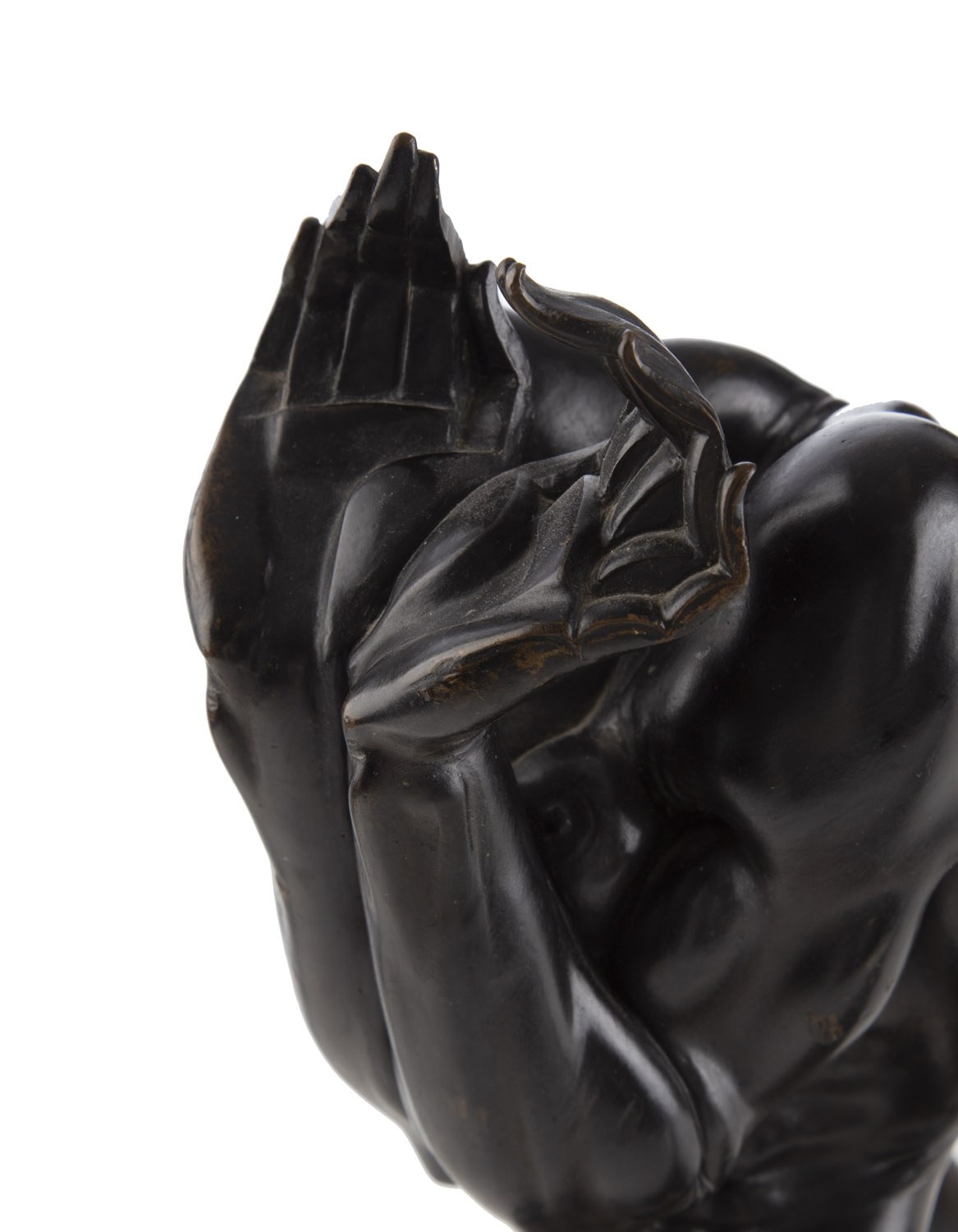
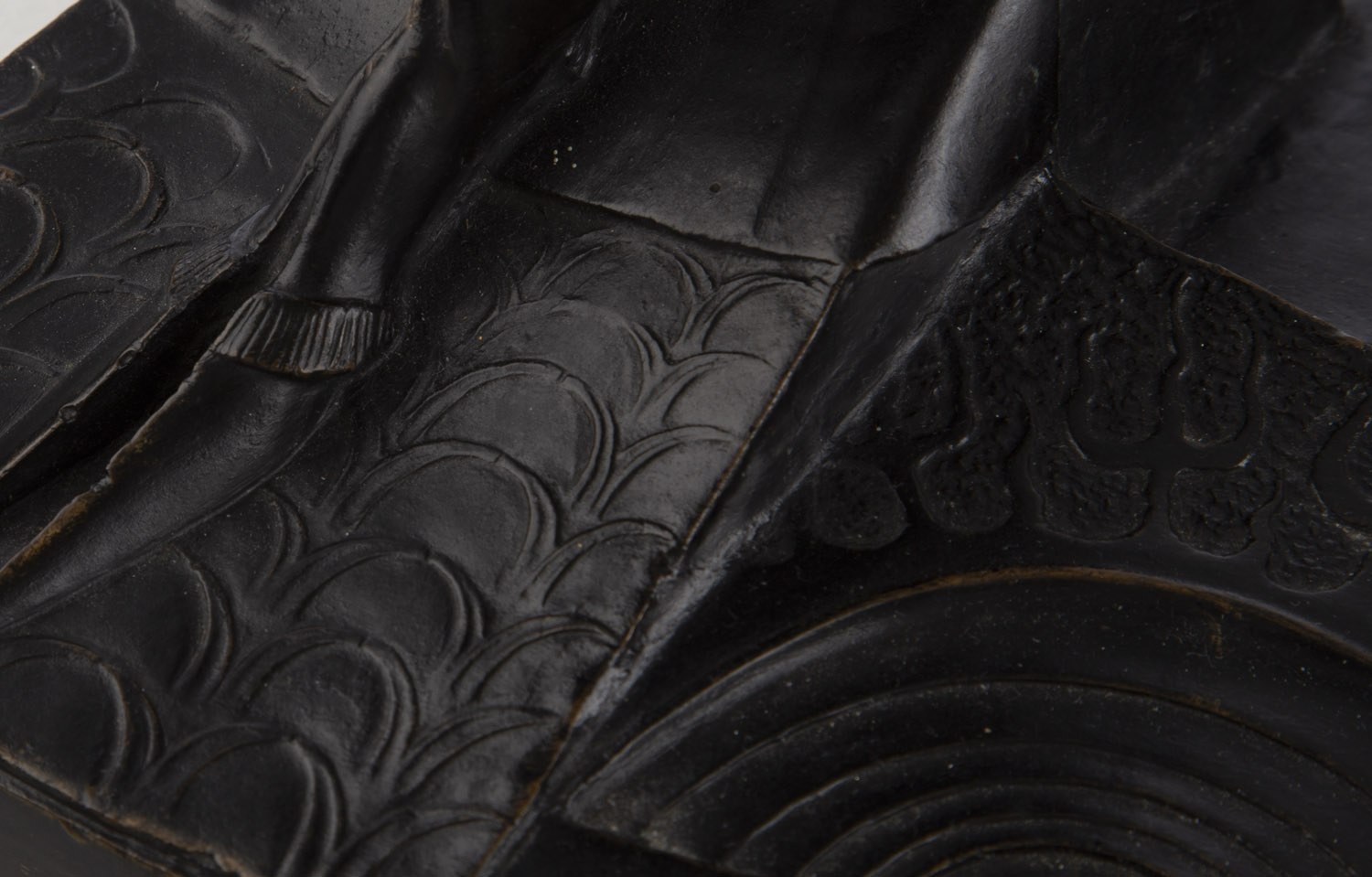
Dimensions: 44 x 36 x 9.5 cm
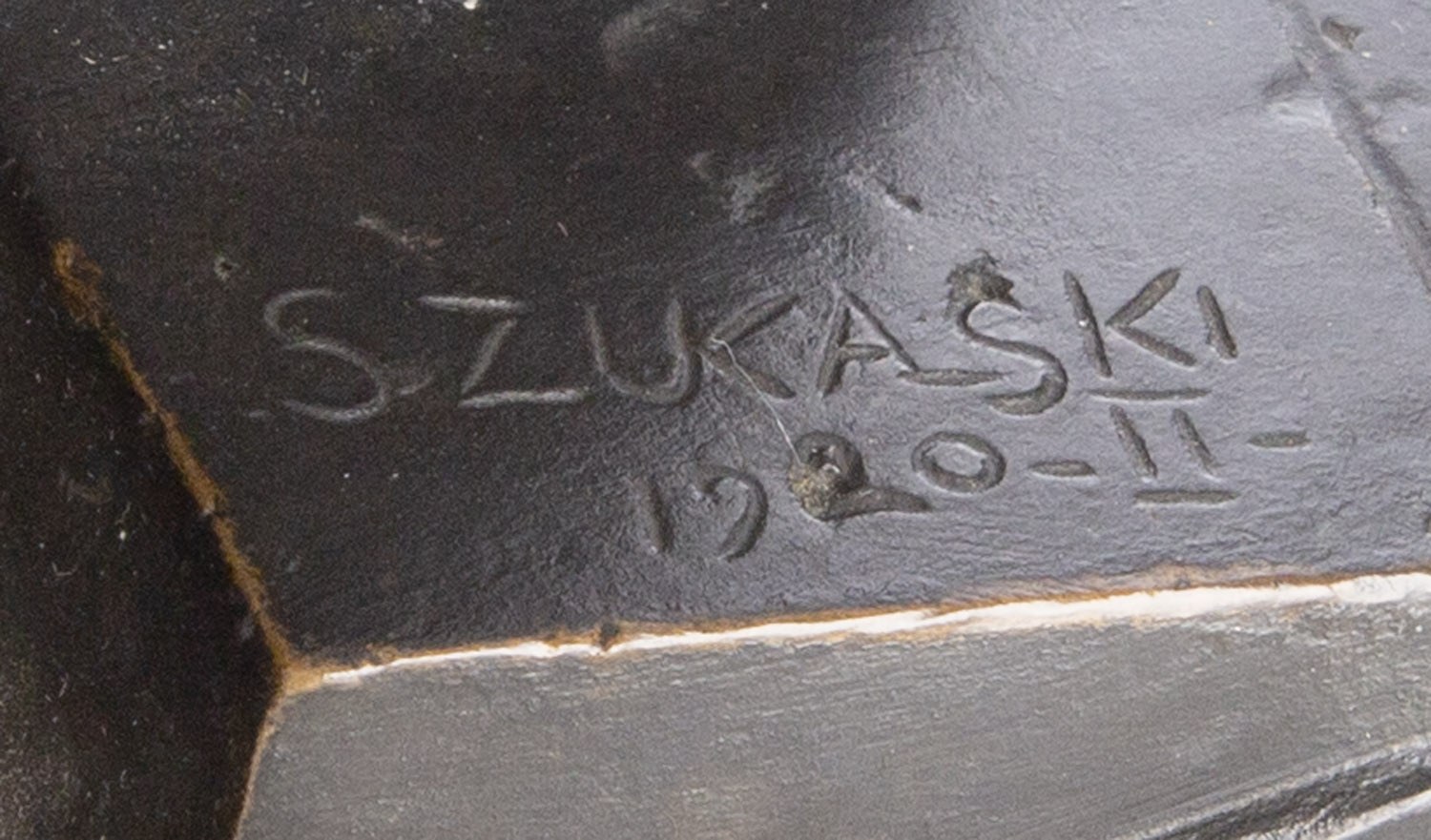
signed and dated on the base: 'SZUKALSKI | 1920 -II-'
on the edge of the base foundry mark: 'ROMAN BRONZE WORKS N-Y-'
Provenance
private collection, Warsaw
Exhibited
Paintings by Stuart Davis, J. Torres Garcia, Sculpture by Stanislaw Szukalski, Whitney Studio Club, New York, April 25 - May 26, 1921 (identical cast)
Polish Pavilion, International Exhibition of Decorative Arts and Modern Industry (Exposition Internationale des Arts Décoratifs et Industriels Modernes), Paris, 28 IV - X 1925 (identical cast)
Eighth Exhibition of the Artists' Guild "Jednoróg", Society of Friends of Fine Arts in Cracow, May 1929 (identical cast)
Exhibition of Works by Stanisław Szukalski, Czesław Garliński Art Salon, Warsaw, VI 1929 (identical cast)
Exhibition of works by Stanisław Szukalski and the "Rogate Heart" strain, Society of Friends of Fine Arts in Kraków, Kraków VI 1936 (identical cast)
Szukalski and the Horned Heart, Institute of Art Propaganda, Warsaw, VI 1936 (identical cast)
Literature
Cf:
Stanisław Szukalski, The Works of Szukalski, Chicago 1923, p. nlb (il.).
Ósma Wystawa Guild of Artists "Jednoróg", Society of Friends of Fine Arts in Krakow, Krakow 1929, item 195, p. 40.
Szukalski and the Horned Heart, Institute of Art Propaganda, Warsaw 1936, item 478, p. 34
archival photographs: 1. from the International Exhibition of Decorative Arts and Modern Industry in Paris, Digital MNW, reference DI 127865 MNW (identical cast); 2. archival photographs of an exhibition of works by Stanislaw Szukalski and the "Rogate Heart" in the building of the Society of Friends of Fine Arts (Palace of Art) in Cracow 1936, reference 3/1/0/11/5410/5 (identical cast)
Biography
In 1903, he and his parents moved to the United States. As a 13-year-old boy, he attended the Institute of Art in Chicago, where he drew the attention of his teachers to his unparalleled talent as a sculptor. In 1909, at the urging of the sculptor Antoni Popiel, who was in the US - his father decided to send the 15-year-old Stach to the Academy of Fine Arts in Cracow. He was an extremely colorful figure in the artistic milieu of interwar Poland - adored by a group of young artists, gathered in the Rogate Heart Szczep, which he founded, and harshly criticized by a group of older artists. A fanatic of pre-Slavism and the myth of Polish power, he leaned toward historical and allegorical themes, using elements of geometric stylization on the formal side. In 1936-39 he executed a commission in Katowice for bas-reliefs for the Silesian Museum building, which was under construction. In 1939 he left Poland and settled permanently in California, where he devoted most of his time to solving prehistoric riddles and mysteries of ancient human history, the emergence and formation of languages, faiths, customs, art, the migration of peoples, and sculptural works became secondary. The last retrospective exhibition of his works, the first in the post-war period and the last during his lifetime, was held in May 1978 at the Palace of Art in Cracow. During the war, almost all of the artist's work created in Poland was destroyed.