


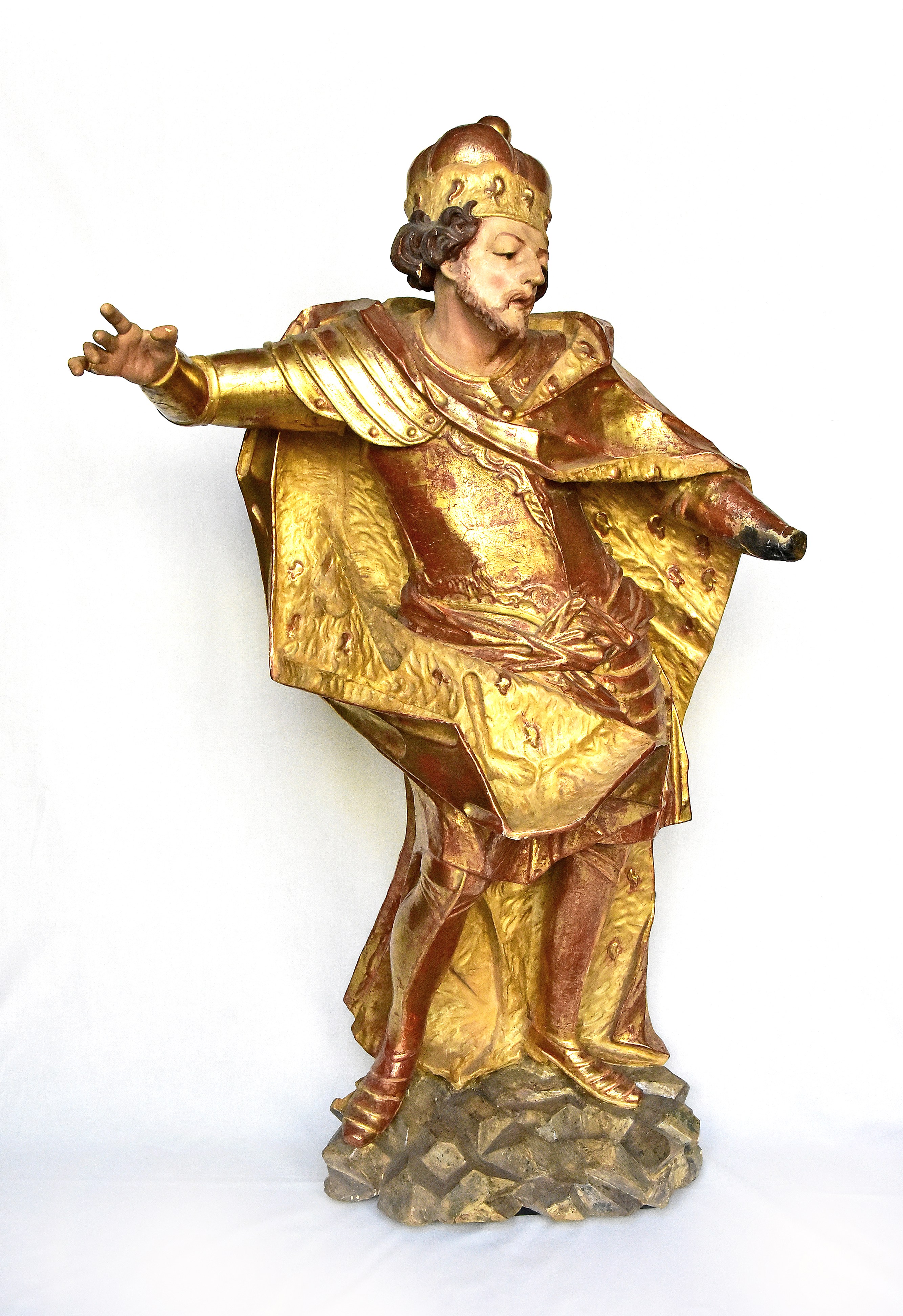
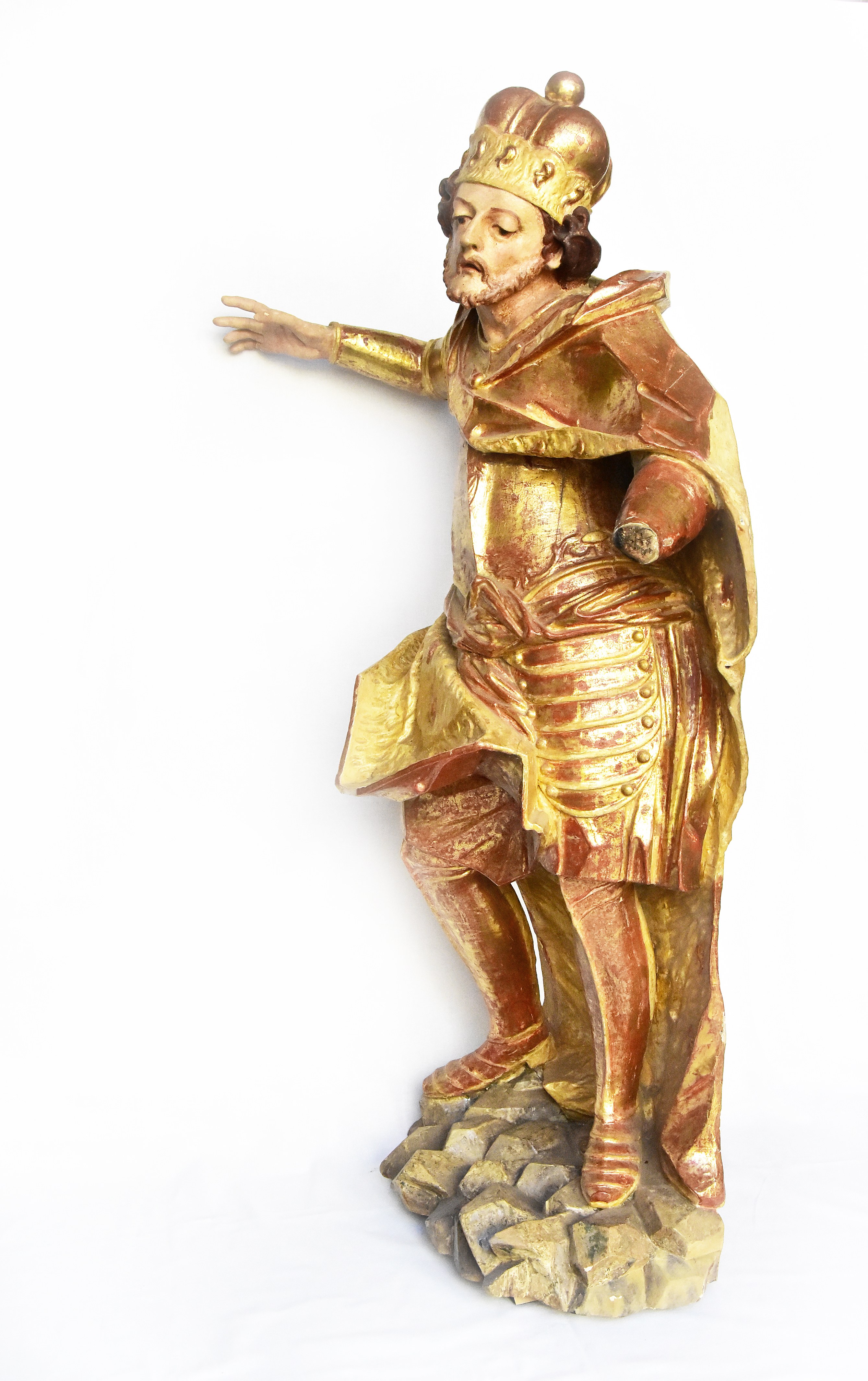
author unknown, pupil of Pinzel (?), Lviv school circle,
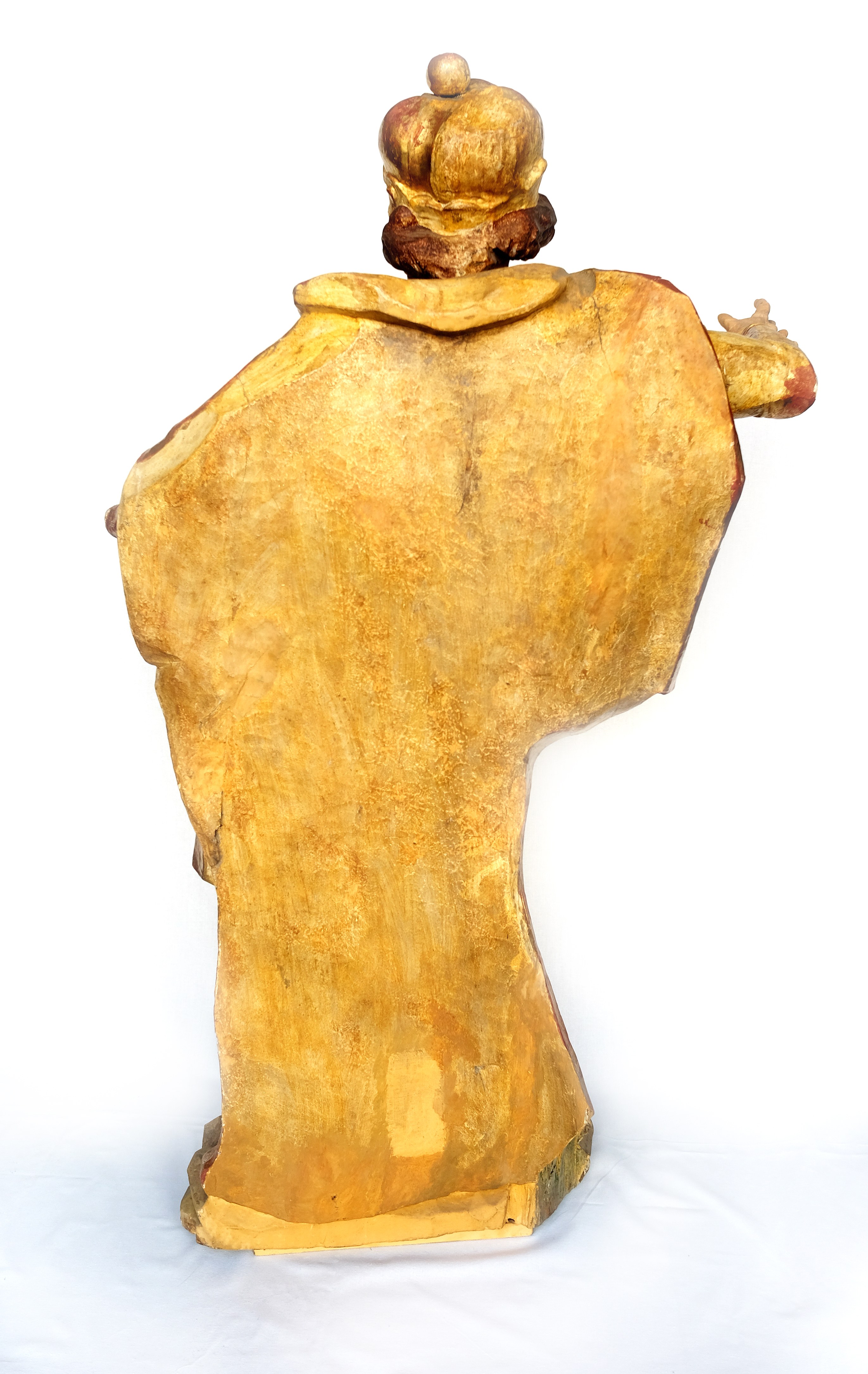
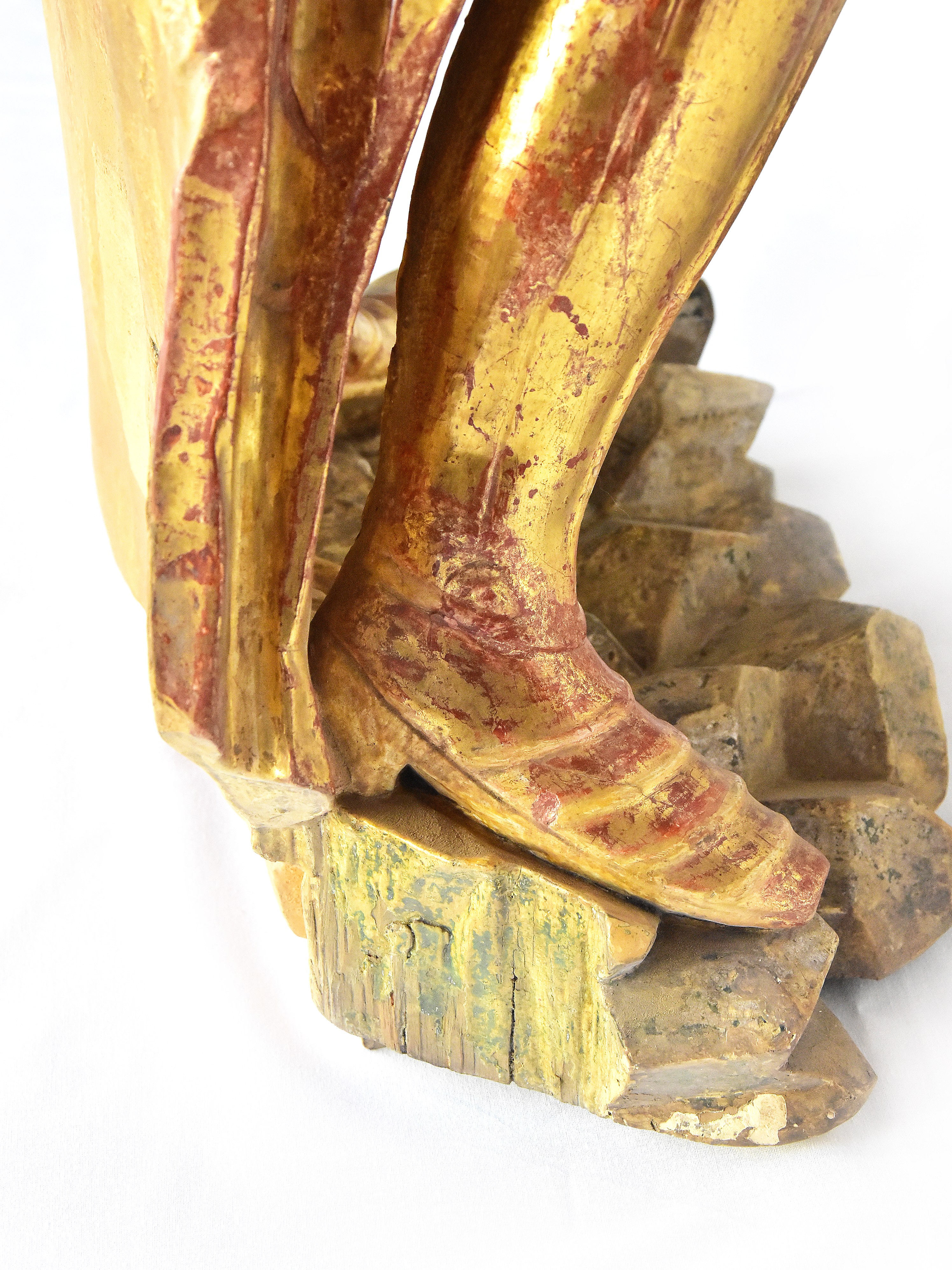
linden wood, polychrome, gilded, the back was not hollow,
dimensions: 115 x 76 x 40 cm,
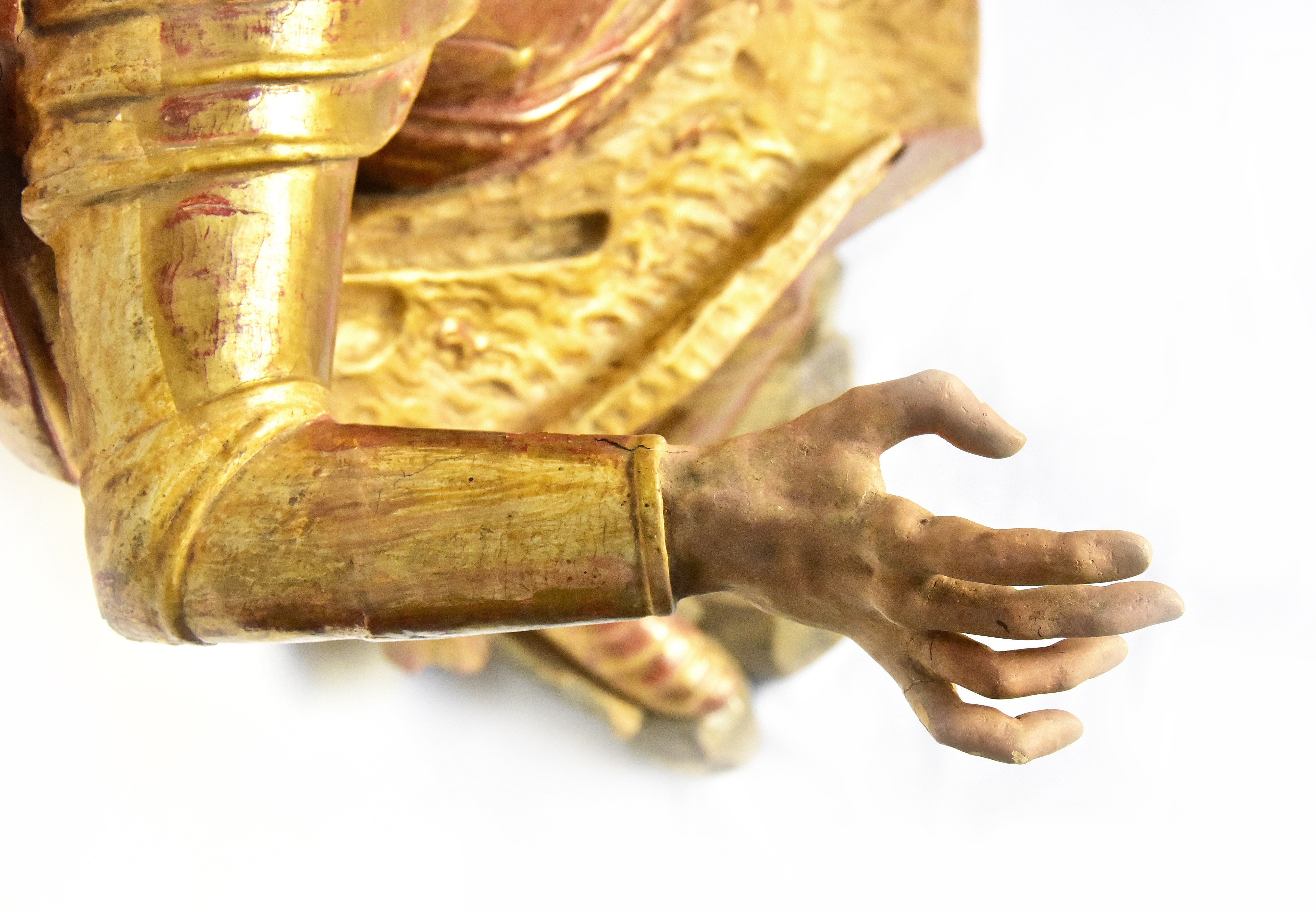
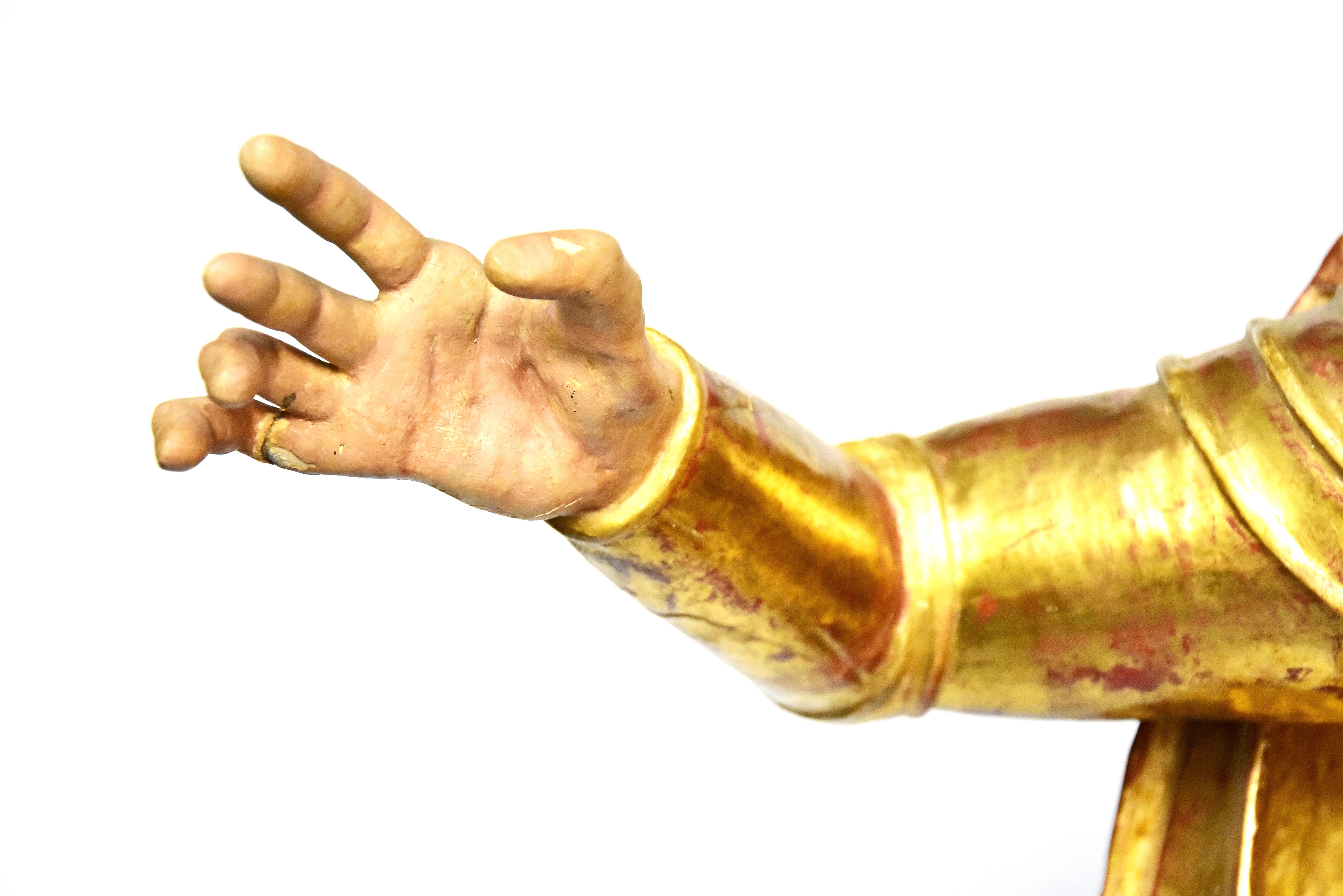
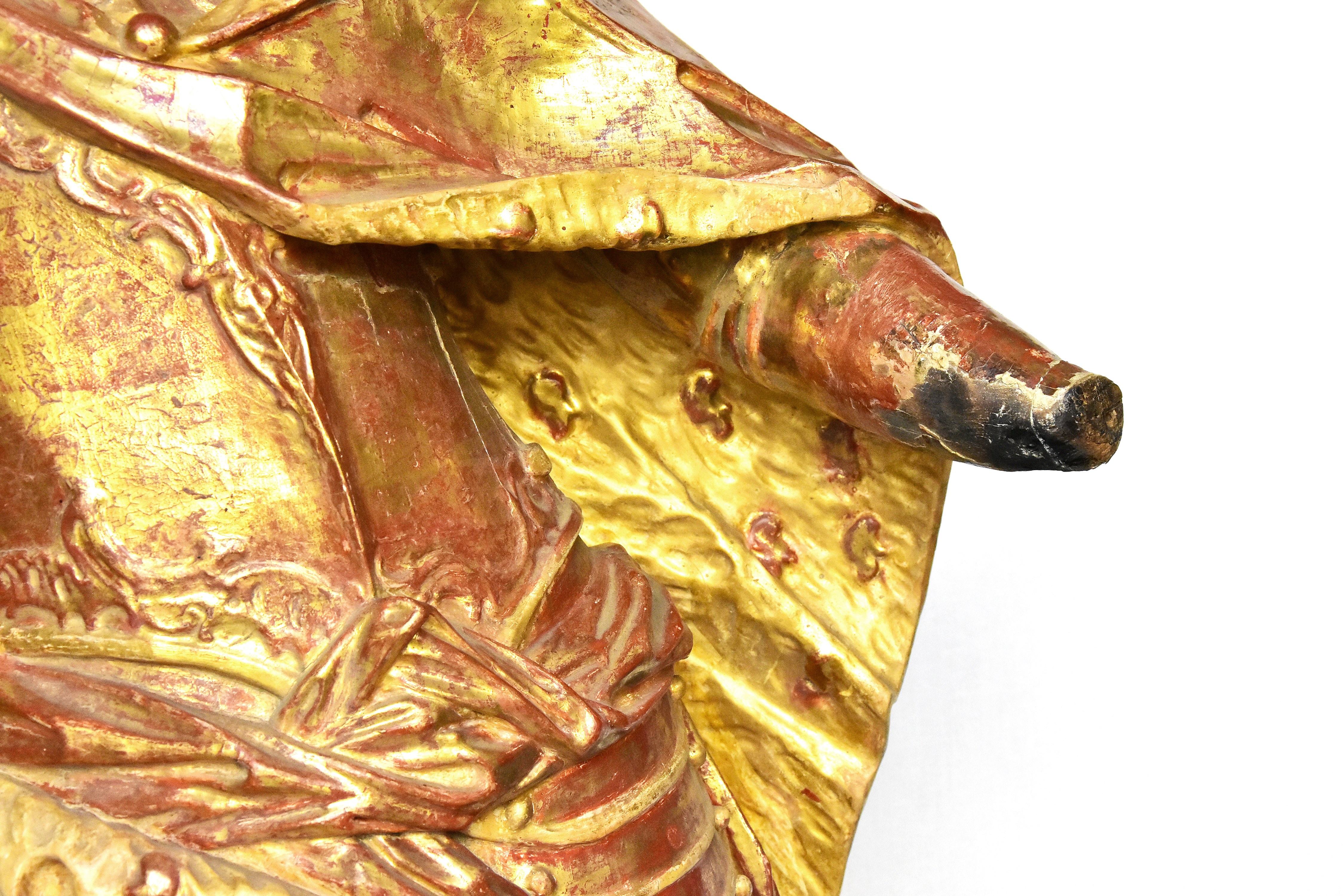
state of preservation: reconstructed fingers of the right hand, left hand missing, charred fragment of the forearm left as a witness to the history of the object.
Sculpture after conservation, attached detailed conservation documentation from 1994, contractors: Monika Bogdanowska, Andrzej Tekielak, Anna Strużyńska, experts: Prof. Marian Paciorek, MKiS Expert on Conservation of Polychrome Sculpture, Maria Dayczak-Damasiewicz, Piotr Krasny.
Sculpture from the collection of Henryk Bednarski (1907-1991), a prominent Lviv collector and bibliophile, author of texts on art, architecture and archaeology, living in Cracow after the war. In the collector's catalog item no. 39.
The authors of the conservation documentation in the section "Stylistic description" recognize the great talent of the creator of the sculptures of St. Florian and St. Wenceslas. The features of excellent workshop in their opinion are somewhat more evident in the depiction of St. Florian. Due to the lack of attributes, apart from their attire, it is not possible to determine unequivocally who the figures represent, nevertheless it is assumed that they constitute the decoration of one altar. Saints Florian and Wenceslas were very often combined together, they were considered secondary patron saints of Poland.
Little has been able to be determined about the history of the sculptures. "The history of the sculptures is unknown. In an attempt to determine the authorship, we can presume about their origin from the Carmelite monastery in Przemyśl. For some reasons, it also seems correct to assume that they were originally located on a small altar in the palace chapel. For one is puzzled by the fact of their very good state of preservation, testifying to the care and custody of their successive owners." (excerpt from part: "History of the objects on the basis of source materials and on the basis of object research"). The program of restoration work assumed limited interference with the objects in order to preserve their characteristic damage, testifying to their history and authenticity. At the request of the owner of the objects, reconstruction of the missing sculptural forms of the fingers was carried out.











Paskutiniai peržiūrėti
Prisijunkite, jei norite pamatyti pozicijų sąrašą
Mėgstami
Prisijunkite, jei norite pamatyti pozicijų sąrašą