


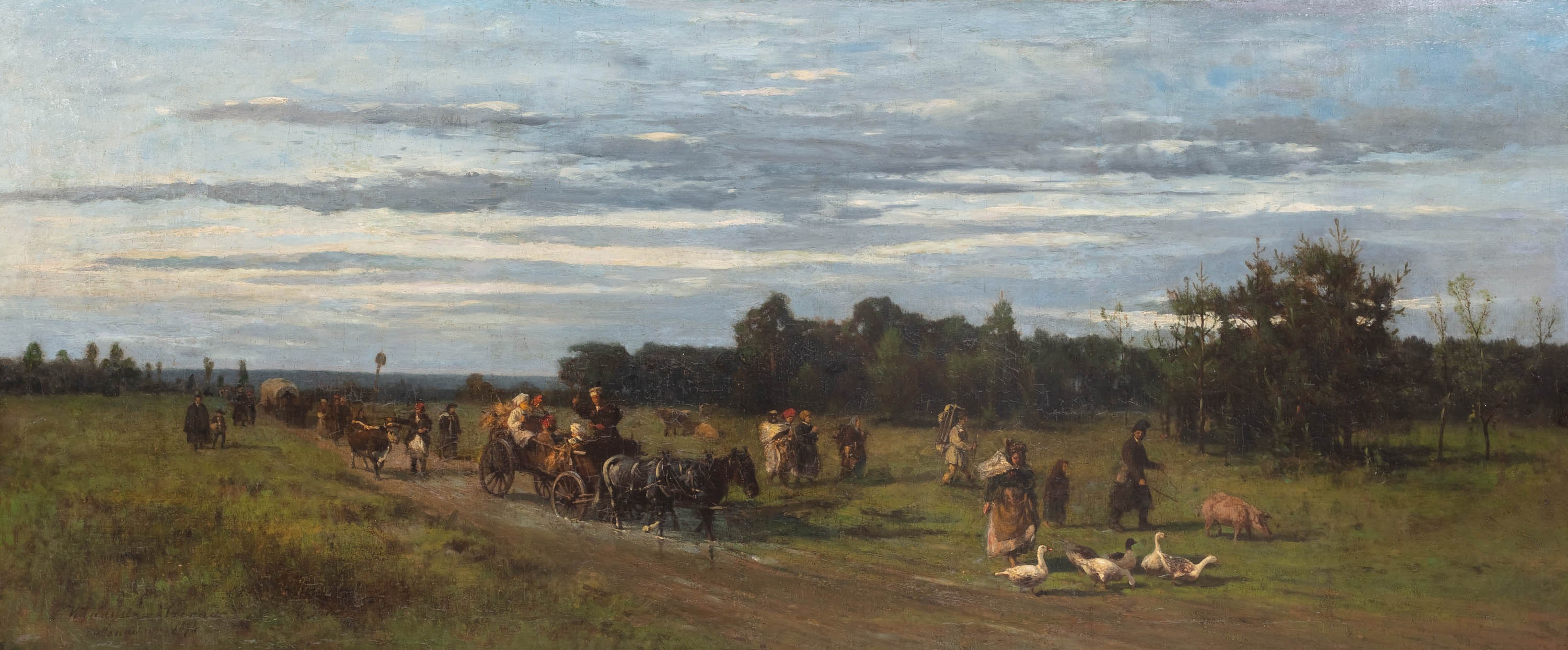
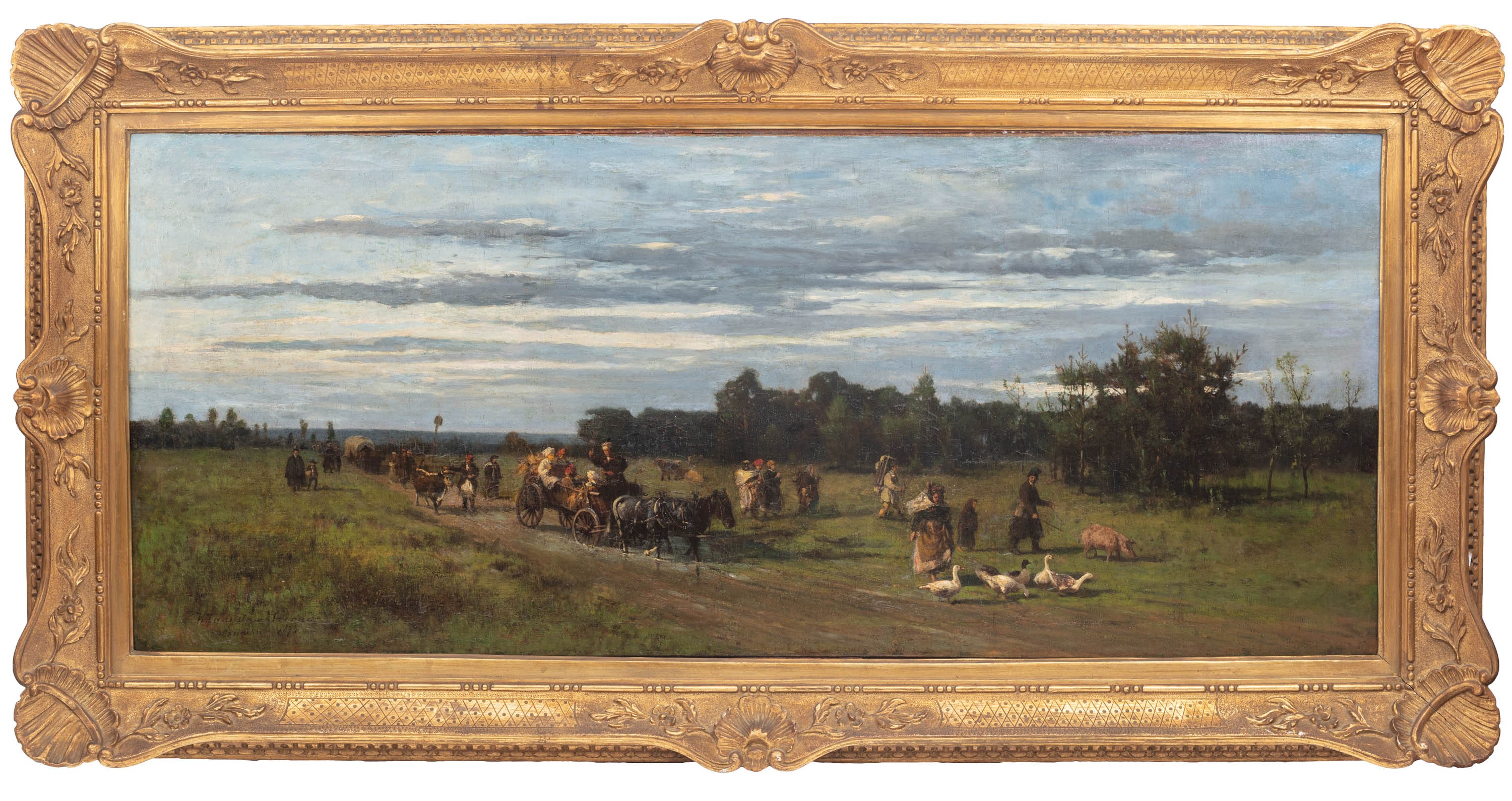
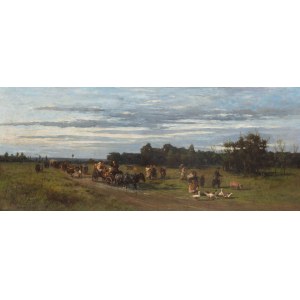
oil, canvas, 55.5 × 132 cm
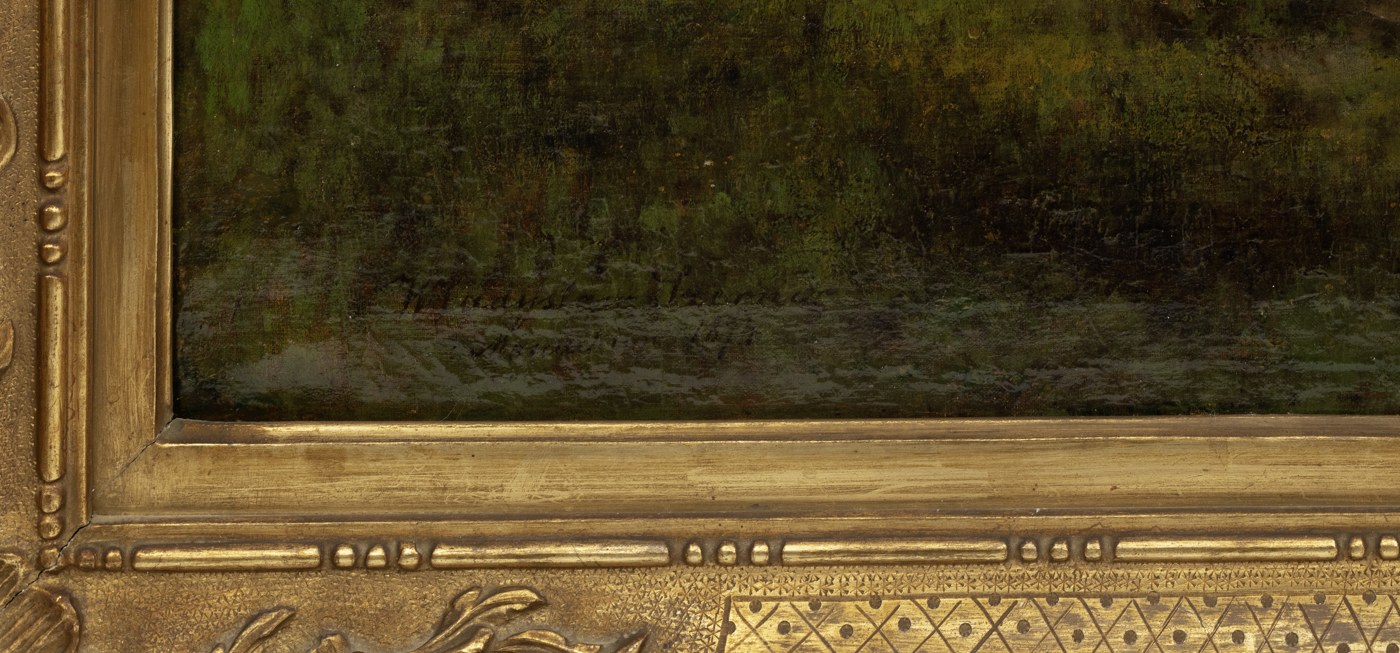
Signed and dated l. d.: "Wladyslaw Szerner/ Munich 1874".
"In Brandt's studio we also had the unexpected pleasure of becoming acquainted with the works of Mr. Wladyslaw Szerner. These are genre scenes, full of truth and charm; our fairgrounds, inns, popasy, caught happily from nature, which would pleasantly adorn any salon and collection
would adorn."
J. I. Kraszewski, "Letters. Munich in October 1876," in "Kłosy" 1876, no. 591, p. 275.
"Landscape was the main theme of the work of Polish painters in Munich. Hunting, courtship, uprising scenes or a group of villagers heading to market were depicted against the background of the Polish landscape. The canvases painted truly Mazovian or sub-Cracow floodplains, sandy roads among fields and forests, villages lost in the boundlessness of flat space. A cottage, a rider on a horse, a wanderer stopped on the road became an integral part of the landscape. They were neither 'above' nor 'in' the landscape. They were a spot of color, inseparable from its other elements. They were signs, building, together with a tree, a line of a field or a forest, the mood of the landscape experienced and rendered by the author with all the depth of sensitivity. The atmosphere of Munich, the strength and value of its artistic community, the friendliness and interest in art felt at every step by Poles released deep layers of creative activity. At another time and in another place, perhaps this would not have been given to them. It is worth remembering, therefore, that "the 'Polish Munich painters' - as Halina Stępień noted - are, after all, the majority of our most outstanding artists of the 19th century."
"Polish painters in Munich" ("And why we went there"). Compiled by Eliza Ptaszyńska, Zbigniew Faltynowicz, Suwałki Regional Museum, Suwałki 2005, p. 45).







Paskutiniai peržiūrėti
Prisijunkite, jei norite pamatyti pozicijų sąrašą
Mėgstami
Prisijunkite, jei norite pamatyti pozicijų sąrašą