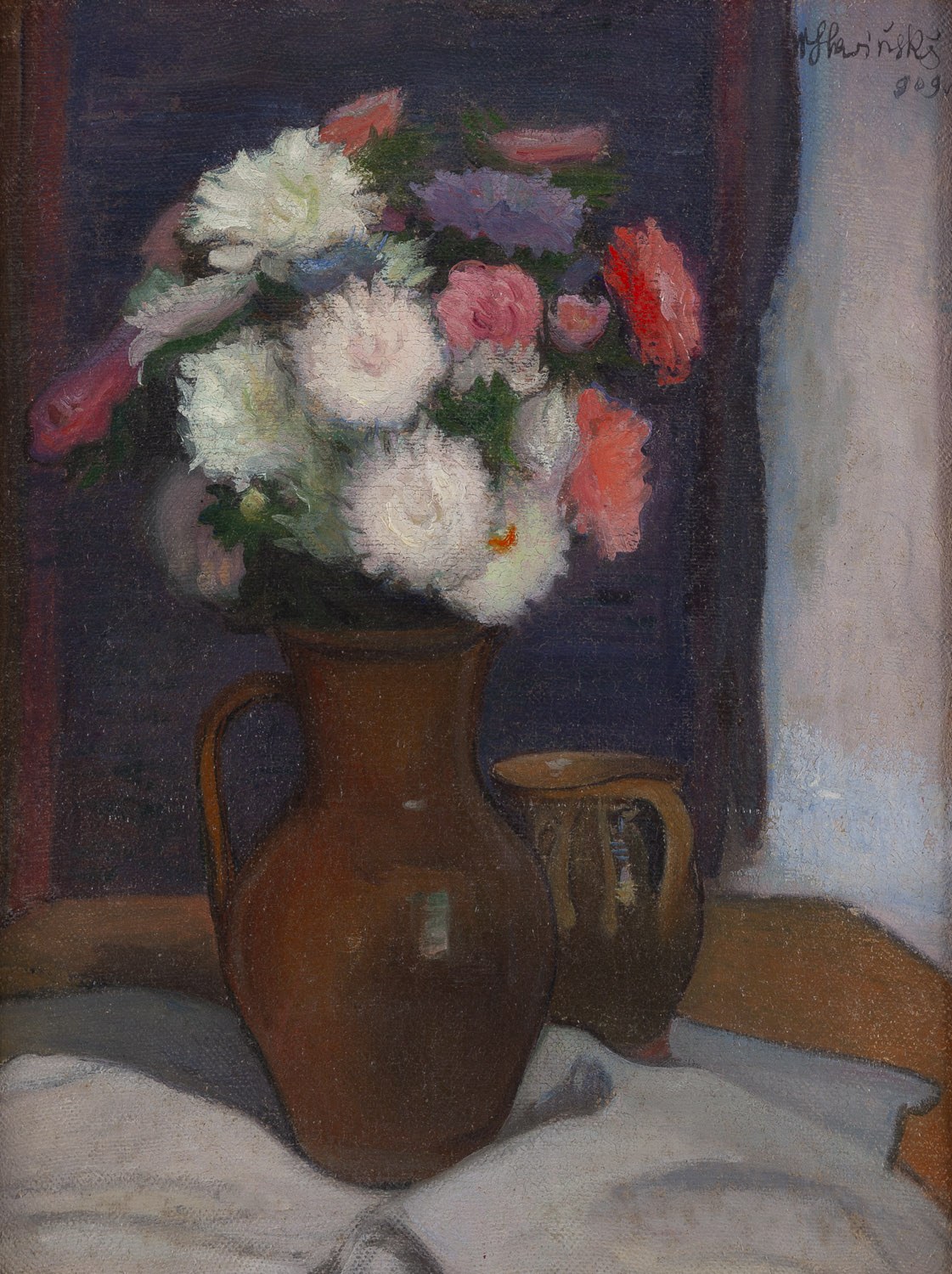
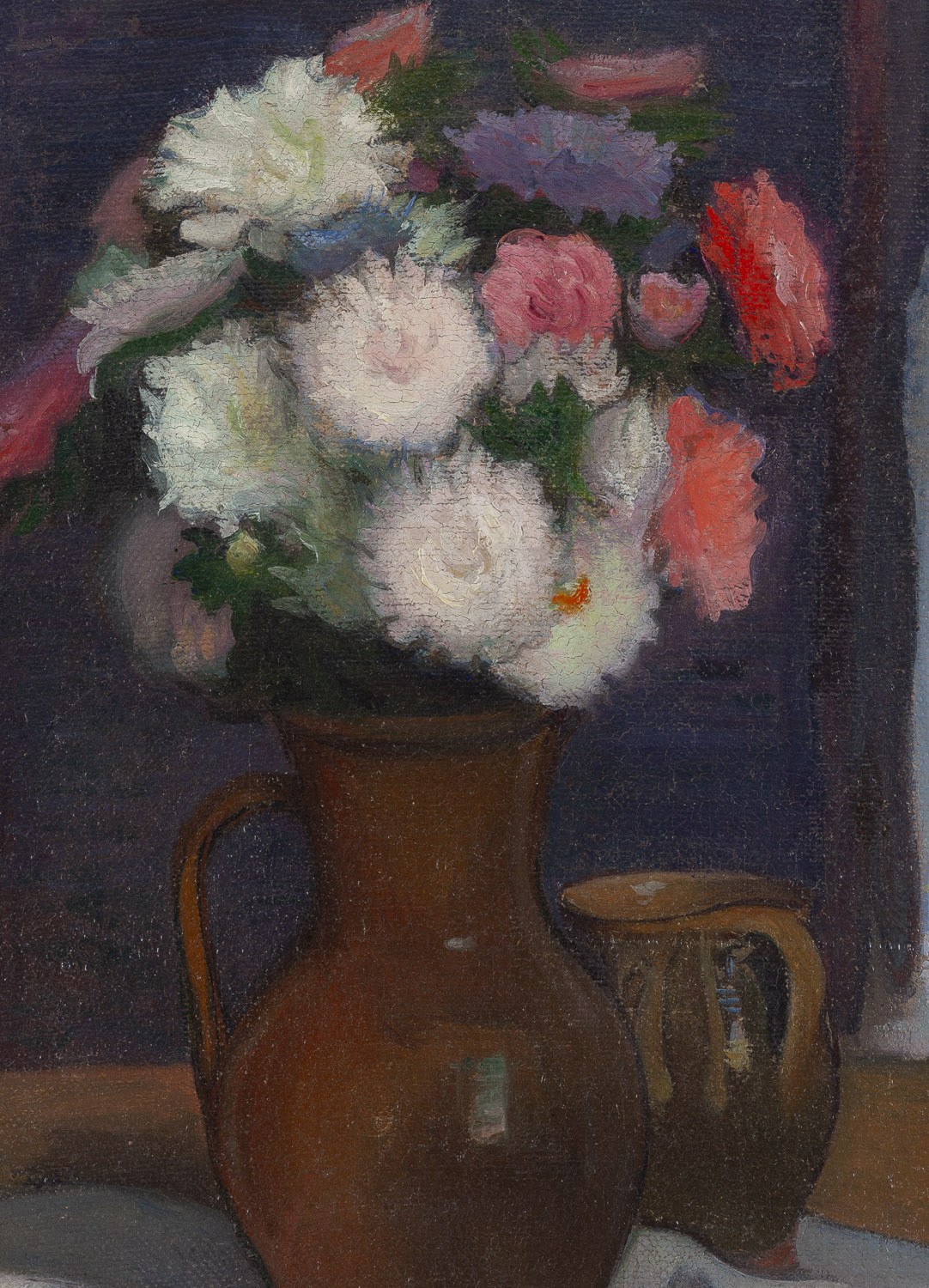
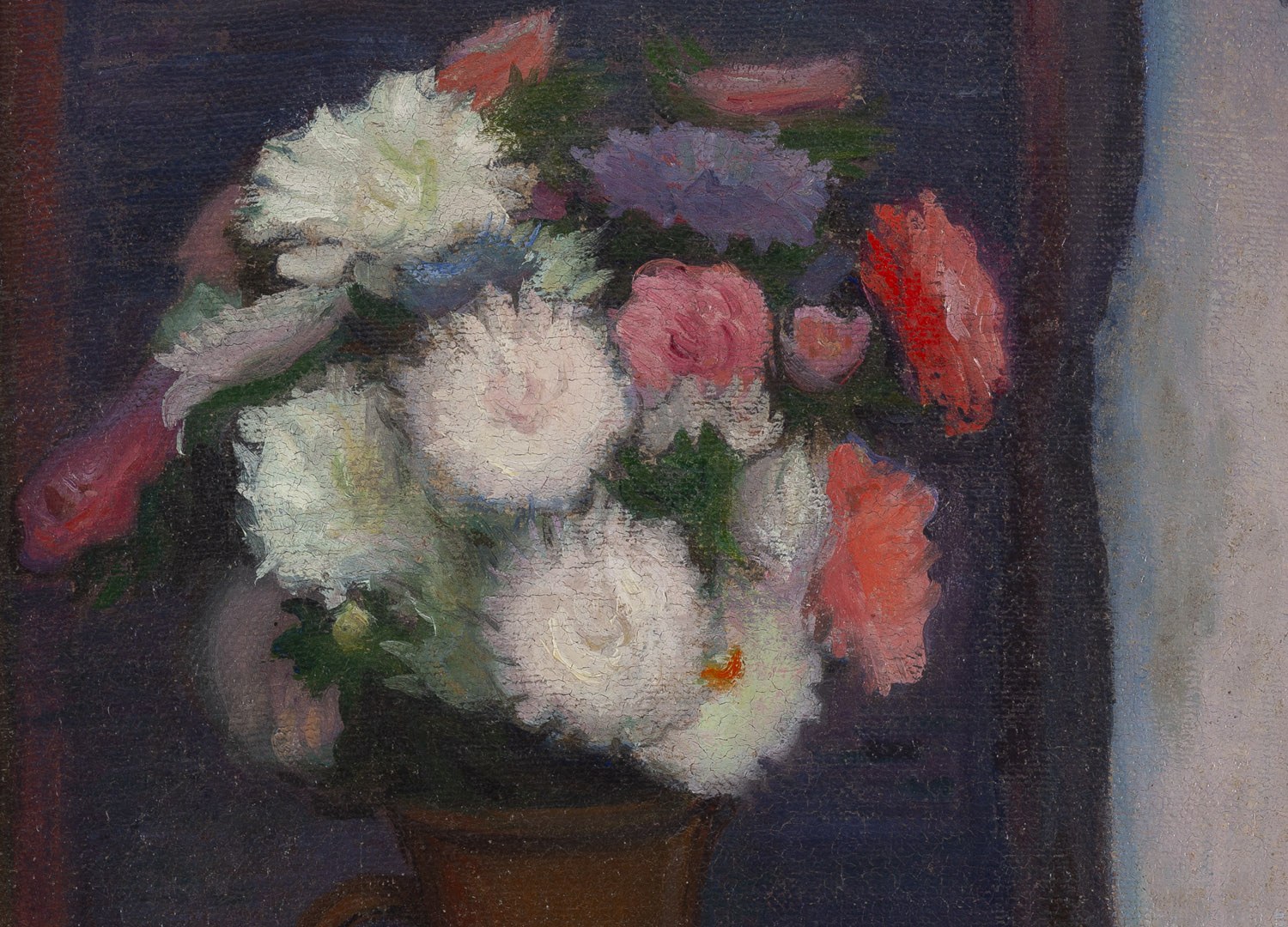
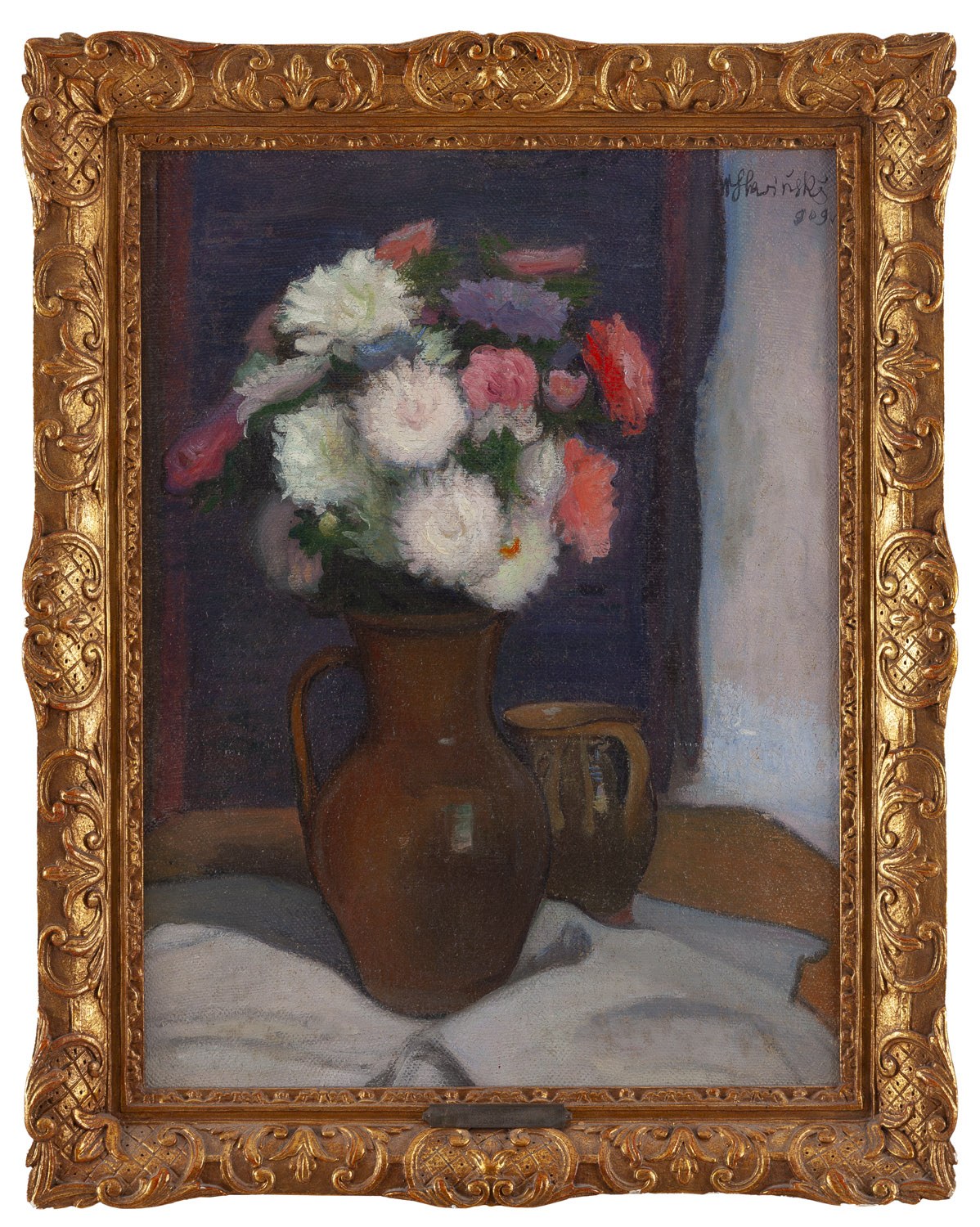
Dimensions: 61.5 x 46 cm
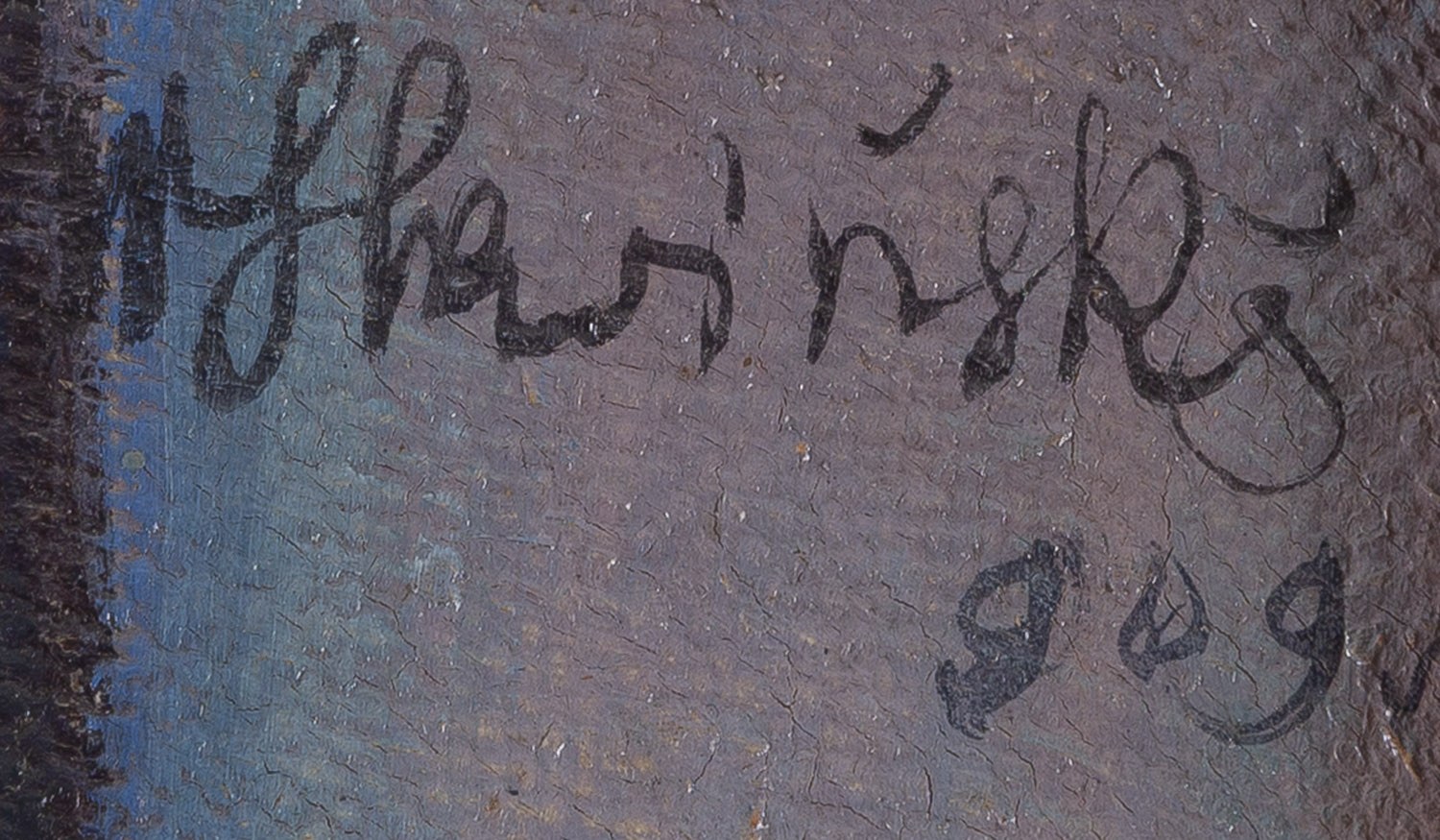
signed and dated p.g.: 'WŚlewiński | 909r'.
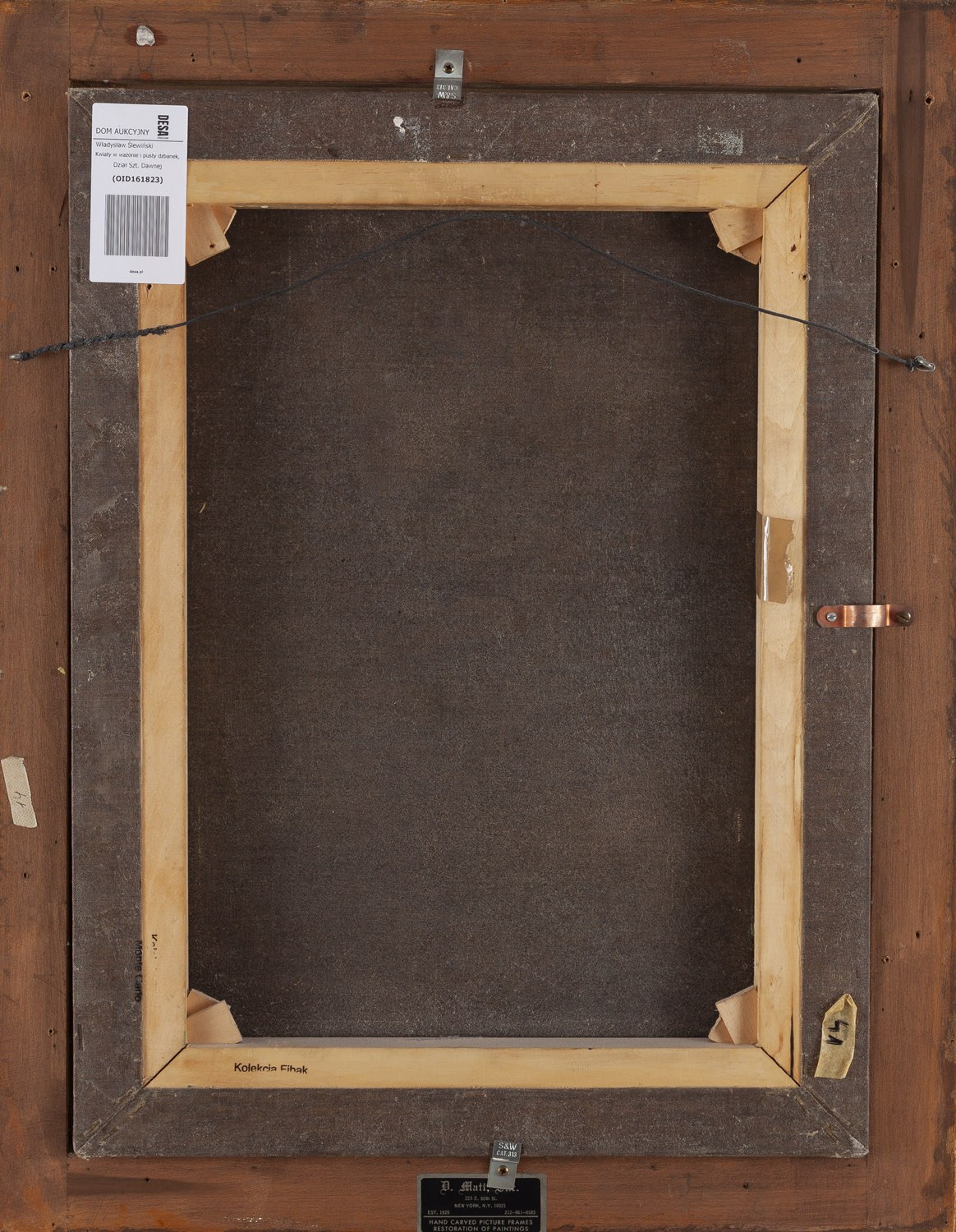
on the canvas the collector's stamp
Origin:
gift of the artist to Mr. Barbe, notary in Moëlan
purchase in France, 1982
Exhibited
August Zamoyski. Thinking in Stone, Center for Contemporary Art Znaki Czasu, Toruń, June 21-September 1, 2024.
Władysław Ślewiński. From Pont Aven to Kazimierz, District Museum in Sandomierz, October 8, 2009 - August 10, 2010.
Polish Paris. École de Paris. Collection of Wojciech Fibak, National Museum in Szczecin, December 1999 - March 2000.
Polish Paris. From Michałowski to Lebenstein. Polish Painting from the Collection of Wojciech Fibak, Museum of the History of the City of Lodz, 1999.
Polish Paris. From Michałowski to Lebenstein. Polish Painting from the Collection of Wojciech Fibak, State Art Gallery, Sopot, July 8 - October 4, 1998.
Polish Painting in the Collection of Ewa and Wojciech Fibak, National Museum in Warsaw, May 23-August 9, 1992; National Museum in Poznan, August 22-October 25, 1992.
Literature
New Generation and Classics of Modernity from the Collection of Wojciech Fibak, exhibition catalog, Centre for Contemporary Art Znaki Czasu, ed. Krzysztof Stanisławski, Anna Kompanowska, Toruń 2024, p. 293 (ill.)
On the trail of perfection: selected works from the collection of Wojciech Fibak, exhibition catalog, State Gallery of Art, Sopot 2022, p. 37 (il.)
Polish Paris. École de Paris. Collection of Wojciech Fibak, exhibition catalog, National Museum, Szczecin 1999, p. 60 (ill.)
Polish Paris. From Michałowski to Lebenstein. Polish Painting from the Collection of Wojciech Fibak, exhibition catalog, Museum of History of the City of Lodz, Lodz 1999, p. 41 (ill.)
Polish Paris. From Michałowski to Lebenstein. Polish Painting from the Collection of Wojciech Fibak, exhibition catalog, State Art Gallery, Sopot 1998, p. 41 (ill.)
Polish Painting in the Collection of Ewa and Wojciech Fibak, exhibition catalog, National Museum in Warsaw, National Museum in Poznan, Warsaw 1992, p. 38 (ill.).
Władysława Jaworska, Władysław Ślewiński, Warsaw 1991, p. 13 (ill.)
Władysława Jaworska, Władysław Ślewiński 1854-1918. monographic exhibition, National Museum in Warsaw, Warsaw 1983, cat. no. 240, il. XVIII
Tytus Czyżewski, Władysław Ślewiński, Warsaw 1928, p. 18 (dated 1900 there)
Biography
Władysław Ślewiński came from a landed, Mazovian family. In 1875 he began his education at an agricultural school in Radom. He briefly attended Wojciech Gerson's Drawing School in Warsaw, probably at the urging of his relative Jozef Chelmonski. He managed the Pilaszkowice estate in the Lublin region inherited from his mother, which he brought to financial ruin. In the rush of 1888, he left Poland for Paris, escaping the sequester of the Internal Revenue Service. He quickly found his way into the circle of modern French art: he studied at the Académie Julian and the Académie Colarossi, and hung out among the artistic bohemians who gathered at the cremerie Chez Madame Charlotte in Montparnassie. Among his acquaintances were Paul Gauguin, Alphonse Mucha and August Strindberg. At the 1889 Synthetist exhibition at Café Volpini, he became acquainted with the circle and art of Gauguin's disciples. He befriended the artist and in 1889-96 traveled to Pont-Aven in Brittany, joining the ranks of the art colony there. He married the Russian painter Eugenia Shevtsova. From 1896 he lived in Le Pouldu in Brittany. The years 1905-10 mark the artist's stay in Poland: there is an exhibition of his works in Warsaw's Aleksander Krywult Salon, Ślewiński goes to Cracow, stays in Poronin, creating within the local art colony centered around Jan Kasprowicz, and establishes an art school on Polna Street in Warsaw. In 1910 he left Poland and for the rest of his life lived in a house called "castle" in Doëlan, Brittany. Under the influence of Gauguin and the syntheticism of the Pont-Aven school, Ślewiński created a personal painting formula situated within the painting of European Symbolism. In the history of Polish art, his painting is classified as part of Young Poland. Ślewiński practiced almost exclusively oil painting - he created intimate still lifes, portraits, landscapes. A unique phenomenon in his oeuvre is a series of seascapes from the Breton coast, executed since the 1890s.