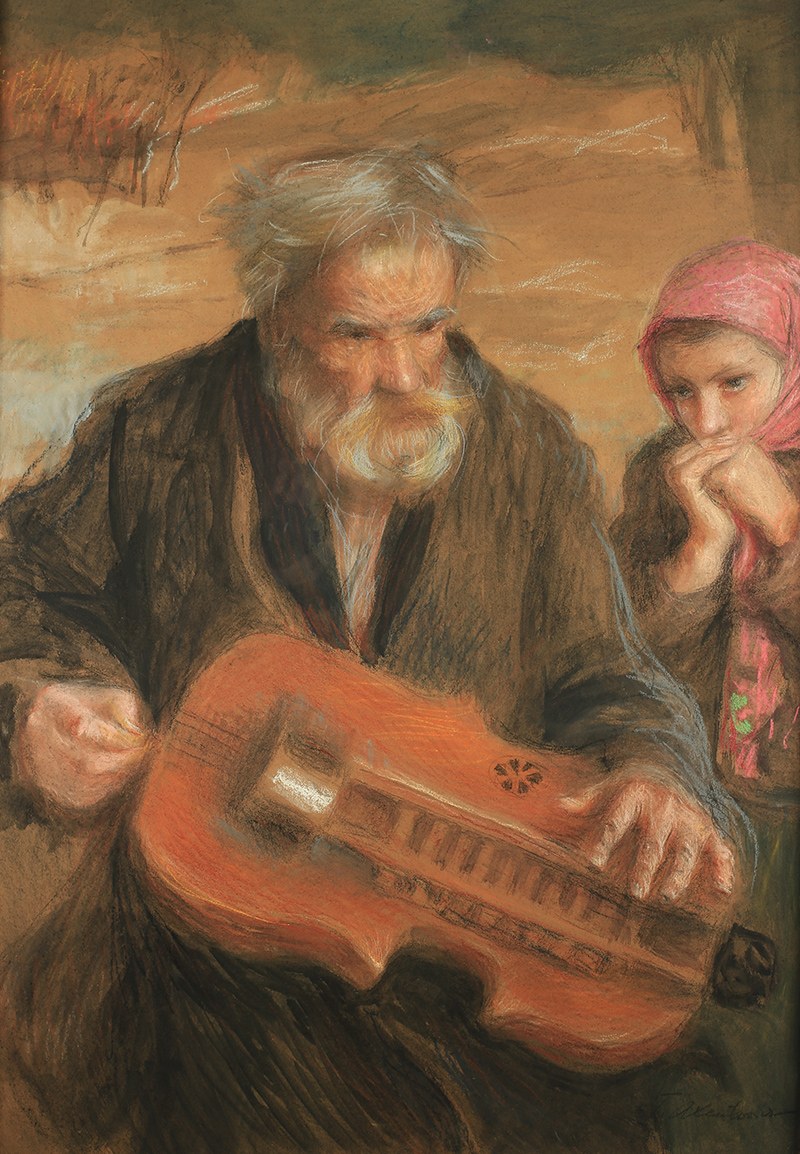
pastel, cardboard, 97.5 × 67.5 cm in light frame
signed p. d: T. Axentowicz
The figure of the Ukrainian lirnik - a wandering folk singer endowed with the power to foretell future events and glorify heroic history, playing the hurdy-gurdy or theorbo - is part of the image of "mother Ukraine" . Lyricist, an inspired bard, appeared in Polish Romantic literature. He is repeatedly immortalized in genre painting. Axentowicz first introduced him in "Panorama Racławicka", painted in 1894. As Waldemar Okoń rightly noted, "in the group of figures praying under the cross for victory, next to an old man - a confederate - was placed a "dida" lirnik, kneeling at the head of this group, which, given the scale of the work and the accompanying national-patriotic contexts, is undoubtedly a form of immortalizing a tradition that lasted throughout the 19th century (Waldemar Okoń, National Allegories. Studia z dziejów sztuki polskiej XIX wieku. Wrocław 1992, p. 18; A.Krol, B.Deptuła, Teodor Axentowicz. Polish Armenian, PGS Sopot 2014, p.60).
Axentowicz returned to the theme of the lyricist in his works - a well-known painting from around 1900, among others: "Lyricist and Girl" (oil, cardboard. 60.5 x 49.8 cm; from the collection of the Boris Voznytskyi National Art Gallery of Lviv). In the work on display, the artist is captivated by the extraordinary attention to detail combined with the painterly freedom of the representation.