Dimensions: 55.4 x 46.3 cm
Signature: signed p.g.: Kisling
Provenance
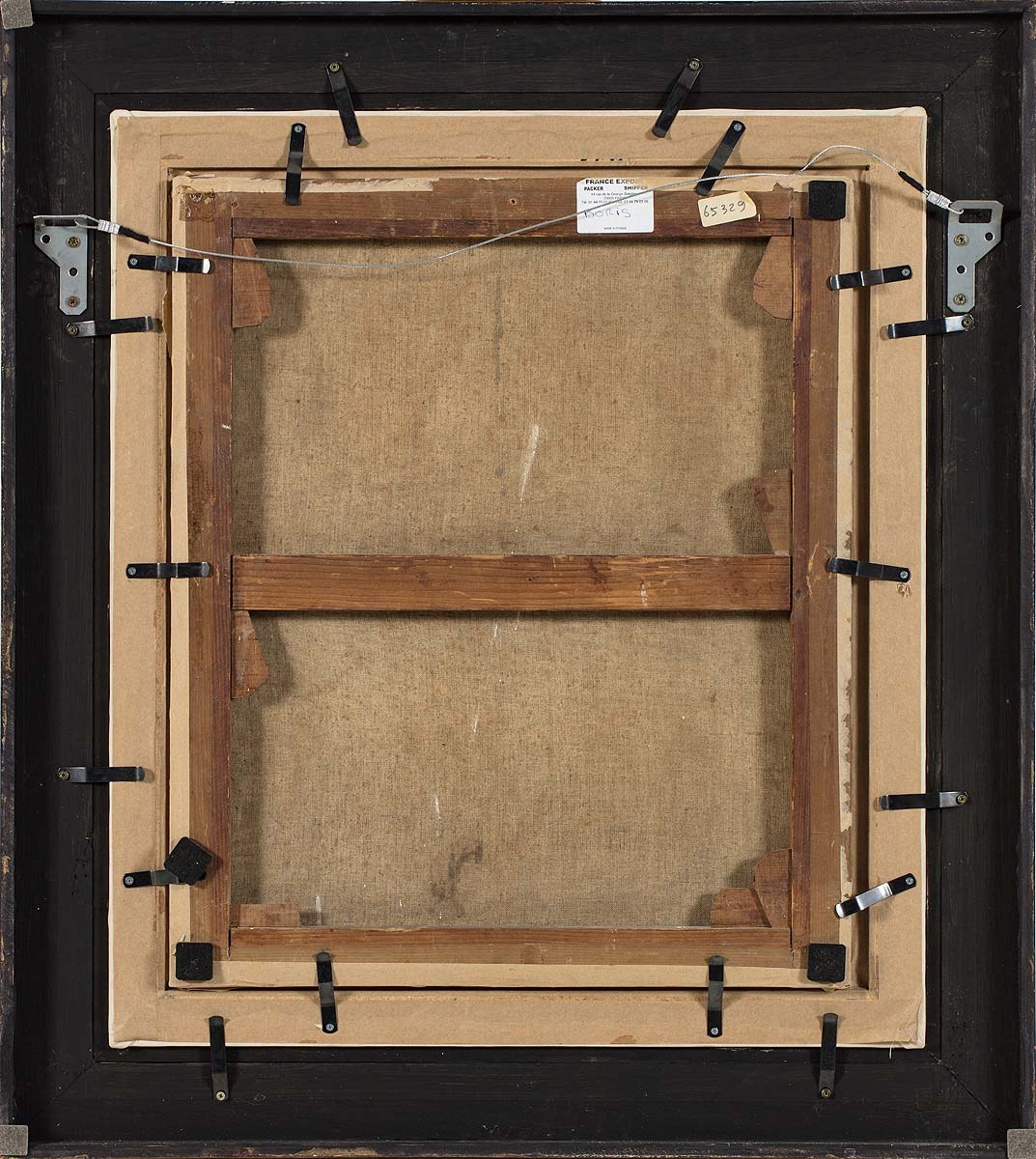
Warsaw, private collection. Paris, Sotheby's, auction 08.12.2011, item 47 Paris, private collection. Paris, Ader-Picard-Tajan, auction 25.03.1992, item 24. Paris, private collection.
Reproduced
Kisling J., Troyat H., Kisling 1891-1953, Turin 1982, No. 101, p. 126.
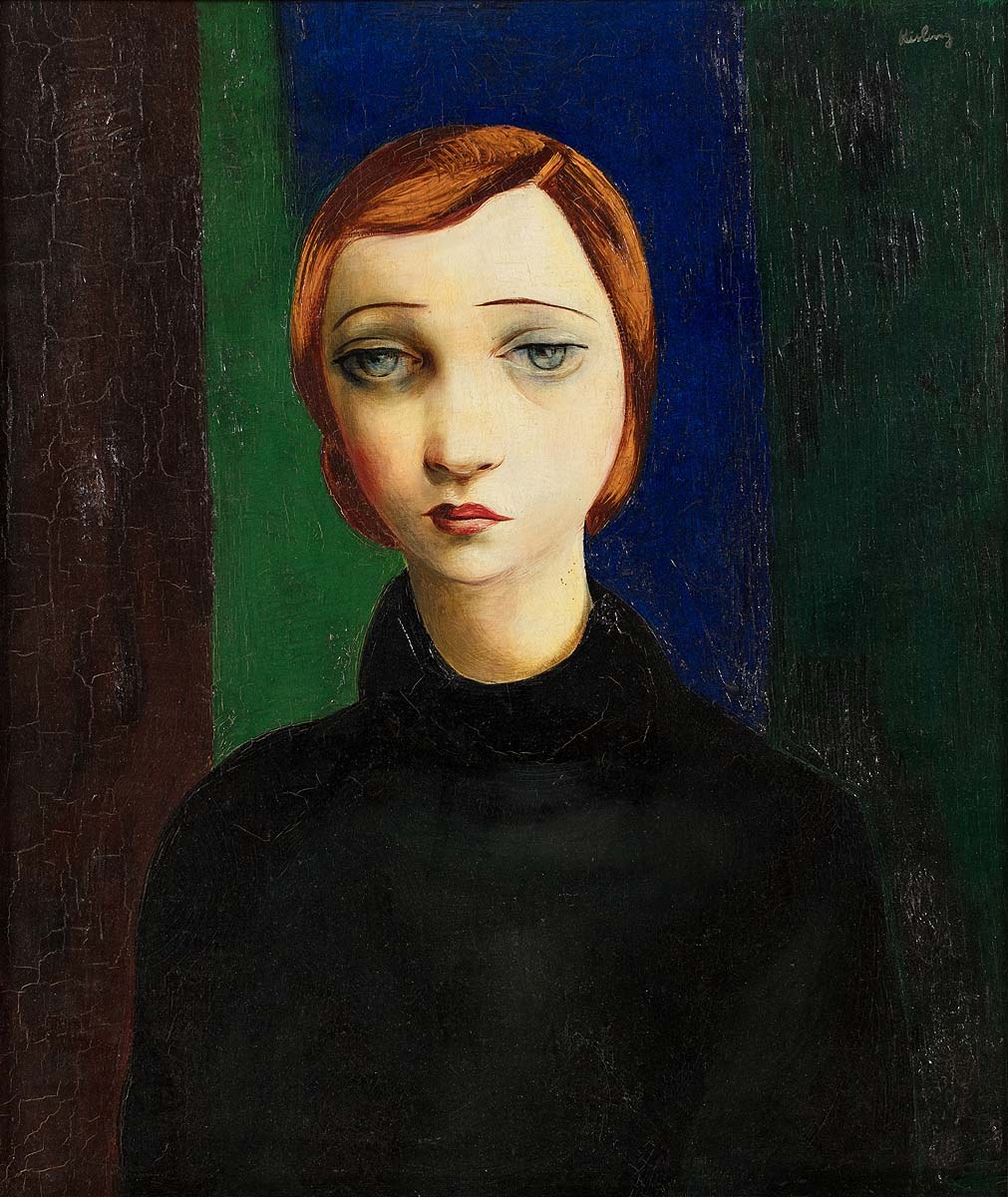
The female portrait occupies a special place in the work of Moses Kisling. It is in the images of women that the artist most fully developed his own recognizable painterly language, combining refined realism with elegant stylization. His models have smoothly modeled faces, elongated, almond-shaped eyes, precisely chiseled lips and features subordinated to a clear, linear structure. Kisling was able to combine decorativeness of form with a sense of the individual mood of the person being portrayed. As Henryk Weber wrote, the artist expressed his attitude to the model with a "fluid and subtle calligraphy of feelings" - a contour that embraces and defines every living form (Weber H., Moses Kisling, "New Journal," February 22, 1932, p. 8). This type of painting, sensual, disciplined and extremely evocative, brought Kisling immense popularity in Paris of the 1920s and 1930s and the title of "prince of Montparnasse."
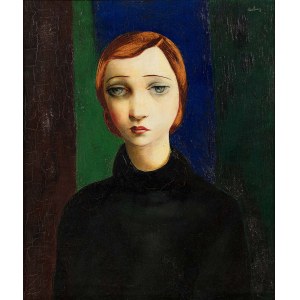
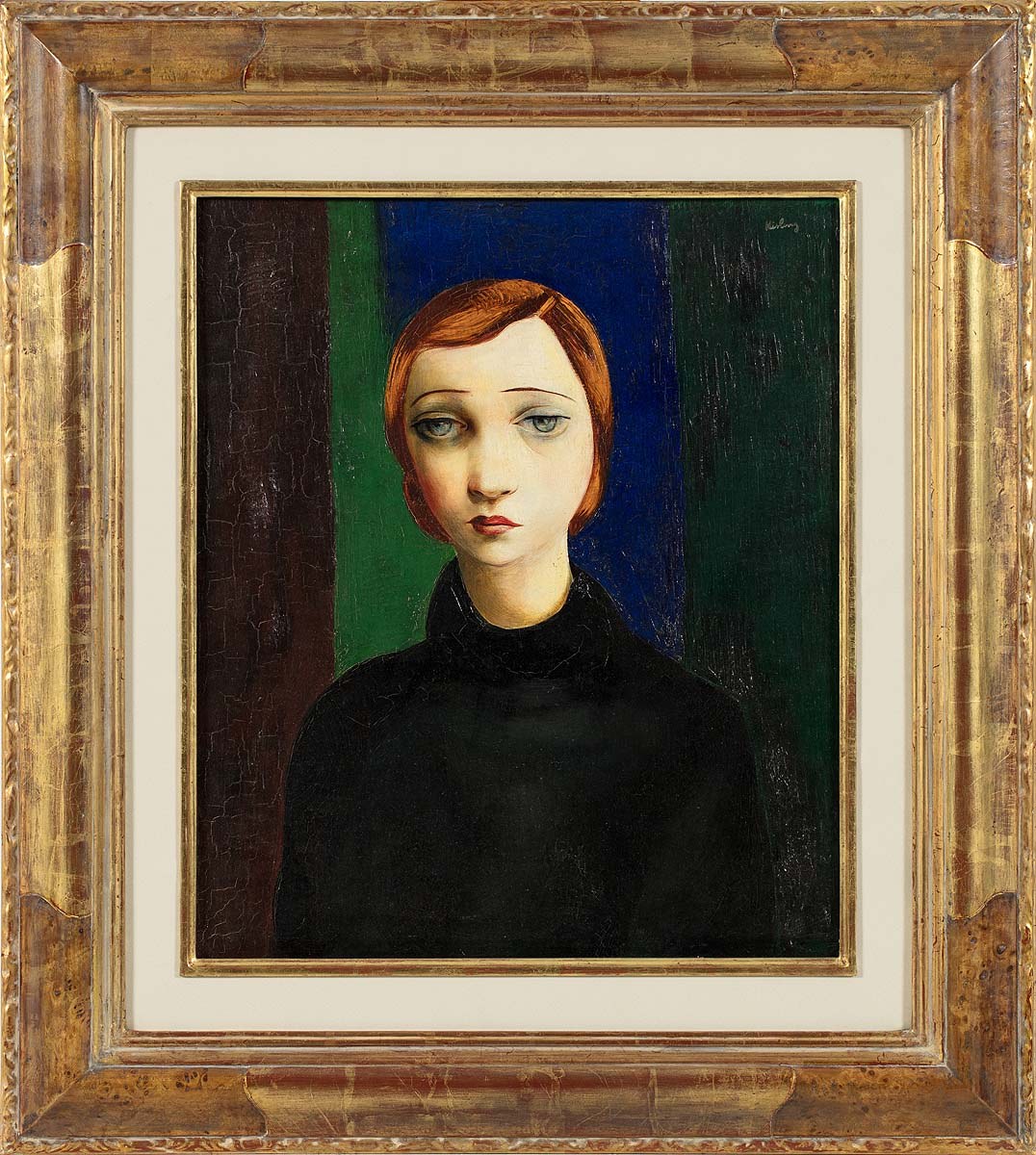
The featured painting from 1928 fits perfectly into the trend of the artist's female portraits. The model is shown frontally, against a background of vertical stripes of deep green, navy blue and brown, which organize the composition and bring out the brightness of her face. Short-cut red hair creates a luminous frame for the girl's delicate features, contrasted with a simple dark turtleneck. The strongest accent of the portrait remains the eyes - large, slightly downcast, suspended somewhere between concentration and mild melancholy. Kisling builds a mood of tranquility and subtle remoteness, while avoiding theatricality of gesture. The model appears calm, thoughtful, almost motionless, yet intensely present. The painting's smooth surface, purity of color and precision of outline give the representation a character of timeless elegance. Grace, restraint and a slightly nostalgic aura, so characteristic of Kisling's best female images, meet in the painting.