


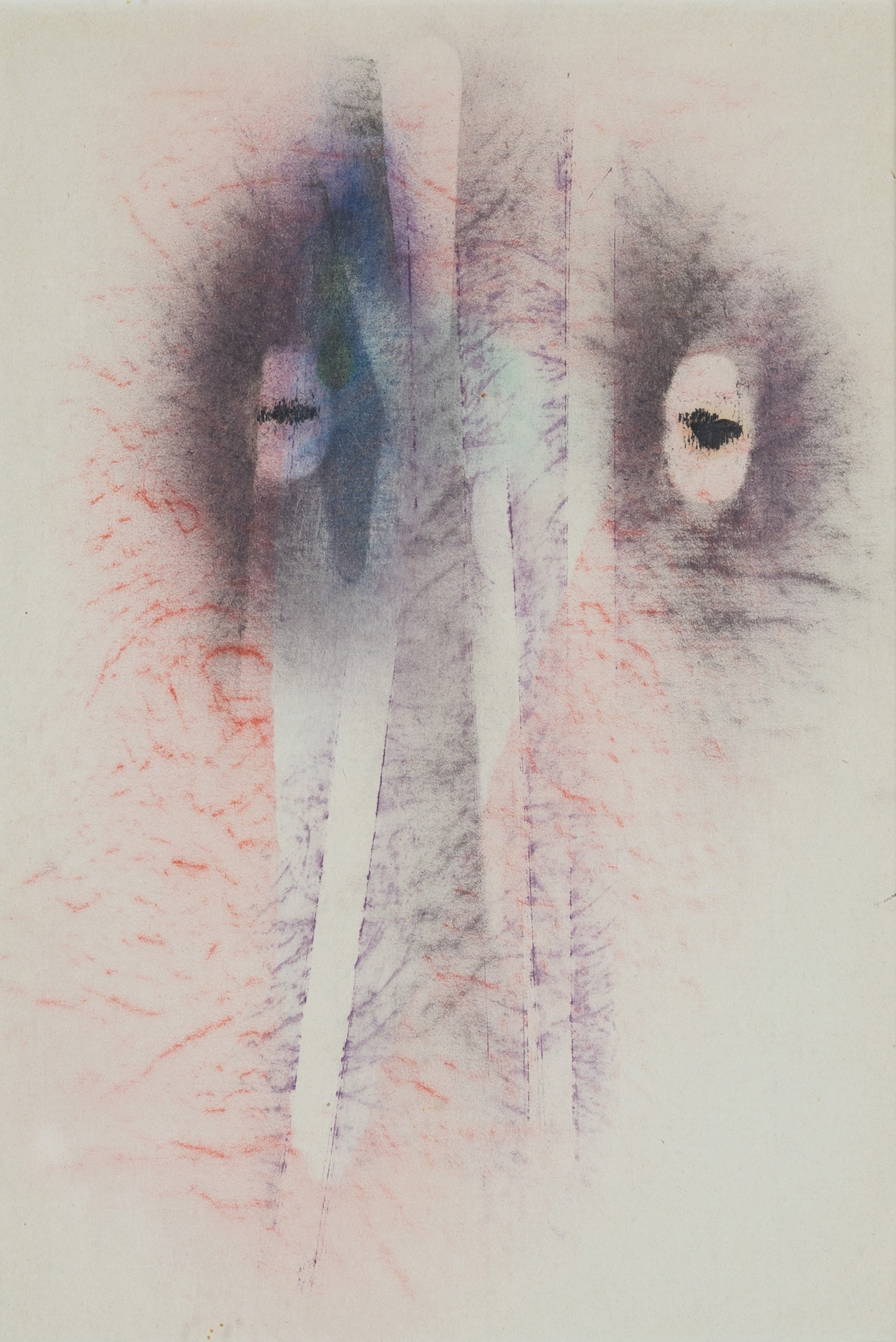
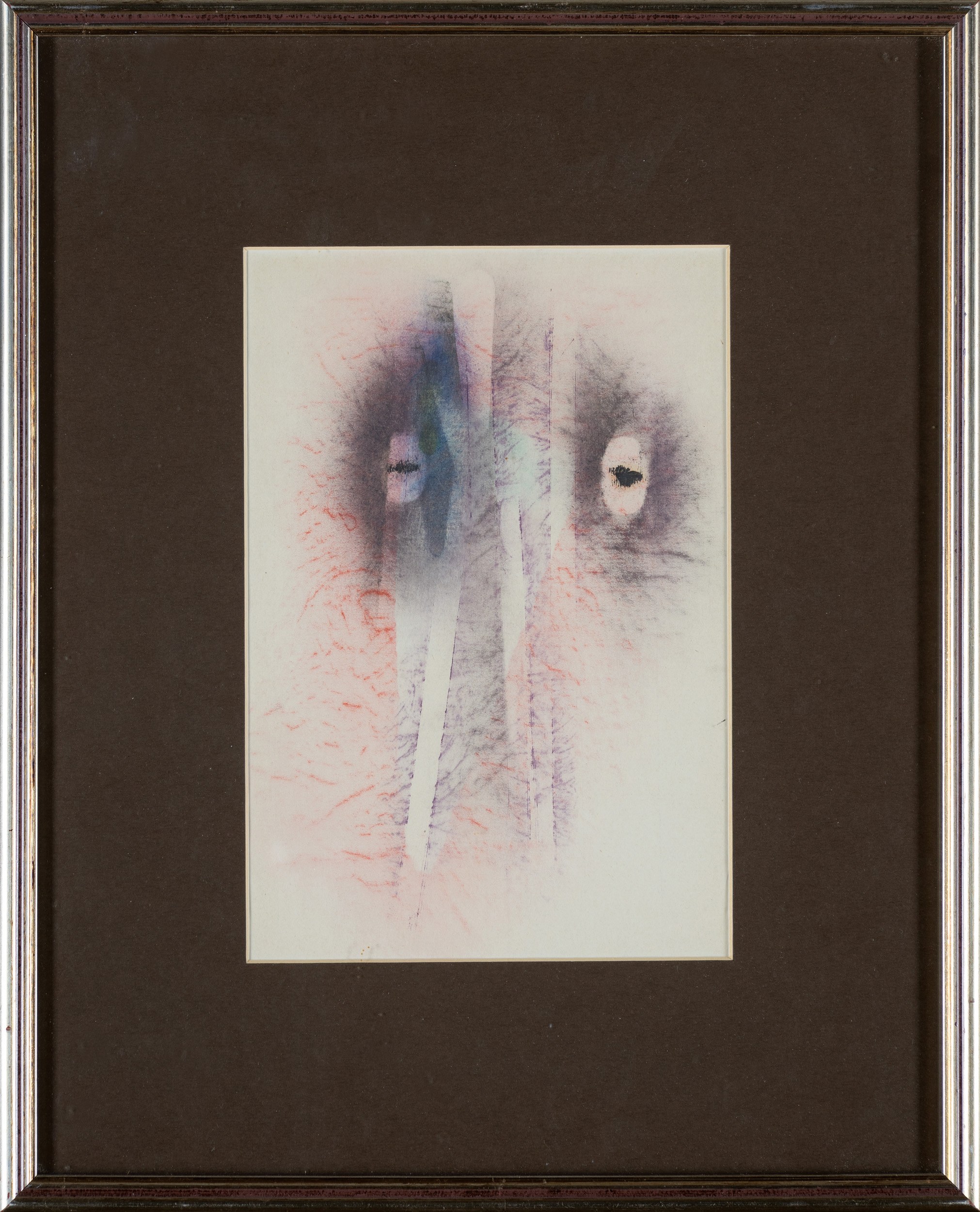
22,2 x 15,2cm - frottage, watercolor, gouache, pastel, ink, paper
frottage, watercolor, gouache, ink, ribbed paper, 22, 2 x 15.2 cm (light passe-partout)
Anna Prugar-Myślik wrote in the introduction to the catalog of the Artist's monographic exhibition at the National Museum in Warsaw in 2004: It is difficult to determine exactly when he began to paint with crayons and gouache on thin tissue paper his first, lyrical, color-saturated compositions. They are built from a set of soft and geometric forms, with lines forming a harmonious whole. Sometimes the ground structure, which is a schematic background, pierces through on them. This constitutes a new quality of the painting. The mechanical way of obtaining the background justified the author himself calling them frotages. These small compositions, sometimes being the first record of a painting concept, faithfully reflect Janikowski's sensitivity and personality.
♣ A fee will be added to the auctioned price in addition to other costs, based on the right of the artist and his heirs to receive remuneration in accordance with the Law of February 4, 1994 - on Copyright and Related Rights (droit de suite).
Mieczyslaw Tadeusz Janikowski (Zaleszczyki, Ukraine 1912 - Cracow 1968) studied painting at the Academy of Fine Arts in Cracow in 1934-1939. He fought in the September campaign. Through Hungary he got to France, then to England. At the end of the war he fought in General Maczek's Armored Division and was wounded. In 1945-1947 he continued his art studies at the College of Art in Edinburgh. From 1947 he stayed in Paris. Since 1962 he visited Poland regularly and participated in national exhibitions and artistic life. His work evolved from realism, through colorism, to which he paid homage just after the war, when he succumbed to a fascination with French art, especially Matisse and Bonnard, to abstractionism. He gradually simplified his compositions to the point of color and formal asceticism in his late period. From 1955 to 1966, he participated in the "Réalites Nouvelles" Salons. His works are represented in leading Polish collections, including national museums in Krakow, Poznan and Warsaw, the Museum of Art in Lodz, the Museum of Contemporary Art in Radom.








Paskutiniai peržiūrėti
Prisijunkite, jei norite pamatyti pozicijų sąrašą
Mėgstami
Prisijunkite, jei norite pamatyti pozicijų sąrašą