


Franciscus Smuglevičius (1745-1807)
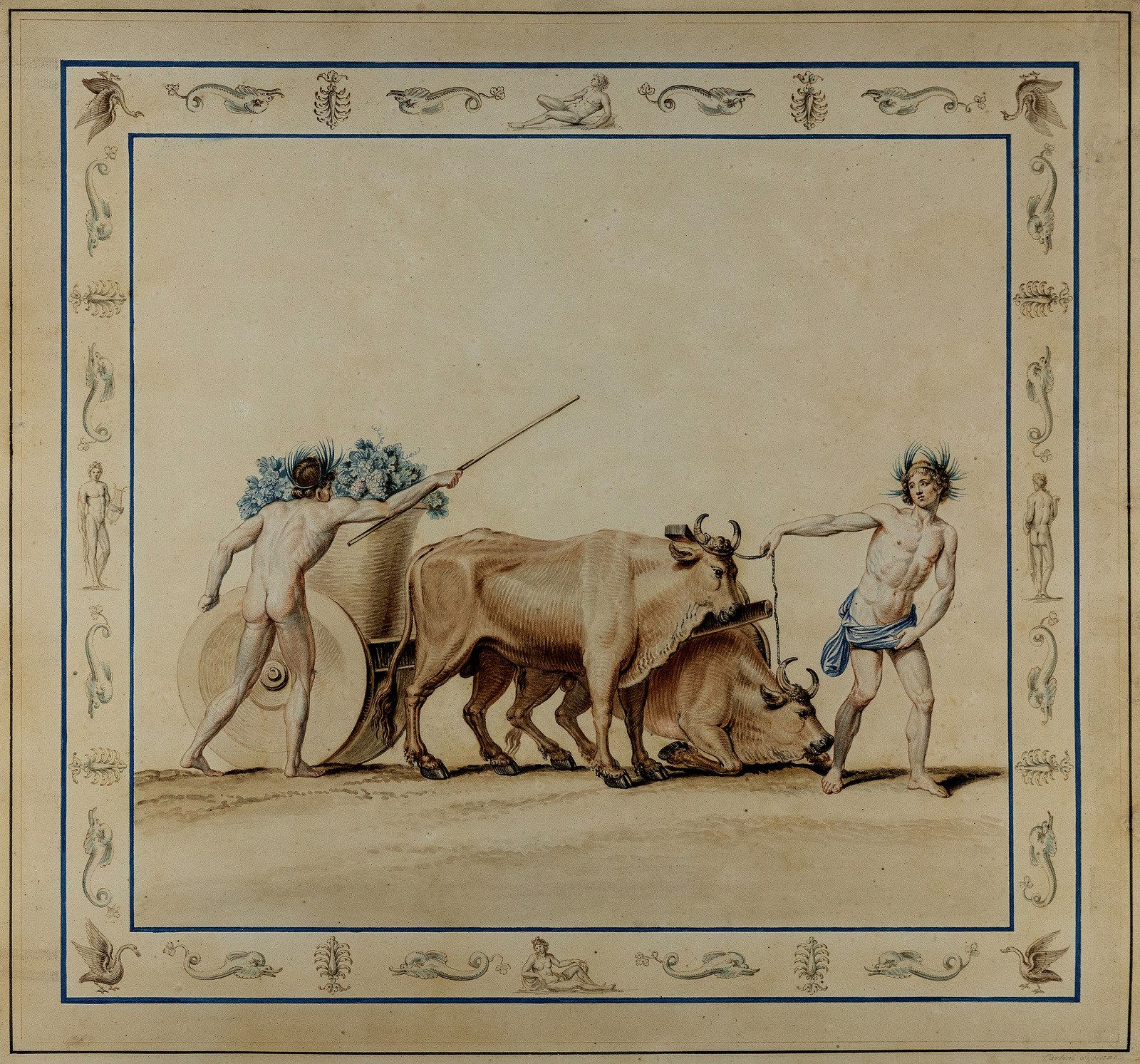
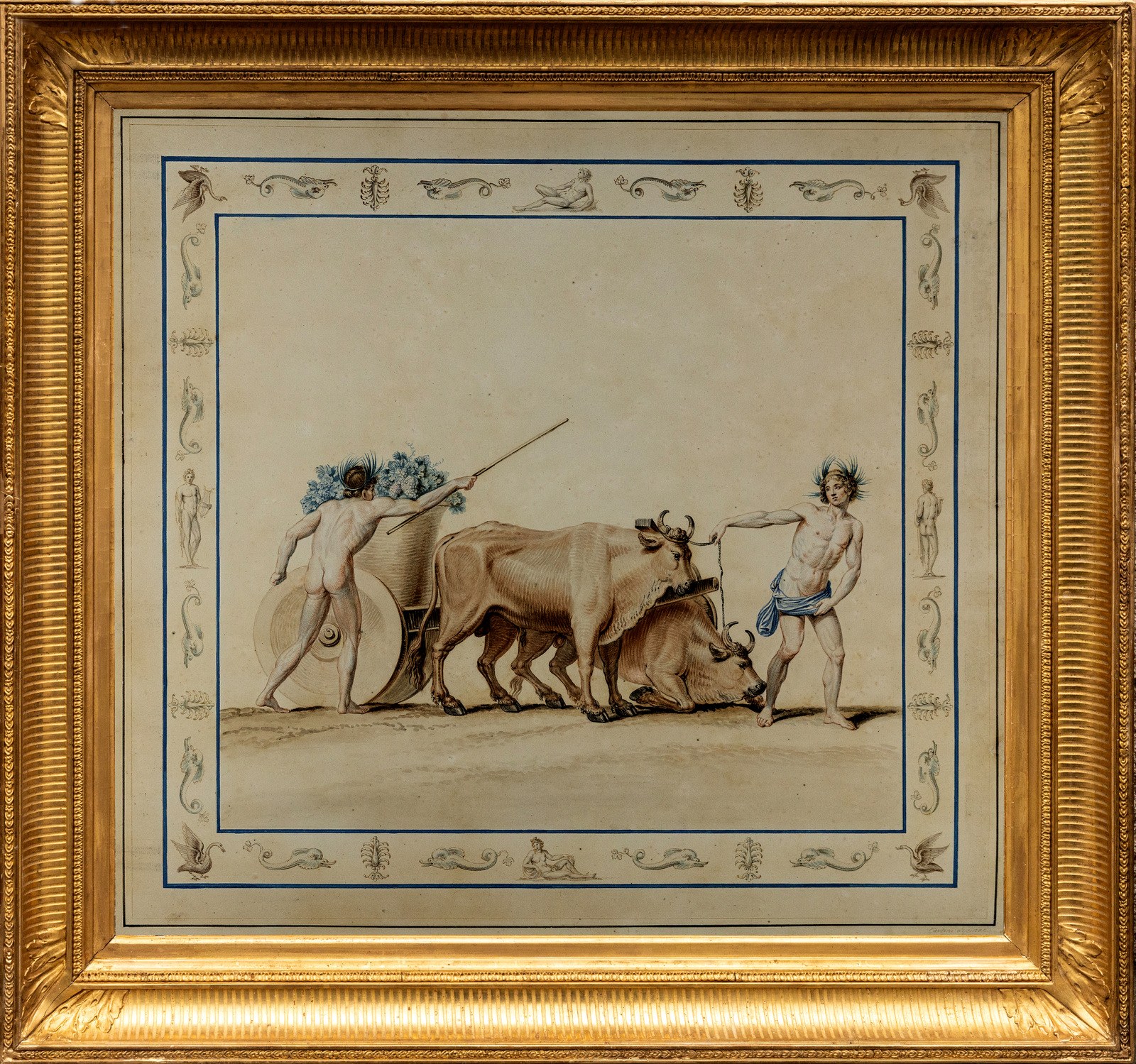
Trolley with grapes
1776, pop., engraver , Marco Carloni (1742-1796)contour engraving (etching), ink, watercolour, 52,2 × 56,8
Sign. AD: Carloni dipinze
"The 'Trolley with Grapes' is a sheet from Vestigia delle Terme di Tito e loro interne pitture, an album of reproductions of wall paintings of Nero's Golden House (then known as Tito's Baths) published in Rome in 1776. The excavation of Nero's Golden House and the copying of the wall paintings is undoubtedly the best-known project of the late 18th century related to the popularisation of ancient art, involving Franciscus Smuglevicius, who was living in Rome at the time. The publication of an album of reproductions of graphic wall paintings and stucco mouldings was initiated by the Italian artist and antiquarian Lodovico Miri to satisfy the demand for examples of ancient art from the many travellers and collectors visiting the Eternal City, as the acquisition of originals was strictly controlled. The archaeological investigations at Esquiline Hill, led by Miri, took place from the winter of 1774 to the spring of 1776. Sixteen sunken rooms were excavated and the artistic documentation of the frescoes in them was entrusted to P. Smuglevich and the architect Vincenzo Brenna (1745-1820). The 60 drawings they produced were etched by the graphic artist Marco Carloni. The engraving 'Trolley with grapes' is number 33 in the album. This scene is believed to have been on the same vault in Gallery 14 as the 31st composition, 'Trolley with grain'.
The publication was produced in stages and in several versions - single sheets, an album or a book with commentary, as well as an expensive colour version or a cheaper monochrome version, with modelling of shapes in strokes. The colour copies were made with great care and attention to the delicate outline carvings by hand, so that each sheet was essentially a one-off. The first outline engravings were printed and coloured in early 1776. The outline versions of the first edition were hand-coloured by both Smuglevičius himself and Carloni, while some of the etchings remained uncoloured. As the signature shows, the sheet in question here, 'The Trolley with Grapes', was coloured by Carloni.
Between February and March 1776, the first series of coloured engravings were exhibited in the Vatican Hall, where they were seen and praised by Pope Pius VI. The influence of the Album on European art from the late 18th to the first half of the 19th century was profound. Copies of the frescoes were widely disseminated and became a handy collection of specimens for the various branches of art. Albums of the first edition of the Vestigia delle Terme di Tito with colour illustrations or single sheets are now very rare.
Dr. (hp), Academician Rūta Janonienė












Paskutiniai peržiūrėti
Prisijunkite, jei norite pamatyti pozicijų sąrašą
Mėgstami
Prisijunkite, jei norite pamatyti pozicijų sąrašą