


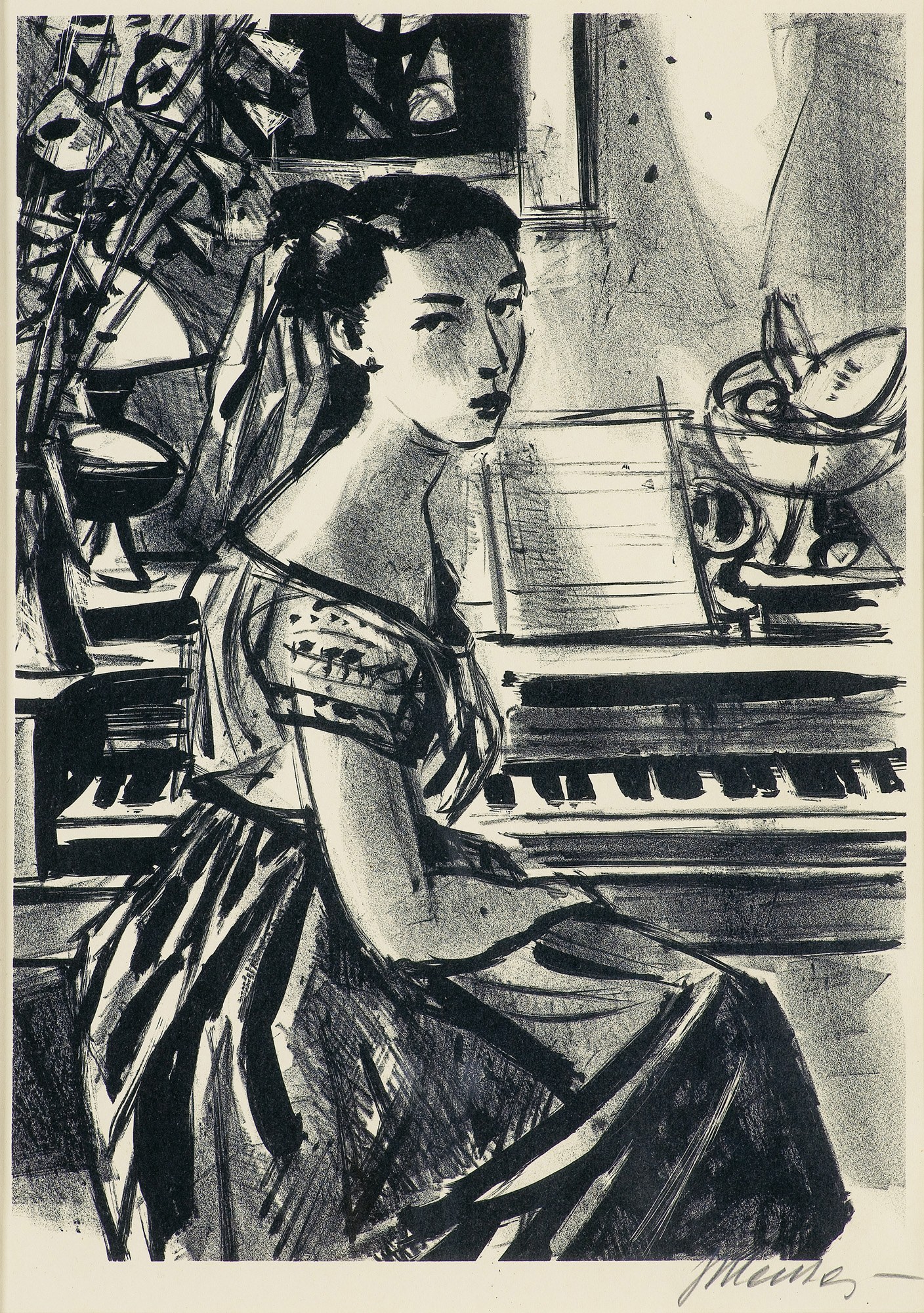
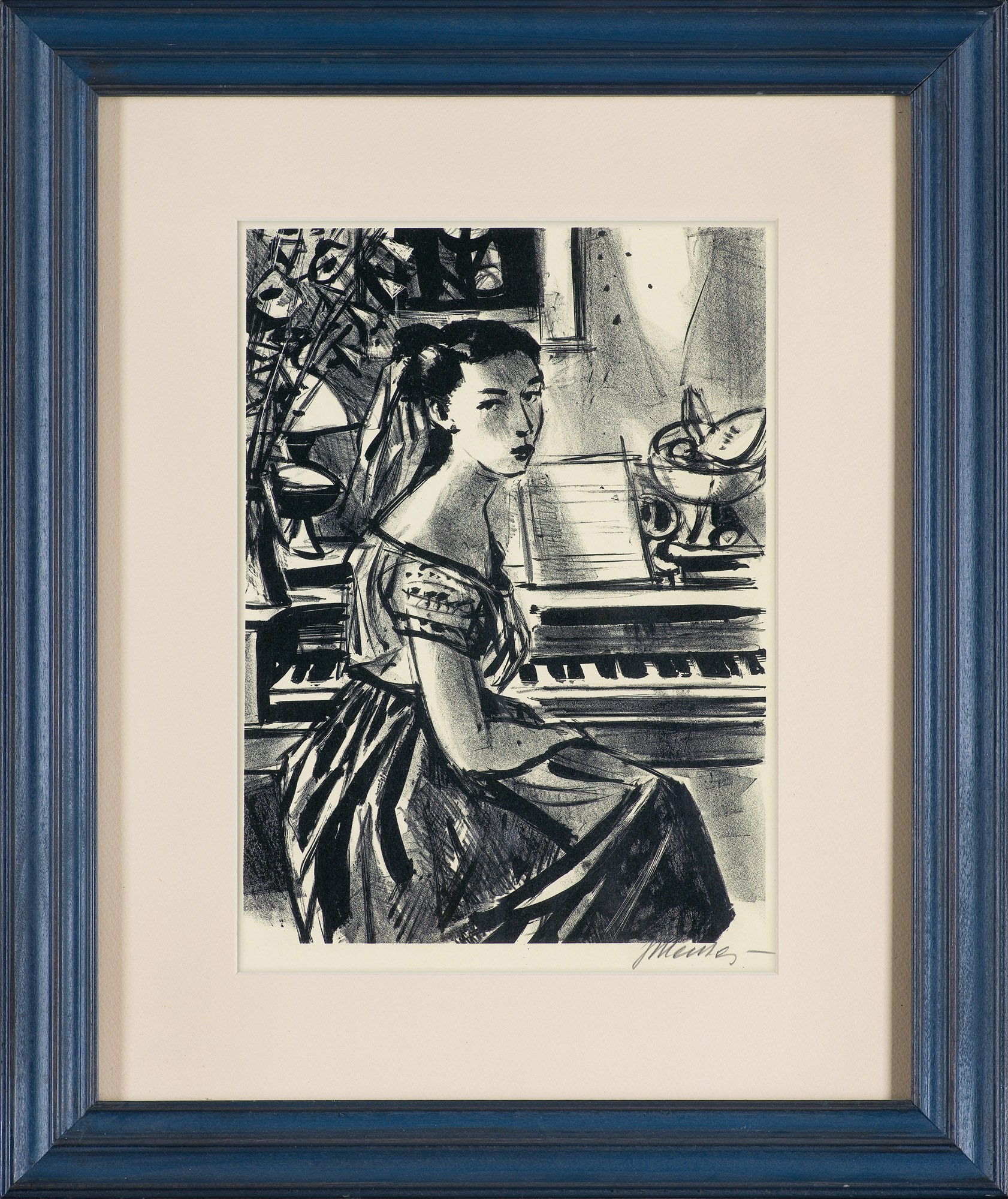
35,4 x 25,1cm - lithograph, paper
lithograph, paper, 35.4 x 25.1 cm (plate imprint)
Signed in lead under the engraving p.: SMenkes
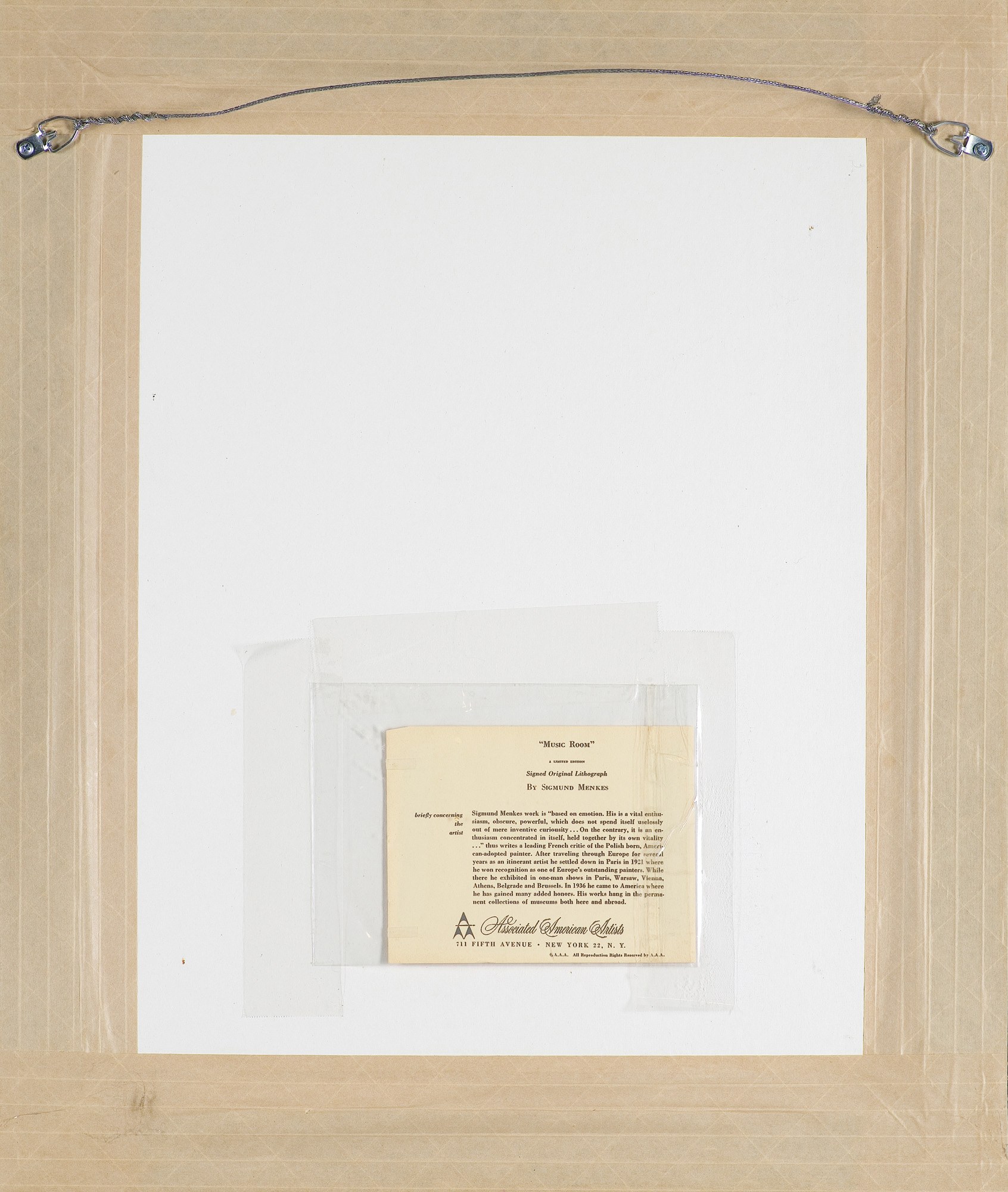
On the back, on the so-called "backing", pasted piece of paper with a description of the print (print): "MUSIC ROOM | A LIMITED EDITION | Signed Original Lithograph | by Sigmund Menkes | l.: briefly concerning the artist, p.: Sigmund Menkes work is "based on emotion.... [brief description of work] | [logo:] AAA Associated American Artists | 711 FIFTH AVENUE NEW YORK 22, N.Y.. | © A.A.A. All Reproduction Rights Reserved by A.A.A.
♣ a fee will be added to the auctioned price in addition to other costs, based on the right of the creator and his heirs to receive remuneration in accordance with the Act of February 4, 1994 - on Copyright and Related Rights (droit de suite).
Zygmunt Menkes (Lviv 1896 - Riverdale, New York 1986) began his study of painting under Kazimierz Sichulski at the Lviv School of Art Industry. Then, between 1919 and 1922, he studied under Wojciech Weiss at the Academy of Fine Arts in Krakow. In 1922 he went to Berlin, where he met Alexander Archipenko and benefited from his guidance. Since 1923, he was permanently in Paris. Associated with the École de Paris community of artists, he was friends with, among others, E. Zak and M. Chagall. He participated in the Autumn, Independent and Tuileries Salons, and exhibited in many Parisian galleries. He often traveled to Poland; he was a member of the New Generation grouping in Lviv and the Zwornik Association of Artists in Cracow, and participated in exhibitions in Lviv and Warsaw. He traveled extensively, including in 1928 he was in Berlin, and in 1935 in Spain (together with A. Nacht-Samborski). In 1935 he went to New York, where he settled permanently and where he had a solo exhibition in 1936. Over the years he worked with art galleries there and taught at the Art Students League. He painted portraits, nudes, figurative compositions, still lifes and landscapes, and after 1940 also paintings referring to the martyrdom of the Jews. His painting underwent various stylistic transformations. In the Paris period, his paintings were close to the currents of Expressionism and Fauvism. In the post-war period, he limited his colors, introduced a strong contour line, rich texture and, with time, an increasingly pronounced geometrization of forms.













Paskutiniai peržiūrėti
Prisijunkite, jei norite pamatyti pozicijų sąrašą
Mėgstami
Prisijunkite, jei norite pamatyti pozicijų sąrašą