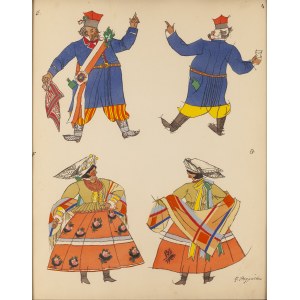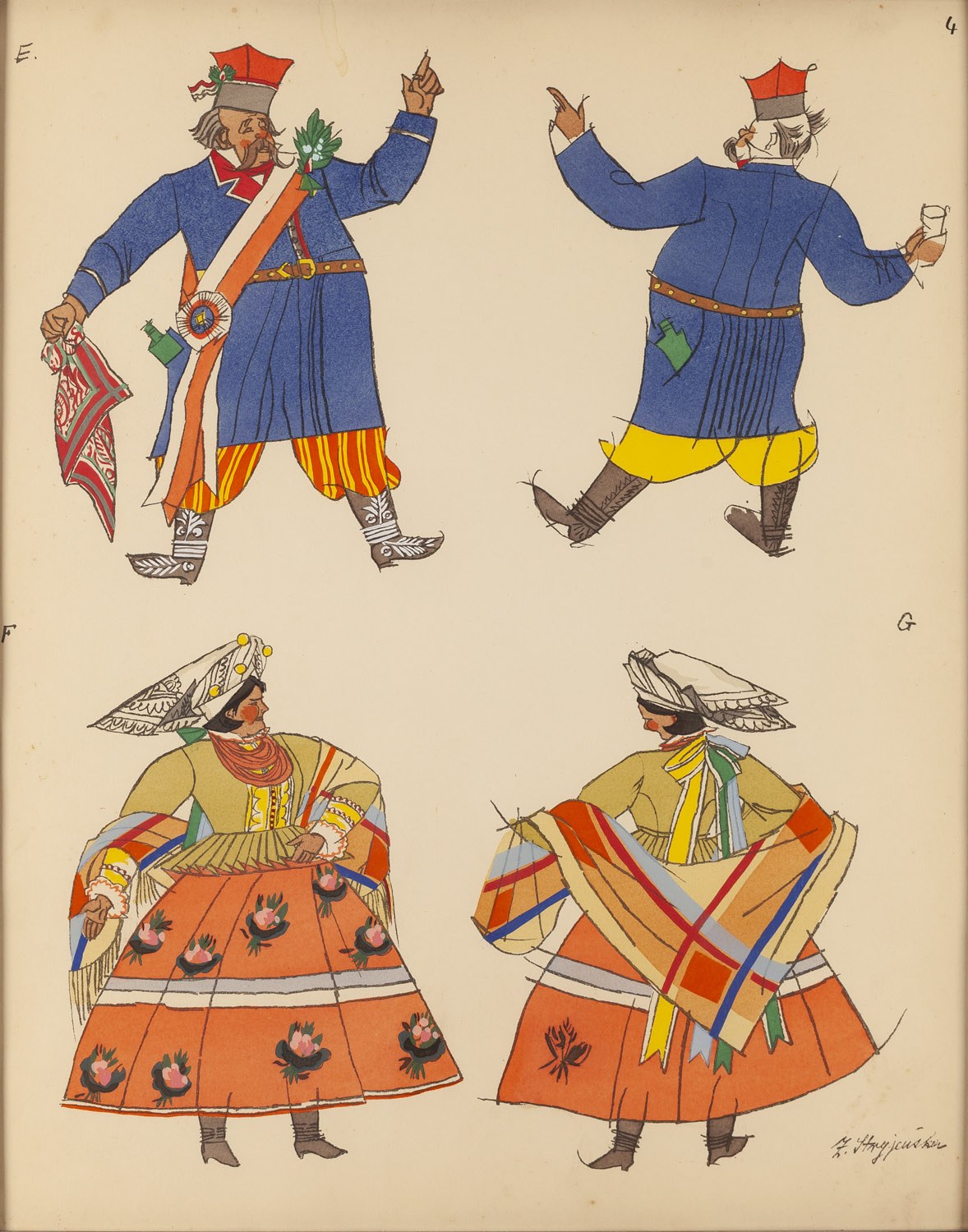
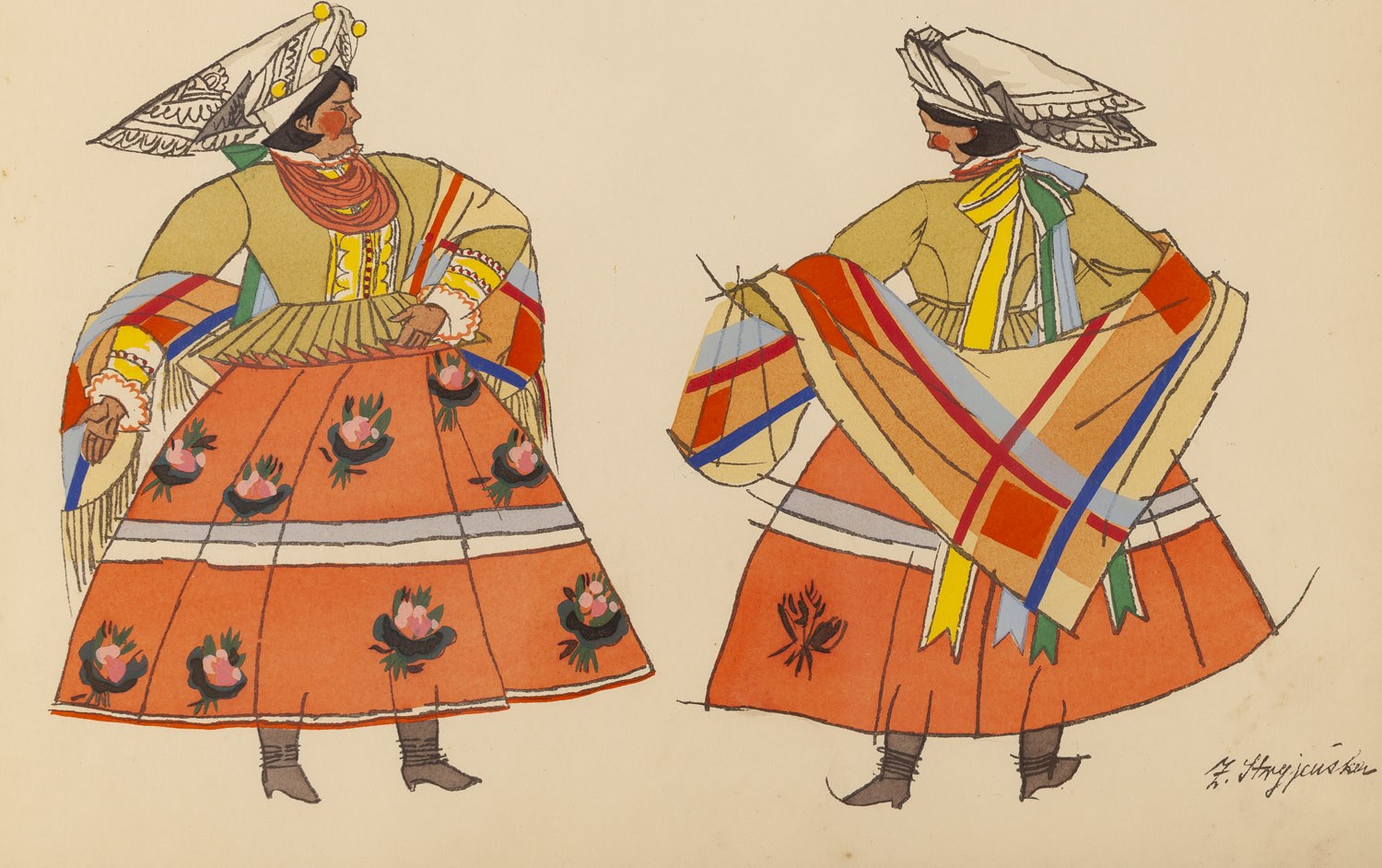
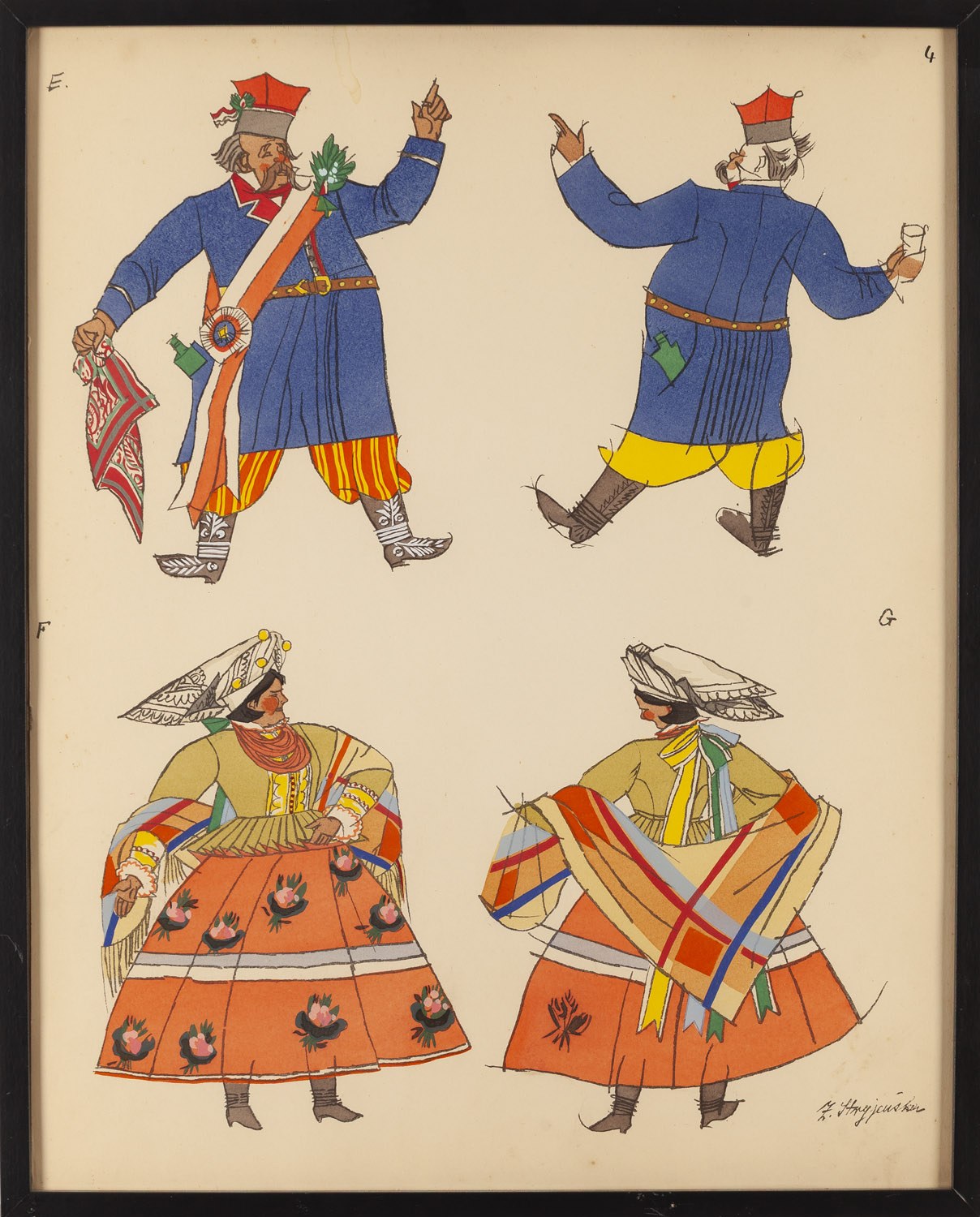
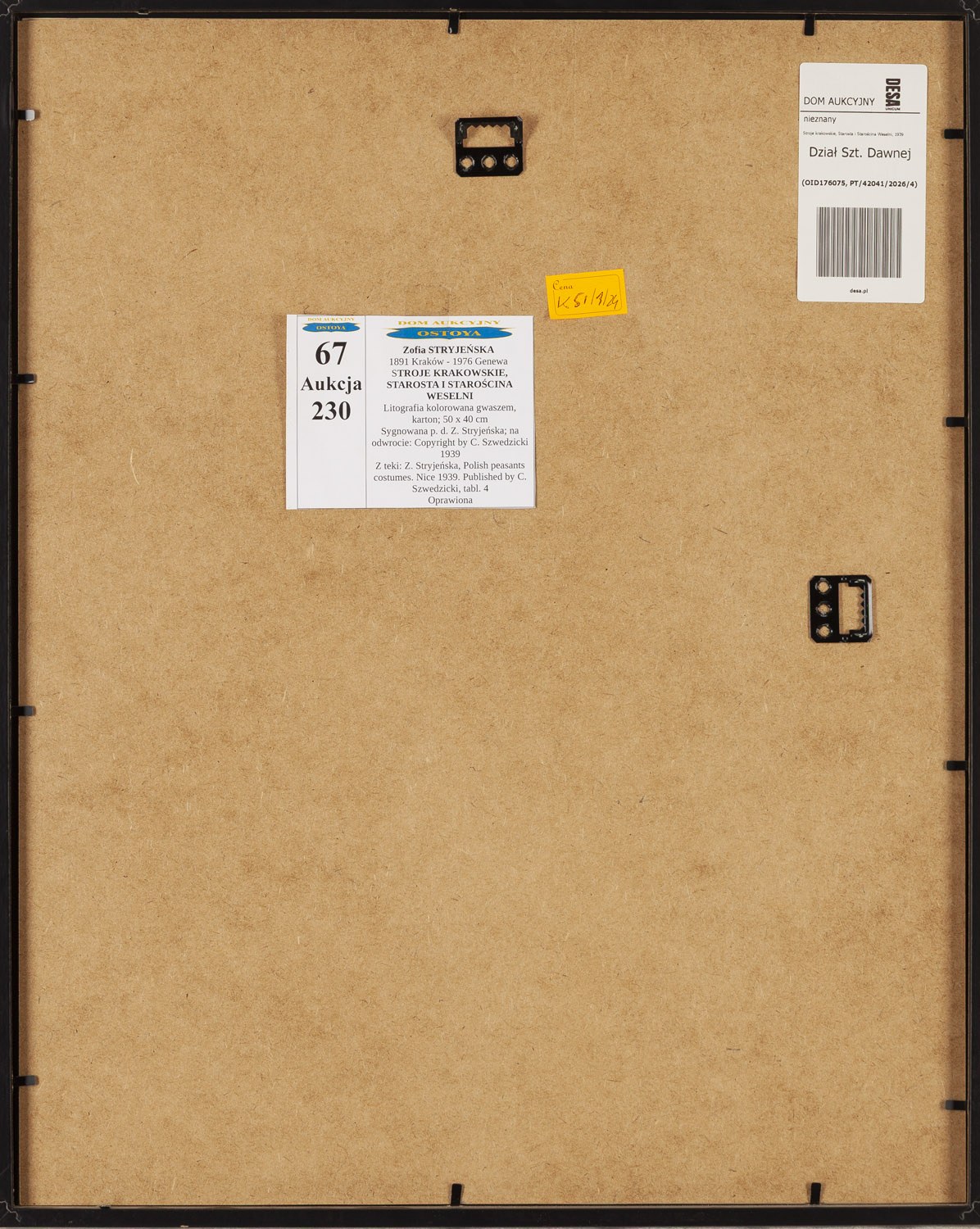
Dimensions: 50 x 40 cm
signed on the stone, lower right: 'Z. Stryjeńska'
Bibliography
Zofia Stryjeńska 1891–1976, exhibition catalog at the National Museum in Kraków, scientific editor Światosław Lenartowicz, Kraków 2008, cat. no. VI.4 (illustrated with selected plates), p. 359
Justyna Słomska, “On Folklore,” ibid., pp. 262–264
Biography
One of the most outstanding Polish artists of the first half of the 20th century. She was the wife of architect and sculptor Karol Stryjeński. In 1909, she began studying at Maria Niedzielska’s painting school for women. In 1911, disguised as a boy under the name Tadeusz Grzymała, she began studying painting in Munich (at that time, women were not admitted to the academy there). A year later, after being recognized by her classmates, she left Munich and returned to Kraków. In 1918, she joined the Kraków Workshops as a toy designer and creator of graphic portfolios. From 1921 to 1927, she lived in Zakopane, where her husband worked as the director of the School of Woodworking. After her divorce in 1927, she moved to Warsaw. In 1938, she received several commissions from the Polish Ministry of Foreign Affairs, including a kilim for Emperor Hirohito of Japan. She participated in the interior decoration of the Polish passenger ships “Batory” and “Piłsudski.” She also created frescoes at the Museum of Technology and Industry in Kraków (1917), polychrome decorations for the halls of the Senators’ Tower at Wawel (1917), and interior decorations for Fukier’s wine bar in Warsaw. As a member of the “Rytm” Association of Polish Artists (since 1922), she participated in the International Exhibition of Decorative Arts in Paris in 1925, decorating the main hall of the Polish pavilion—designed by J. Czajkowski—with six panels depicting The Ritual Year in Poland. Solo exhibitions of Stryjeńska’s work were held, among other places, at the Society for the Encouragement of Fine Arts in Warsaw (1919, 1926), the Galerie Crillon in Paris (1921), the New Art Salon in London (1927), the Museum of Artistic Industry in Lviv (1932), and the Institute for the Promotion of Art in Warsaw (1935). Abroad, the artist exhibited her works at the Venice Biennale (1920, 1930, 1932) and at exhibitions organized between 1927 and 1939 by the Society for the Promotion of Polish Art Abroad. In 1929, she received a grand gold medal for her book illustrations at the General National Exhibition in Poznań, and in 1932, she won a gold medal at the 18th Venice Biennale. During the height of Stryjeńska’s popularity, her works were distributed in the form of portfolios, albums, and postcards by Jakub Mortkowicz’s publishing house, which released, among other titles, *Polish Dances*, *Passover. A Song of the Lord’s Resurrection,” “The Piasts,” and “Polish Rites.”