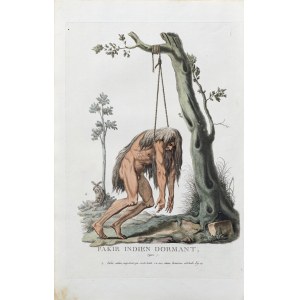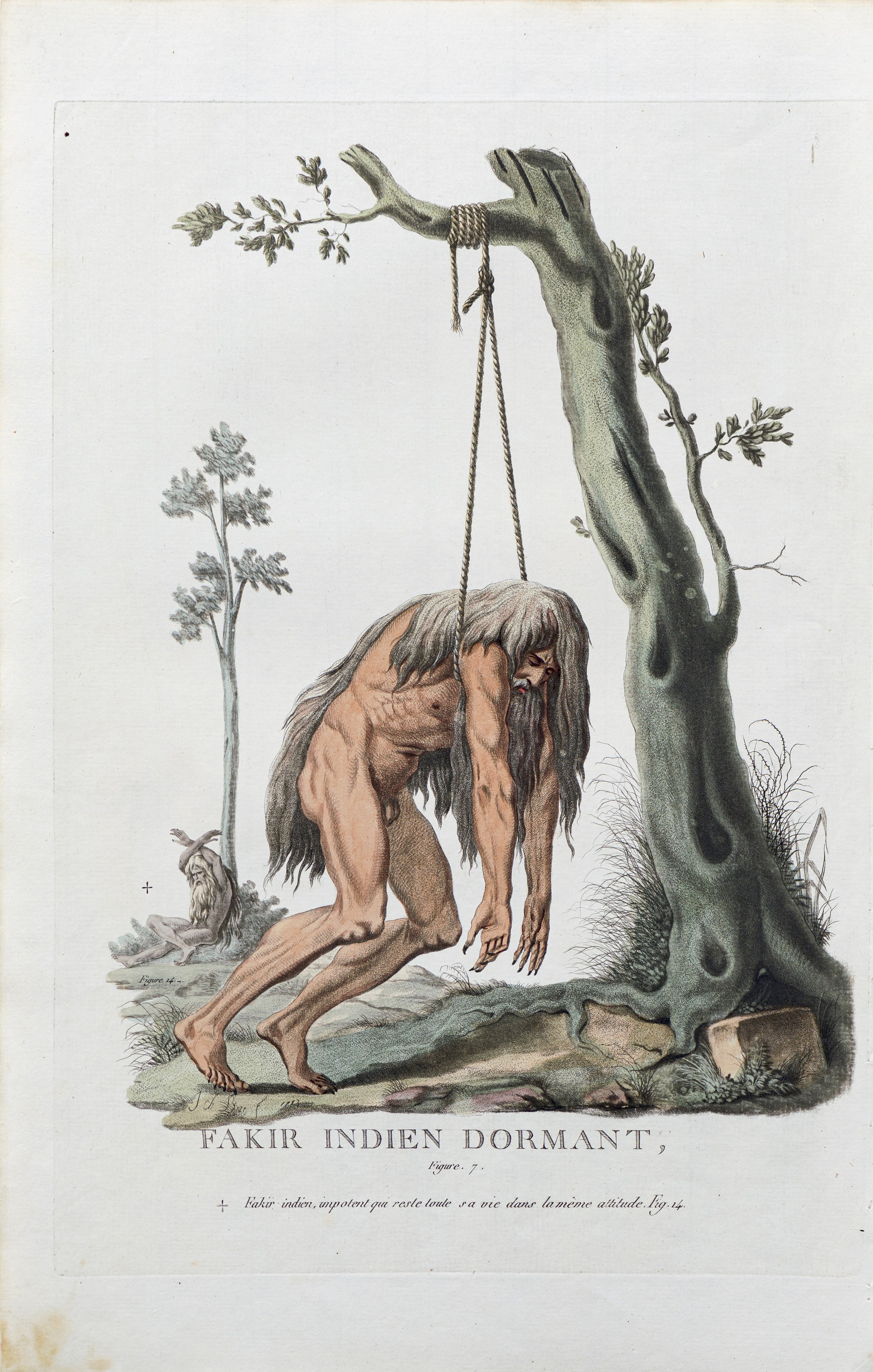
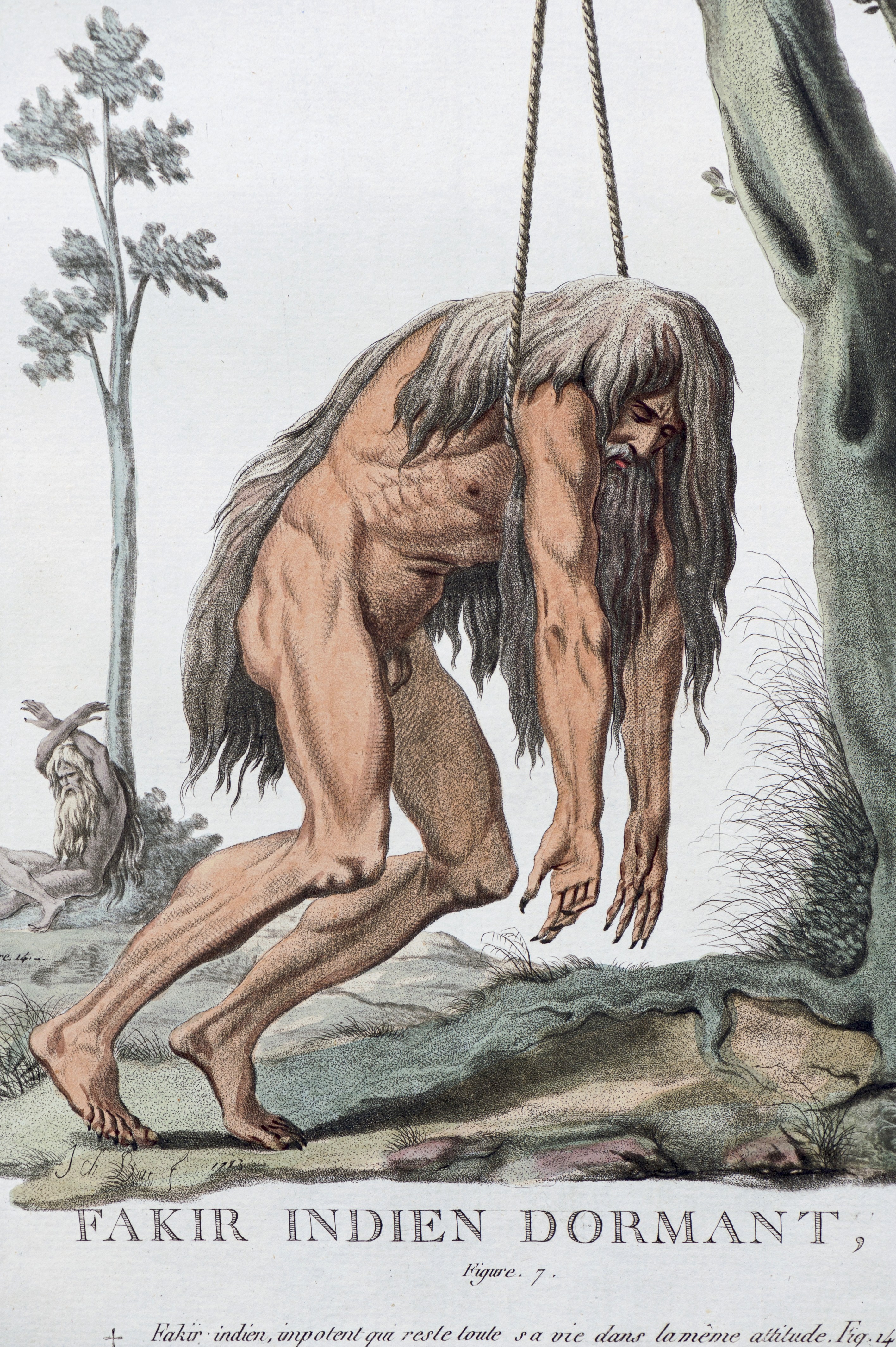
aquatint, colored by hand, handmade paper with watermark (coat of arms with lily), sheet size 43x27 cm, signed at bottom: J. CH. BAR f. 1783
An analogous aquatint is in the collection of the Louvre in Paris (Département des Arts graphiques). It is a beautifully colored engraving with a depiction of a sleeping naked Indian fakir, who, as we read in the description in the lower margin, remains in such a position throughout his life. The work comes from the first edition of a six-volume publication, "A Collection of All the Costumes of Religious and Military Orders with a Historical and Chronological Summary," published by J.Ch. Bar in Paris in 1778-1791.
Little is known about Jacques Bar, except that he was a printmaker, living and working in Paris until the French Revolution. He then left Paris and changed his name to Jacques Charles Rabelli-Bar, and was the author of the aforementioned monumental six-volume publication, which he published independently. The work consisted of 610 engravings, executed in copperplate and aquatint techniques, hand-colored by the author. For depictions of fakirs, the author placed emphasis on "exotic" religious practices. Hindu ascetics, usually called yogis and fakirs in India, aroused the interest of Europeans in the 17th and 18th centuries. Widely regarded as holy men possessing supernatural or miraculous powers, they were treated with awe and suspicion. Their unearthly, naked appearance and incredible practices of self-denial to obtain supernatural powers or merit from the gods meant that Europeans often interpreted these activities as fanaticism or compared them to Christian penitential practices to atone for sins.