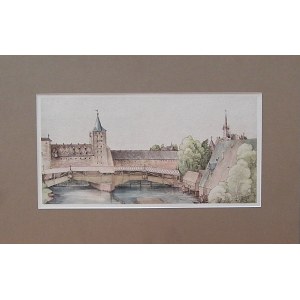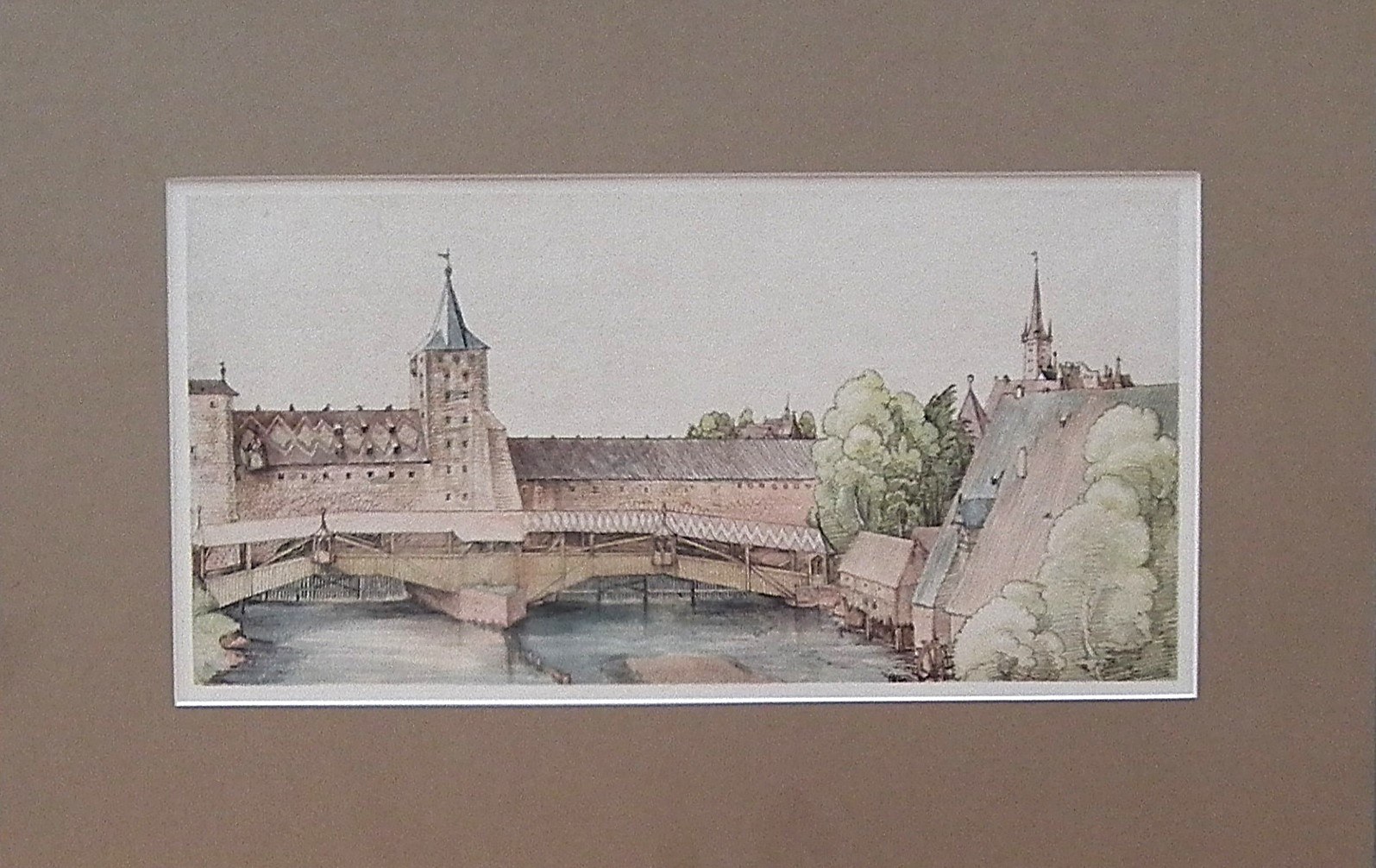
lithograph, paper, 17 x 33 cm composition in passe - partout light, 30 x 46 cm in passe-partout frame, made in the 19th century by the museum outhouse "Albertina Facsymiles in Vienna; a unique print from the only unique edition of Durer's prints published at the end of the 19th century.
(Albertina is one ofthe most important art museums in Austria, holding the largest and most valuable collection of drawings and prints by Albrecht Dürer).
Albrecht Dürer German artist: painter, printmaker and draughtsman, aswell asart theoristconsideredthe most outstandingartistof the GermanRenaissance.
"The Castle of Nuremberg" isan importantexample ofDürer'swork,whichskillfully combinedtechnique withsensitivity to thebeauty of nature and architecture.Theyare atributeto the citytheartistknew and lovedso well.
Dürer's watercolor shows the architecture of Innsbruck Castle in theLate Gothicstylethat dominated the cityscape of the time. The artist introduced a new level of realism to Northern European art. His works, including the watercolor in question, were characterized byattentiontoevery detail, which was extremely innovative compared toearlierdepictionsoflandscapesor architecture, which were often more stylized or symbolic and the use of linear perspective in such a precise manner wassomething uniqueat the time. The work isalso significant because of the technique used. Dürer executed this work in watercolor, which allowed him to delicately render light, shadow and subtle colors. In Dürer's time, the watercolor technique was not as widespread and developed as oil on canvas. Dürer experimented with watercolor, using itscapabilities to precisely render nuances of light and shadow and subtle colortransitions. This experimentation withdifferent techniquescanalsobeconsidered innovative.
This work isan important element inDürer'soeuvre; the precision of the architectural details, thesubtletyofhisuse of color and light,andhisattentionto realism and perspective attest to his mastery. It isalso a valuable historical record, depicting the appearance of thecourtyardof the imperial residence, which has changed over the centuries.