A small silver commemorative medal, known as a Siegespfennig, struck to commemorate the Allied victory at Orthez on 27 February 1814. Designed by Daniel Friedrich Loos, it belongs to a series of miniature medals celebrating victories over Napoleon’s forces.
The battle was fought near the River Gave de Pau in south-western France during the closing stages of the Peninsular War. The combined British, Portuguese and Spanish army was commanded by Arthur Wellesley, Marquess of Wellington, while the French forces were led by Marshal Jean-de-Dieu Soult.
The French occupied strong defensive positions on the heights near Orthez and initially repelled several Allied assaults. Wellington subsequently altered his plan, directing his main forces against the French centre and right flank, while General Rowland Hill’s troops threatened the enemy’s line of retreat. Soult was forced to withdraw, and the initially orderly movement gradually descended into a disorderly retreat.
The victory opened the way for Wellington’s army to advance further into southern France and compelled Soult to retreat towards Toulouse. It was one of the final major engagements of the Peninsular War.
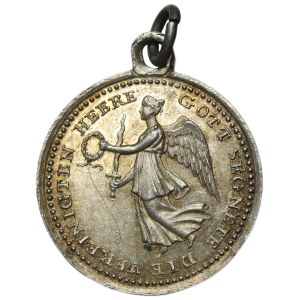
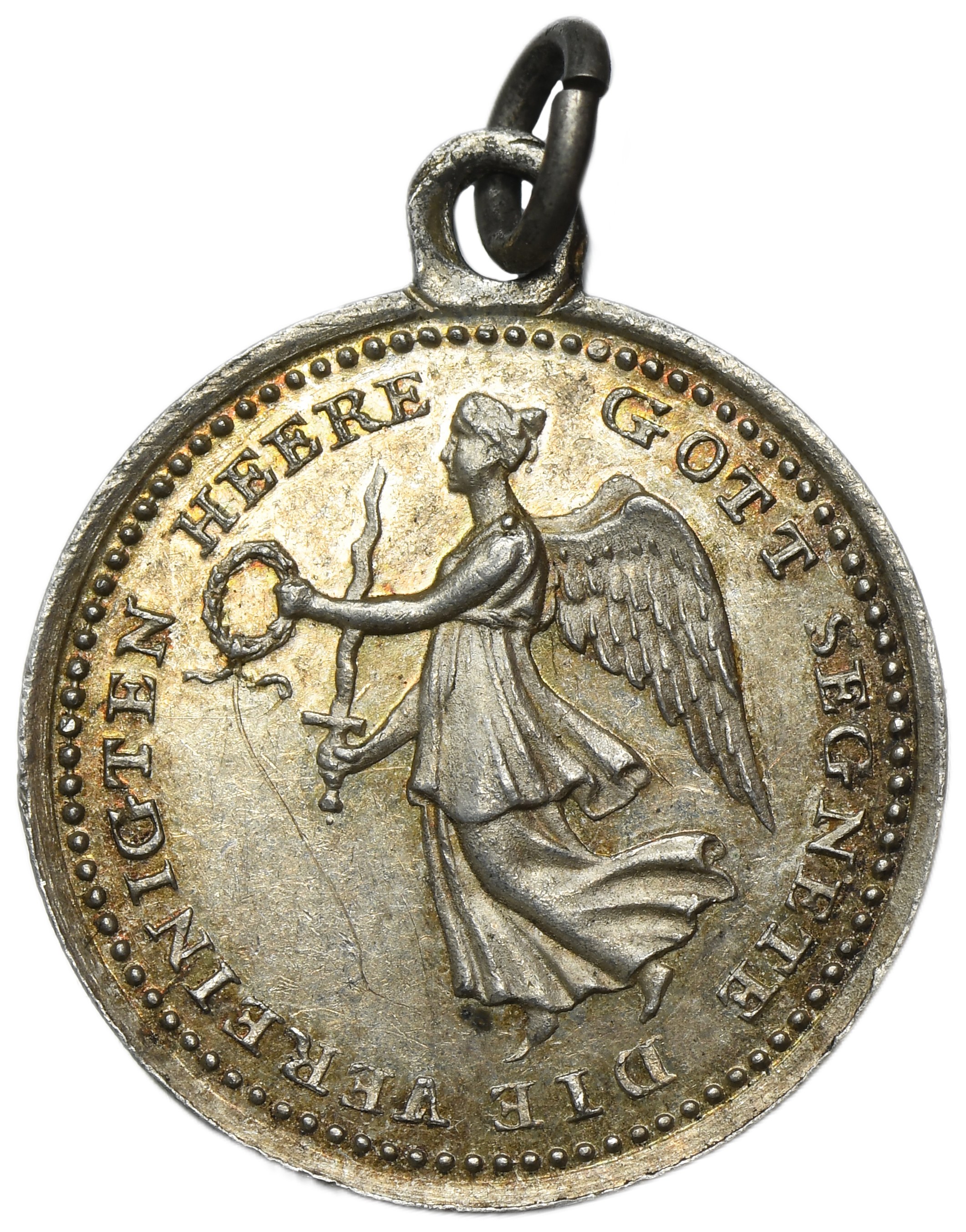
The obverse depicts the winged goddess Victory holding a flaming sword and a laurel wreath. The legend GOTT SEGNETE DIE VEREINIGTEN HEERE translates as “God blessed the united armies.”
Fitted with a suspension loop and ring.
An interesting memento of one of Wellington’s most important victories during the final phase of the campaign against Napoleon’s army in southern France.
Obverse: winged Victory holding a flaming sword and a laurel wreath
GOTT SEGNETE DIE VEREINIGTEN HEERE
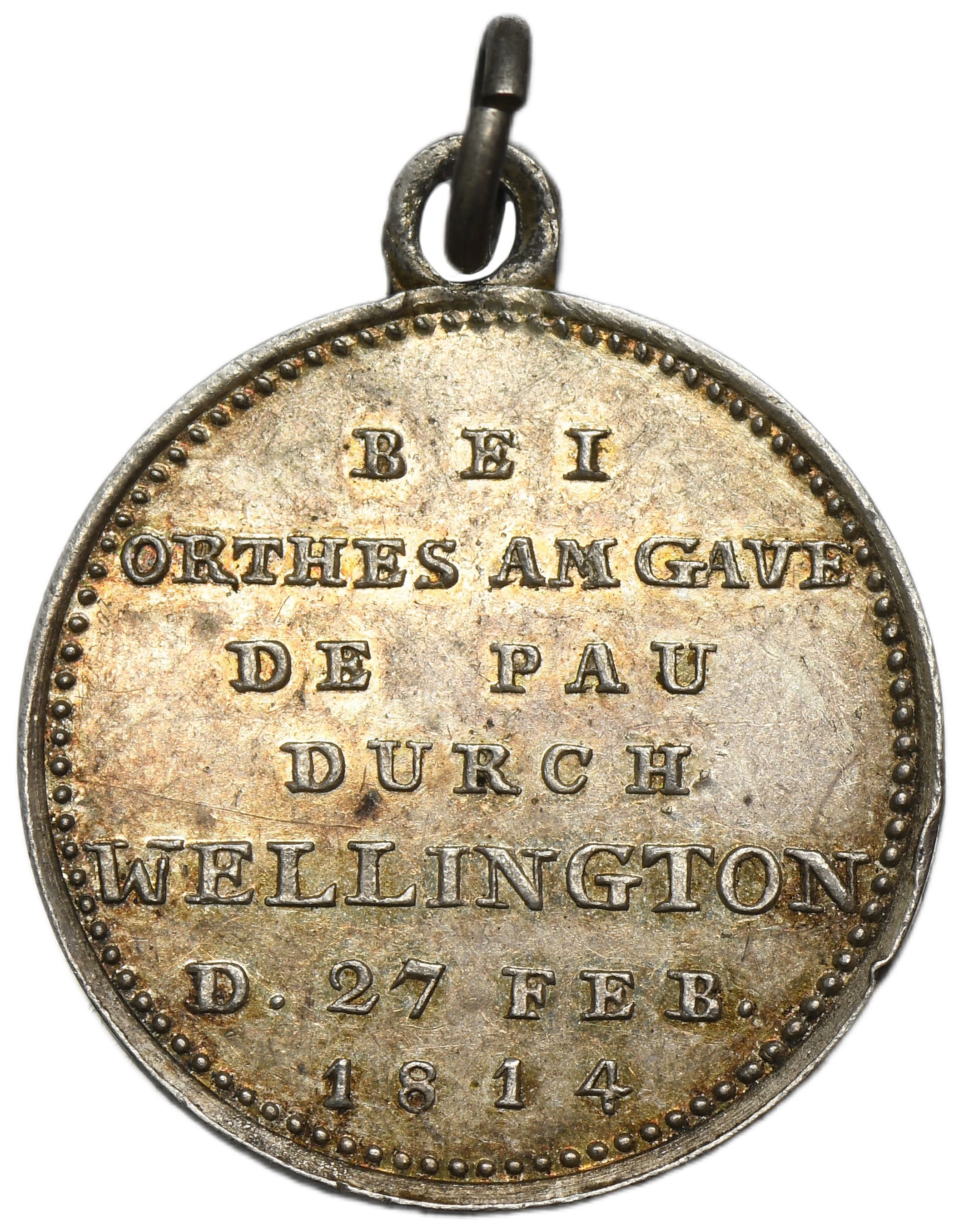
Reverse: seven-line inscription
BEI / ORTHES AN GAVE / DE PAU / DURCH / WELLINGTON / D. 27 FEB. / 1814
Silver, diameter 15 mm, weight 1.64 g