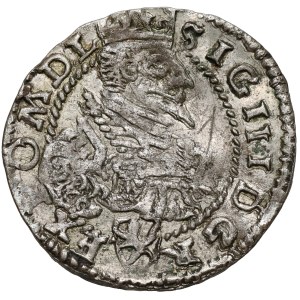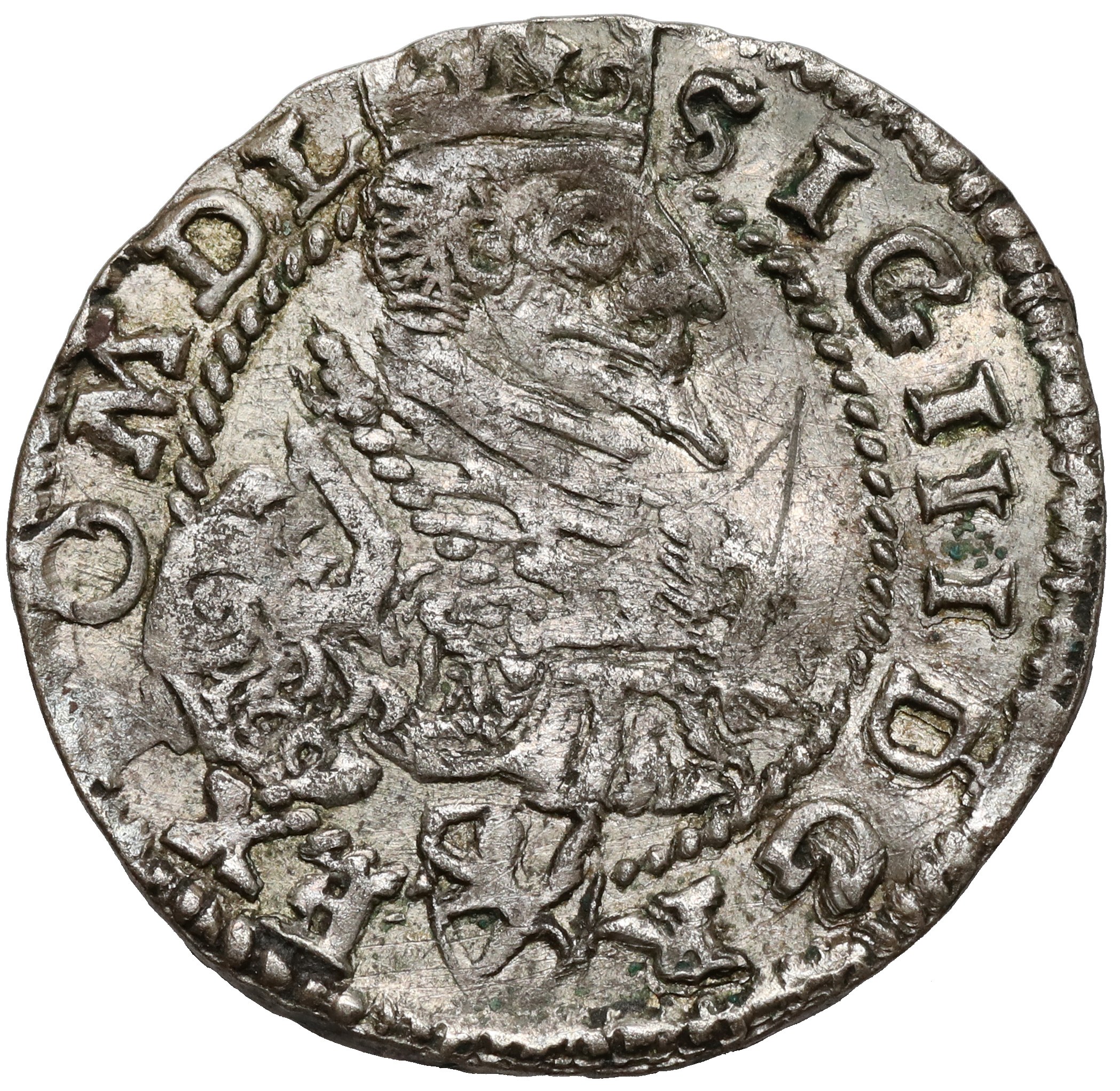
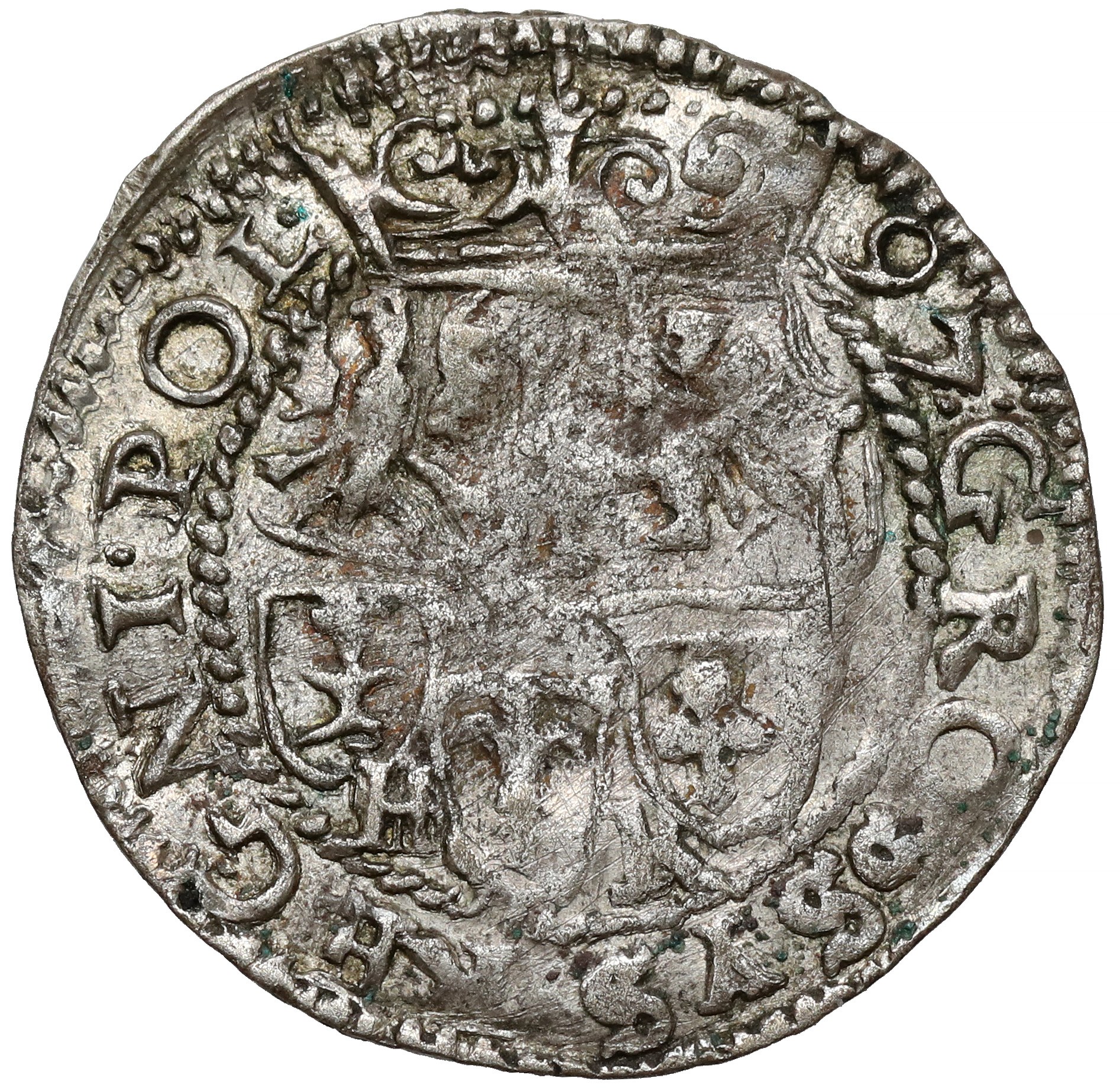
Sigismund III Vasa was a king who not only left behind a wealth of coin types and varieties, but also devalued many of the denominations. One such denomination was the grosz, which, toward the end of his reign, was minted in accordance with three reforms that successively reduced its silver content. To such an extent that the early groszy, minted up to 1599, were about twice as high in silver content as those from the end of his reign. They were larger, heavier, and minted in higher-quality silver, as I discuss in a lecture on our YouTube channel.
A prime example of this are the Wschowa groszy, which—though struck with more than one set of dies, as evidenced by the variety of their variants—are very rare today. Over the years, in accordance with one of Copernicus’s laws, they were driven out of circulation by inferior currency. They were seized and melted down.
Currently, Wschowa is the rarest of the mints that struck Sigismund III’s grosz coins.
For many years, its coins were mistakenly identified as a Poznań issue (similar to the 1598 grosz with a half-length portrait). It was only through recent research by Tomasz Poniewierka and Ryszard Kozłowski that their iconographic similarities to the issues of the town of Wschowa (including the szeląg coins) were demonstrated.
The grosz coins from Wschowa are exceptionally interesting to collectors. It is evident that the town was searching for its own iconography, changing the arrangement of the elements on the reverse almost with every die. This grosz is a variant not recorded by Edmund Kopicki, featuring Herman Rudiger’s initials on either side of the Snopek coat of arms, the coats of arms of Poland and Lithuania in simplified shields, and an abbreviated date at the beginning of the reverse legend. It was first described in Jarosław Dutkowski’s catalog, who assigned it a rarity rating of R8, illustrating it with this very piece!
In the case of Wschowa, however, the challenge lies in simply acquiring a single grosz, rather than building sets of variants. This is confirmed by our archive, where only 2 groszy were recorded (one sold in 2020 for 15,525 zł and another in 2024 for 17,400 zł). At the same time, there were over 10 examples of the Lublin groszy, which are so highly valued today!
Additionally, this is a very attractive coin for this issue. It has slight scratches in front of the king’s portrait and typical under-strikes, but it stands out for its lovely, lustrous surface, whose natural appearance is accentuated by an aquamarine patina.
The coin comes from an excellent contemporary collection at Zbiór.com and is featured on their website.
Ex. Frimynt 10.1992