


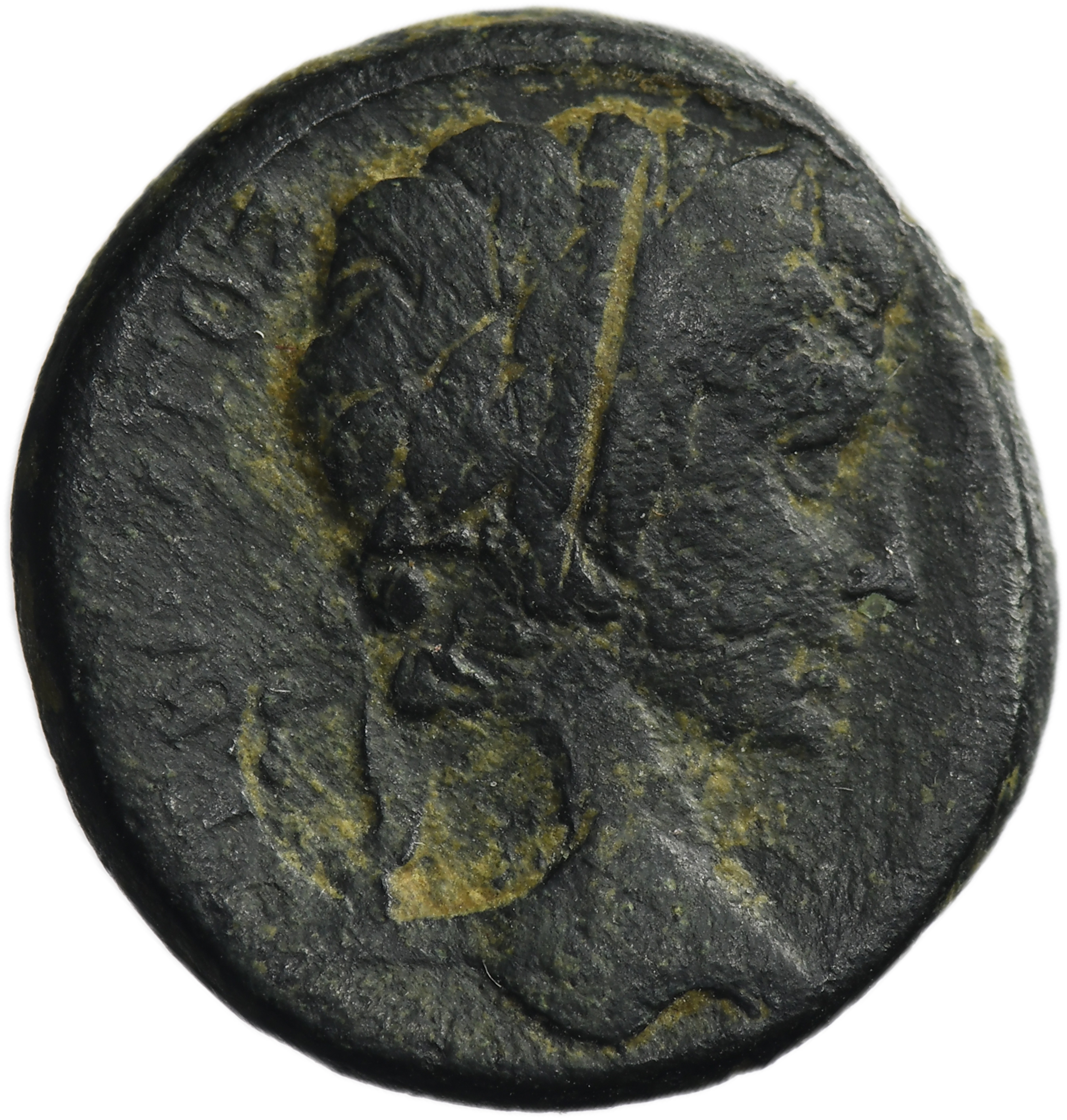
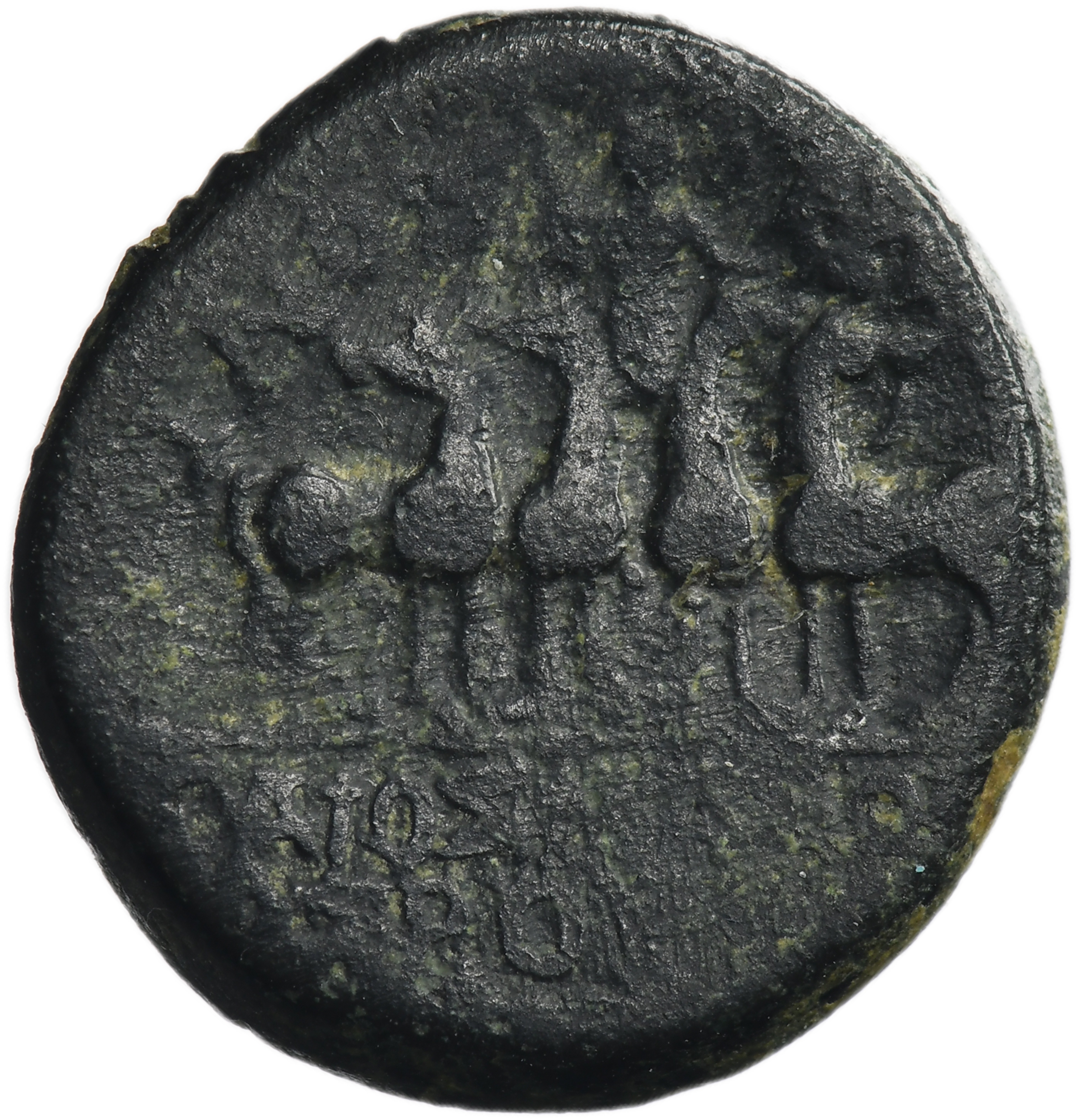


Provincial bronze coin of Augustus (27 BC – AD 14), struck at Apamea in Phrygia, belonging to municipal issues that combine Greek tradition with Roman imperial ideology. Coins of this type provide important evidence of dynastic propaganda in the early Empire.
The obverse features a right-facing head of the emperor wearing a laurel wreath, with the legend ΣΕΒΑΣΤΟΣ (“Augustus”), emphasizing his supreme authority.
The reverse depicts Gaius Caesar standing facing in a quadriga, being crowned by Nike, with the legend ΓΑΙΟΣ ΚΑΙΣΑΡ ΓΑΙΟΣ ΜΑΣΩΝΙΟΣ ΡΟΥΦΟΣ ΑΠΑΜΕΩΝ. This scene refers to the prestige and success of Augustus’ adopted grandson and designated heir.
The quadriga and coronation motif symbolizes triumph, victory, and divine favor, forming part of a broader dynastic propaganda program aimed at reinforcing the position of the successor.
The inclusion of the magistrate’s name (Gaius Mazonios Rufus) reflects local civic minting traditions, where officials were responsible for issuing coinage.
Roman Provincial
Phrygia, Augustus (27 BC - 14 AD), AE
Obverse: laureate head right
ΣΕΒΑΣΤΟΣ
Reverse: Gaius Caesar in facing quadriga, holding a staff and crowned by a small Nike
ΓΑΙΟΣ ΚΑΙΣΑΡ ΓΑΙΟΣ ΜΑΣΩΝΙΟΣ ΡΟΥΦΟΣ ΑΠΑΜΕΩΝ
Diameter 18 mm, weight 5.3 g











