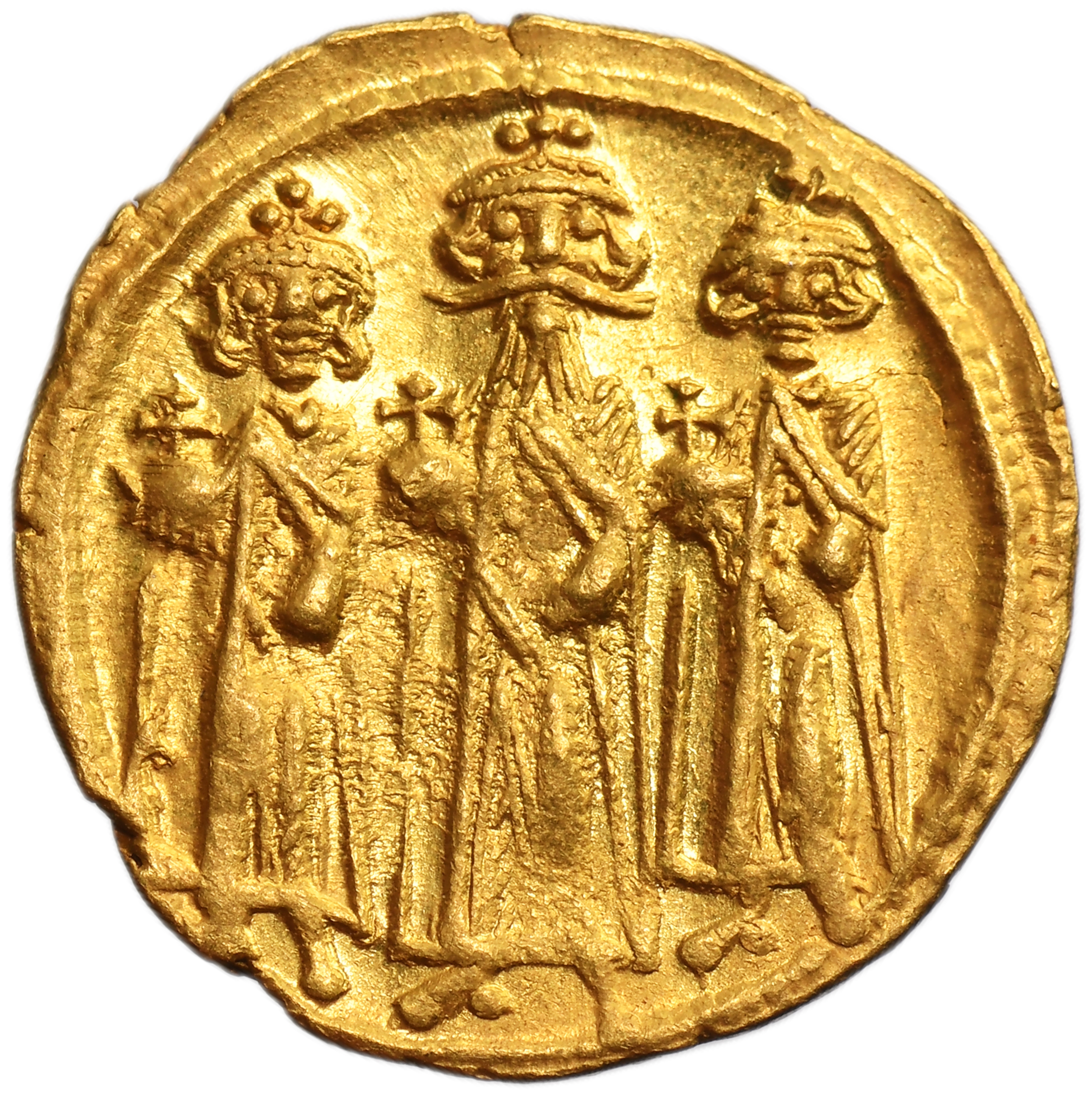
Gold solidus of Heraclius (AD 610–641), struck at the mint of Constantinople between AD 639 and 641, depicting his co-ruling sons Constantine III and Heraclonas. Issues of this type belong to the final years of Heraclius’ reign and represent a clear example of dynastic propaganda.
The obverse shows three standing figures facing—Heraclius in the center, distinguished by his long beard, flanked by his sons. All hold a globus cruciger, symbolizing dominion over the world granted by divine authority. The composition emphasizes joint rule and dynastic continuity.
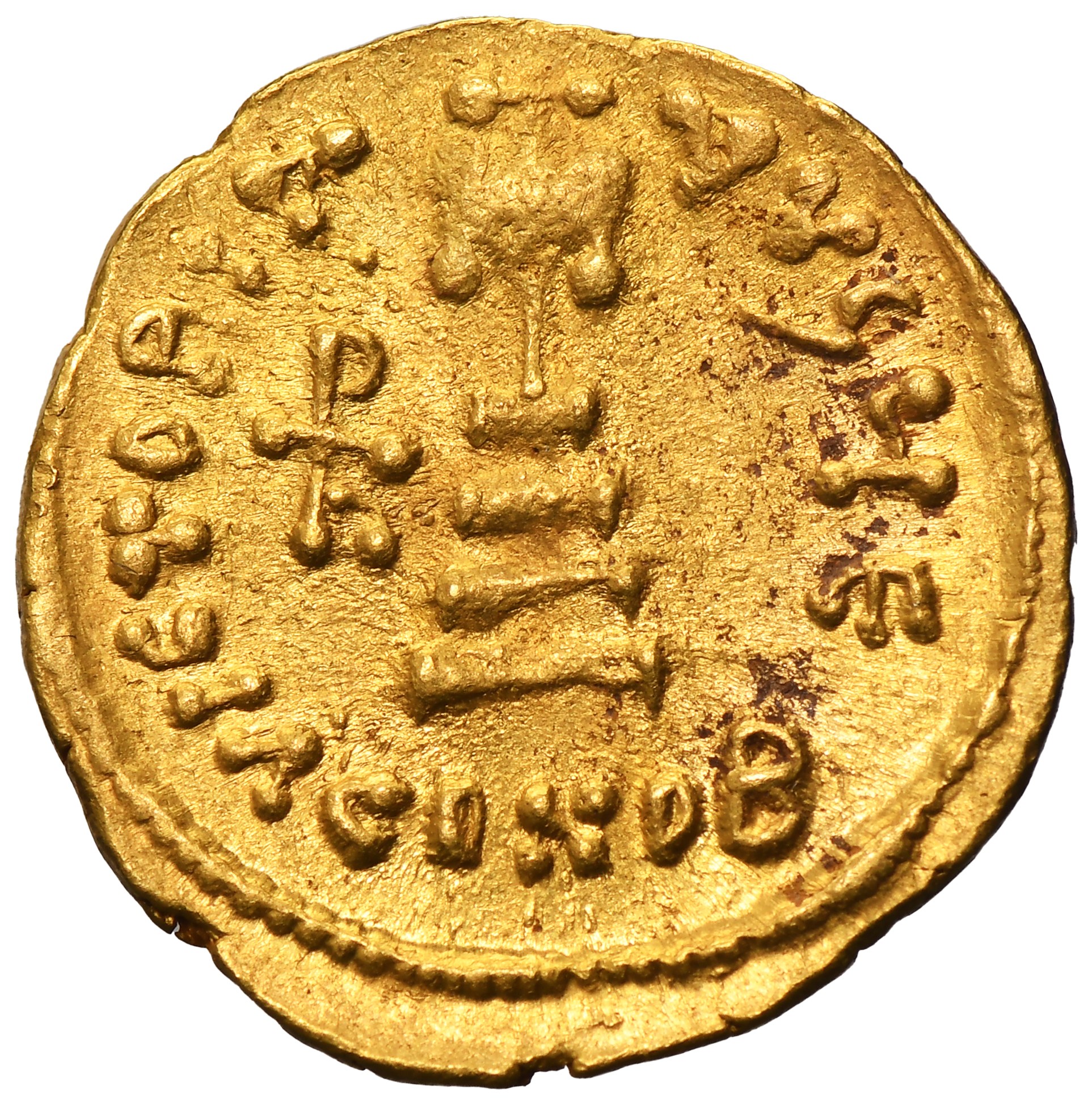
The reverse features a cross on three steps, one of the central symbols of Christian imperial ideology, highlighting the divine foundation of power. A monogram appears in the left field, while the exergue CONOB indicates the mint of Constantinople and the high purity of the gold (obryzum).
The legend VICTORIA AVGЧE refers to the victory of the emperors, a standard element of Byzantine propaganda linking military success with divine favor.
Plenty of mint bloom.
Byzantine Empire
Heraclius, Heraclius Constantine and Heroclonas (610-641), Solidus 639-641, Constantinople mint
Obverse: three emperors standing facing, each wearing crown and holding globe cruciger on the right hand, Heraclius, in the centre, with long beard
Reverse: Cross potent on three steps, monogram in left field, CONOB in exergue
VICTORIA AVGЧE
Gold, diameter 19 mm, weight 4.47 g