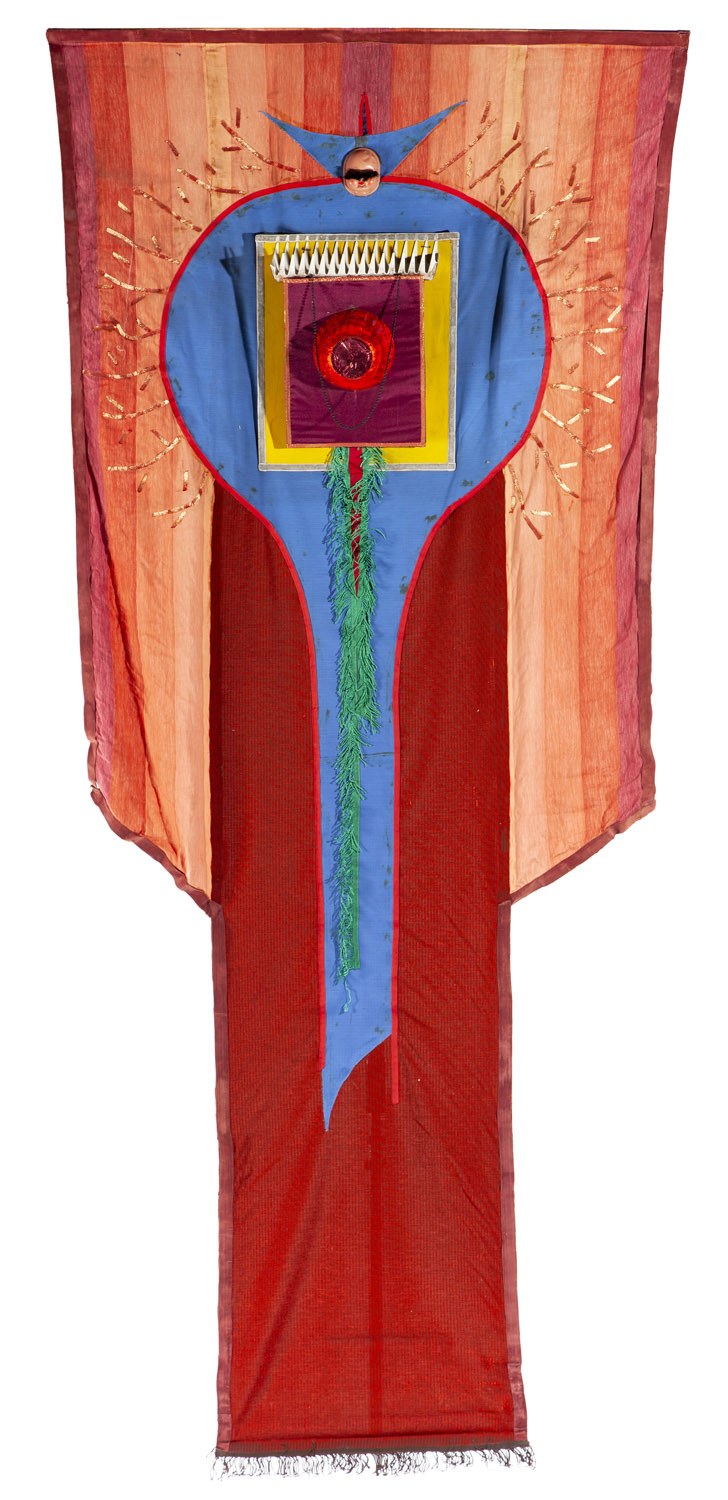
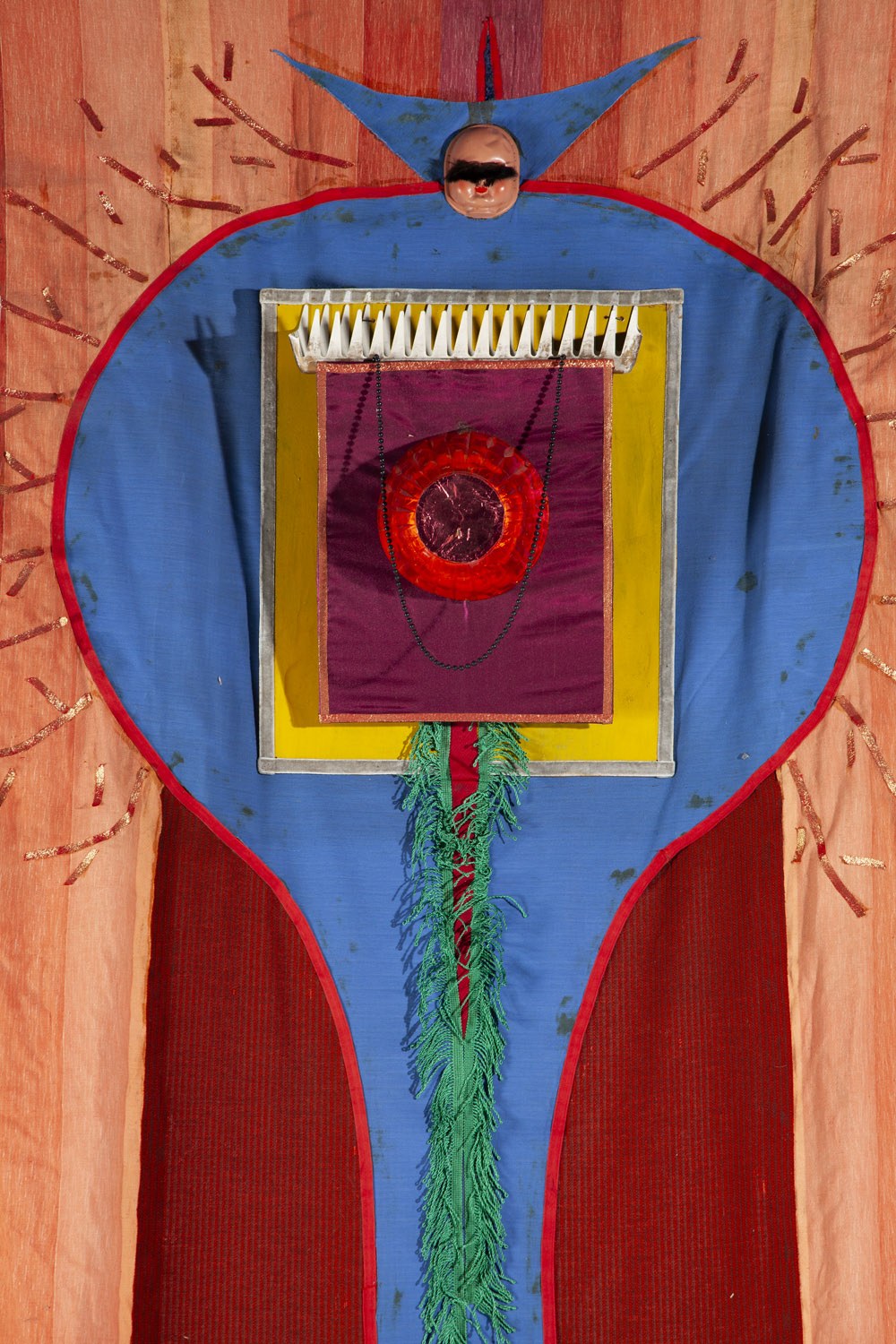
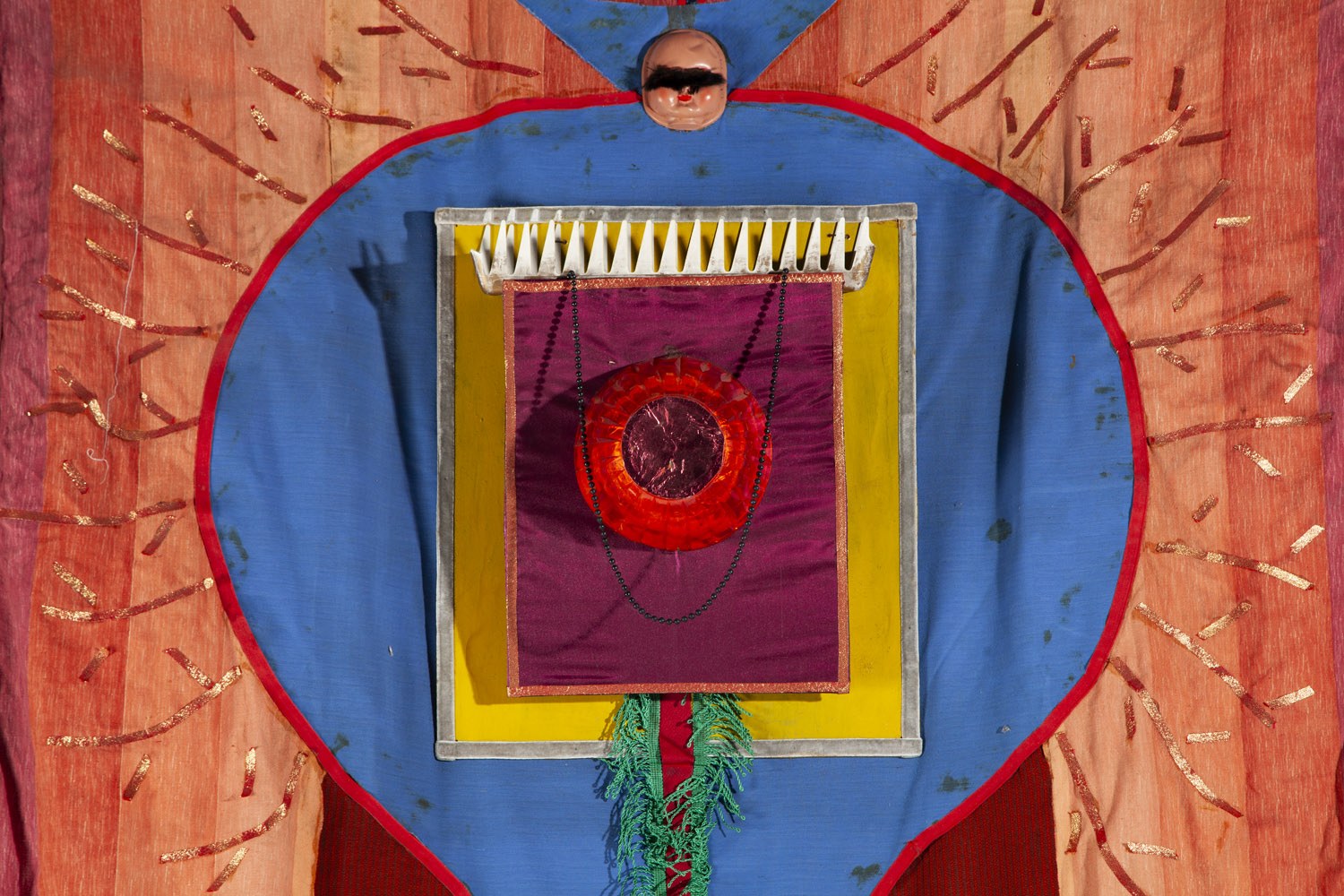
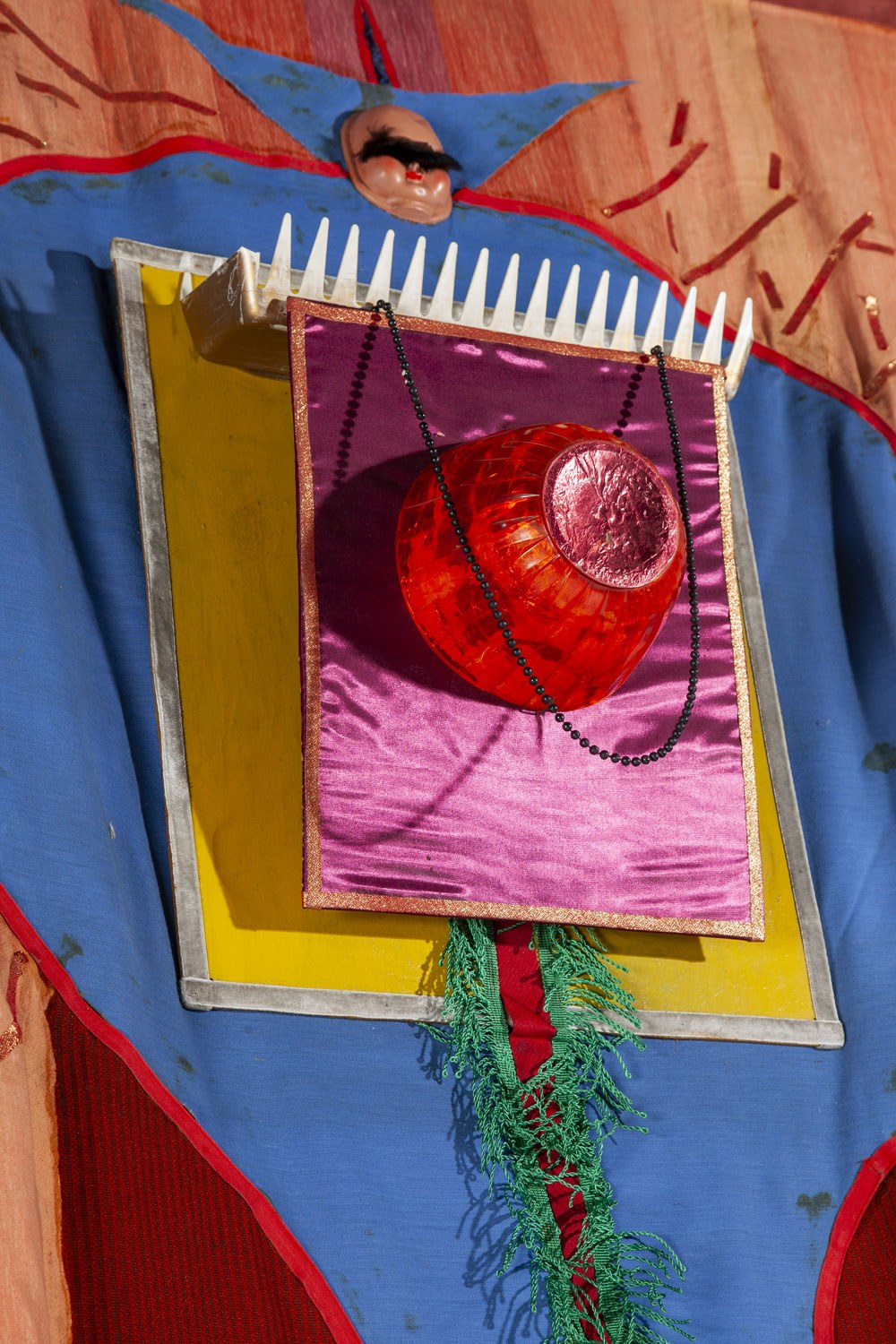
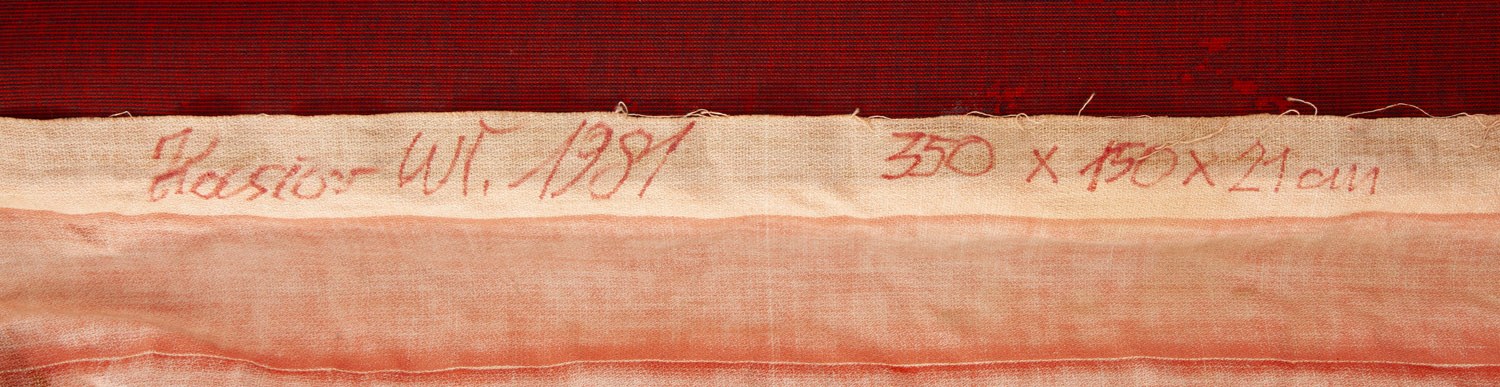
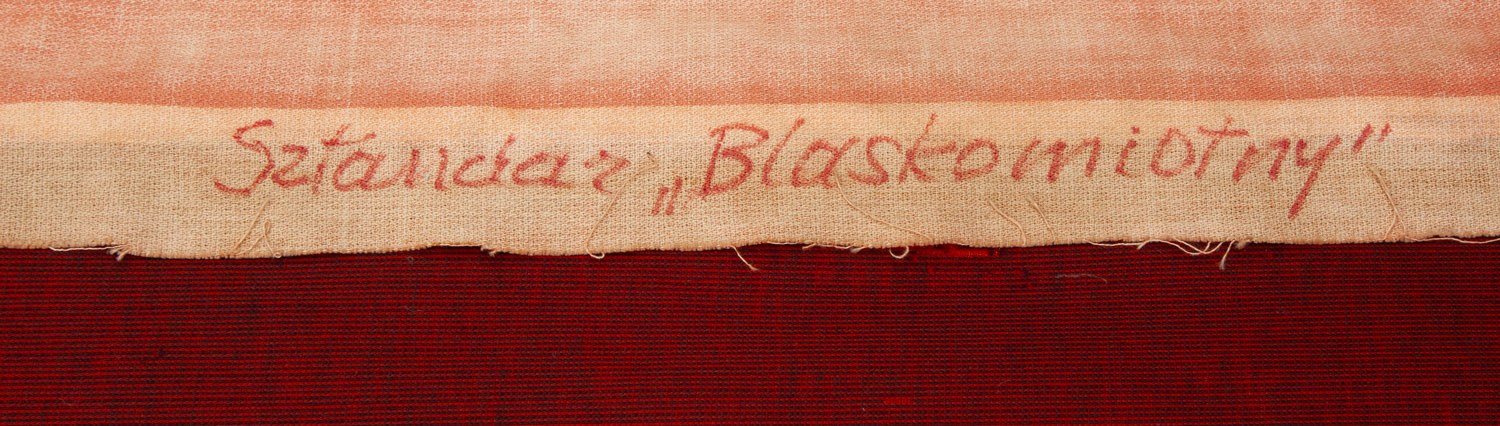
Dimensions: 350 x 150 x 21 cm
Signed, dated, and inscribed on the reverse side of the fabric: 'Wł. Hasior 1981 Sztandar Blaskomiotny'
Bibliography
Hasior, dir. Jerzy Passendorfer, WDR, Poltel Television Film Studio, 1982
Władysław Hasior Gallery, ed. Stefan Maciejewski, Zakopane 1984, unpaginated (photo from the banner parade)
“Sztuka,” no. 7, 1998, p. 10 (photo from the banner procession)
Magdalena Figzał-Janikowska, Władysław Hasior’s Visual Performances, Warsaw 2024, p. 162 (ill. no. 37, photo from the banner procession)
They Sang, Ate, and Mowed: An Interview with Julita Dembowska by Sonia Jaszczyńska, “Dwutygodnik,” no. 406, 2025 (photo from the banner procession), online: https://www.dwutygodnik.com/artykul/11762-spiewali-jedli-i-kosili.html [accessed: July 15, 2026]
Biography
He studied at the Faculty of Sculpture at the Academy of Fine Arts in Warsaw. From 1957 to 1968, he worked as a teacher at the Kenar School in Zakopane. From 1970 to 1971, he worked as a set designer at the Polish Theater in Wrocław and as a professor at the State Higher School of Fine Arts there. He is known primarily as the creator of monumental sculptures and the ephemeral performances associated with their creation—*The Sun Chariot*, *Flaming Birds*, *Fiery Birds*, and *Burning Banners*. In parallel with the “Banners” and his monumental works, he created intimate sculptures. In the 1980s and 1990s, he created “Portraits” using the techniques of assemblage and collage. He had been creating assemblages since 1957. He represented Poland at the São Paulo Biennial in 1965 and 1971, the Venice Biennale in 1970, and many other prestigious international exhibitions.