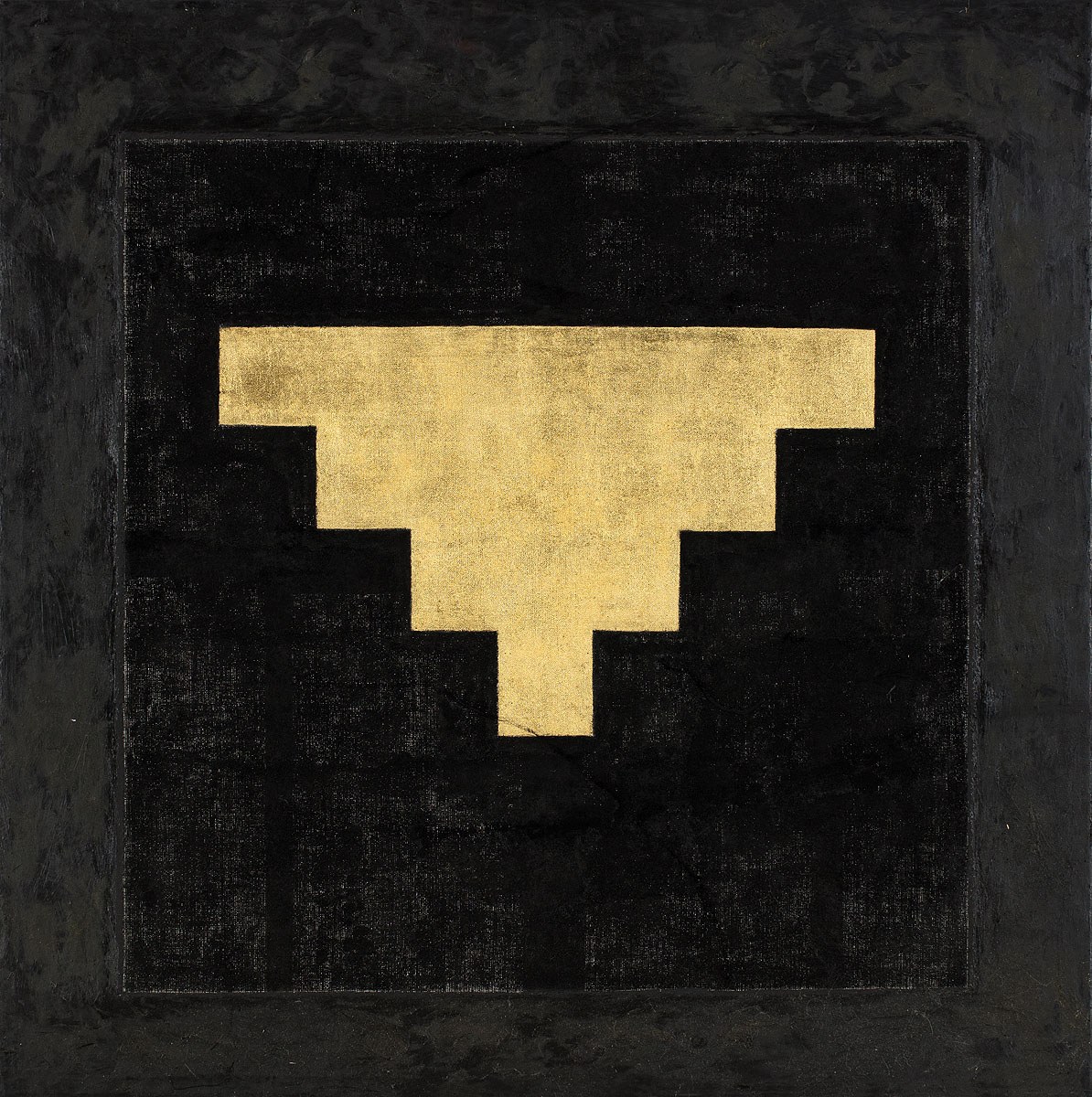
Dimensions: 100 x 100 cm
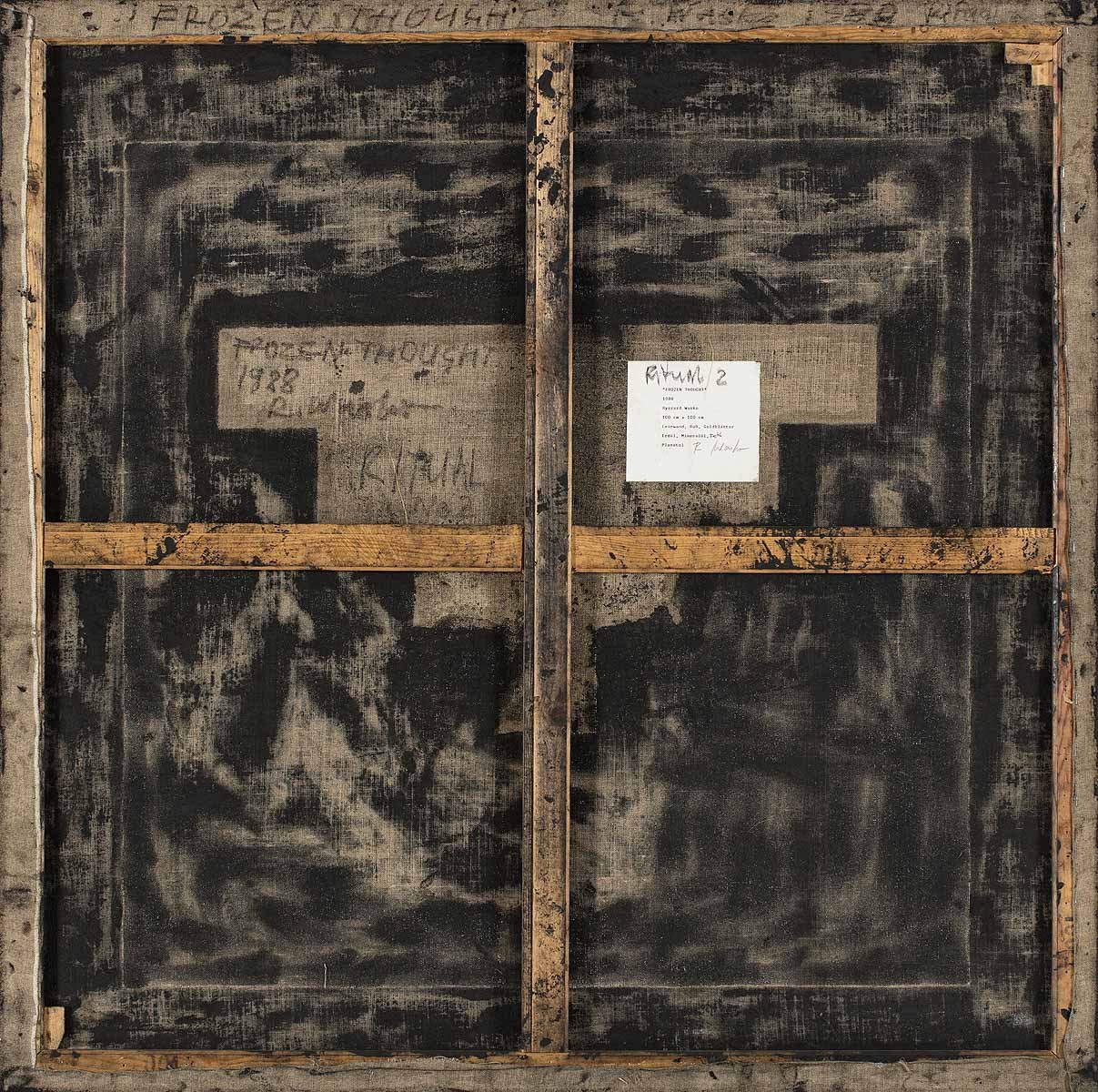
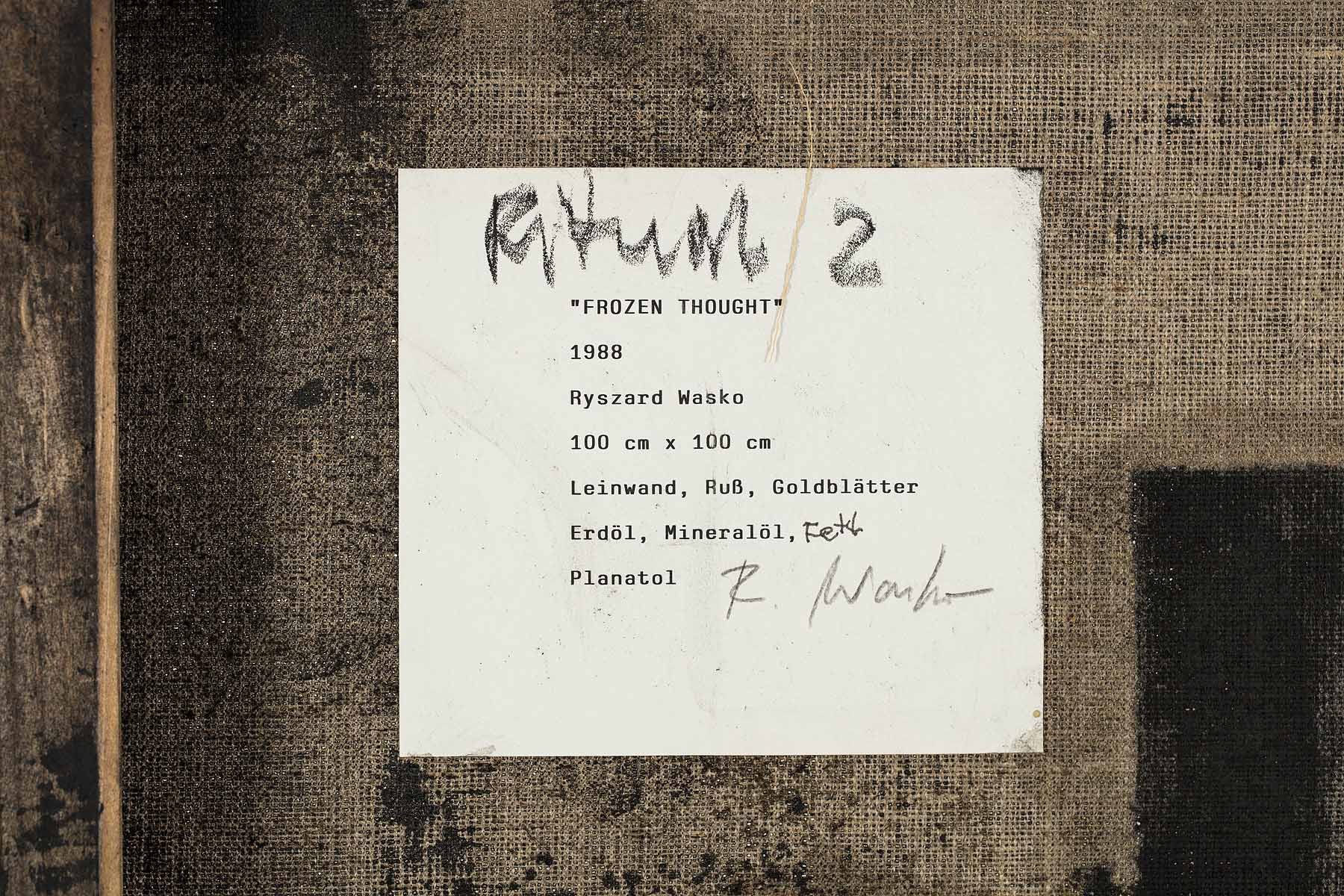
Signed: signed and described on the reverse: FROZEN THOUGHT / 1988/ R. Waśko / RITUAL / No 2, described on the selvedge: FROZEN THOUGHT, on the reverse a sticker with the description of the work and the artist's signature
The emigration to Berlin in 1983 and the need to find himself in a completely new environment resulted in a significant change in Waśko's artistic attitude. He abandoned the new media he had explored so far - and turned to painting. Seeking new techniques and new materials, he began creating paintings using natural or minimally processed ingredients, such as soot, wax, grease, pigments, gold and silver flakes, rust or zinc.
Soot as a painting material had already inspired him several years earlier, during his first "Construction in Process." At the time, his colleague, American artist Sol LeWitt, needed help for his work in gathering enough black paint so that he could cover a very long wall with it. With the rationing of goods in the realities of communist Poland, Waśko was unable to arrange for the artist to have as many tubes of paint. However, he came up with the idea of buying a bag of carbon black, which, when mixed with the right glue, perfectly fulfilled the role of a black dye, not only saving LeWitt's concept, but also providing Waśko with an important impetus for further creative experiments.
The artist's turn to unusual, organic painting materials during the Berlin period brought with it experiments of a technical nature, such as finger rubbing, smudging, spreading liquid wax and zinc. These activities, reminiscent of peculiar rituals, were not subject to any mechanical process or system of rules, instead they introduced a significant degree of uncertainty about the results. The result was not predetermined or planned. What's more, the canvases were "alive," changing through atmospheric and physical-chemical conditions. The deep black, matte surfaces sloughed off, soiling their surroundings and viewers.
The hidden energy of the works was also marked by the ever-recurring mysterious symbol of the stepped pyramid. Wasko used it for the first time in his painting "Maria" (1988), a title alluding to his wife's name. The pyramid concept was born for him through the deformation of the square, whose ideal yet obvious form he did not want to use because of its connotations with Malevich and non-objective art. Deconstructing the square, he removed and rearranged its various parts, deforming it into something dynamic and alive, yet uncertain and mystical. He built pyramids, spontaneously deciding on the number of steps and the degree of extension. Based on symmetry, he created a variety of arrangements that could work differently depending on how the figures were arranged. Due to the free process of creation, as well as the natural means used, these paintings emphasize the organic nature of their structure, not focusing only on the strict geometry of the form. Their power of influence lies in a certain amount of randomness and variability, giving them a contemplative dimension.