Dimensions: 73 x 92 cm
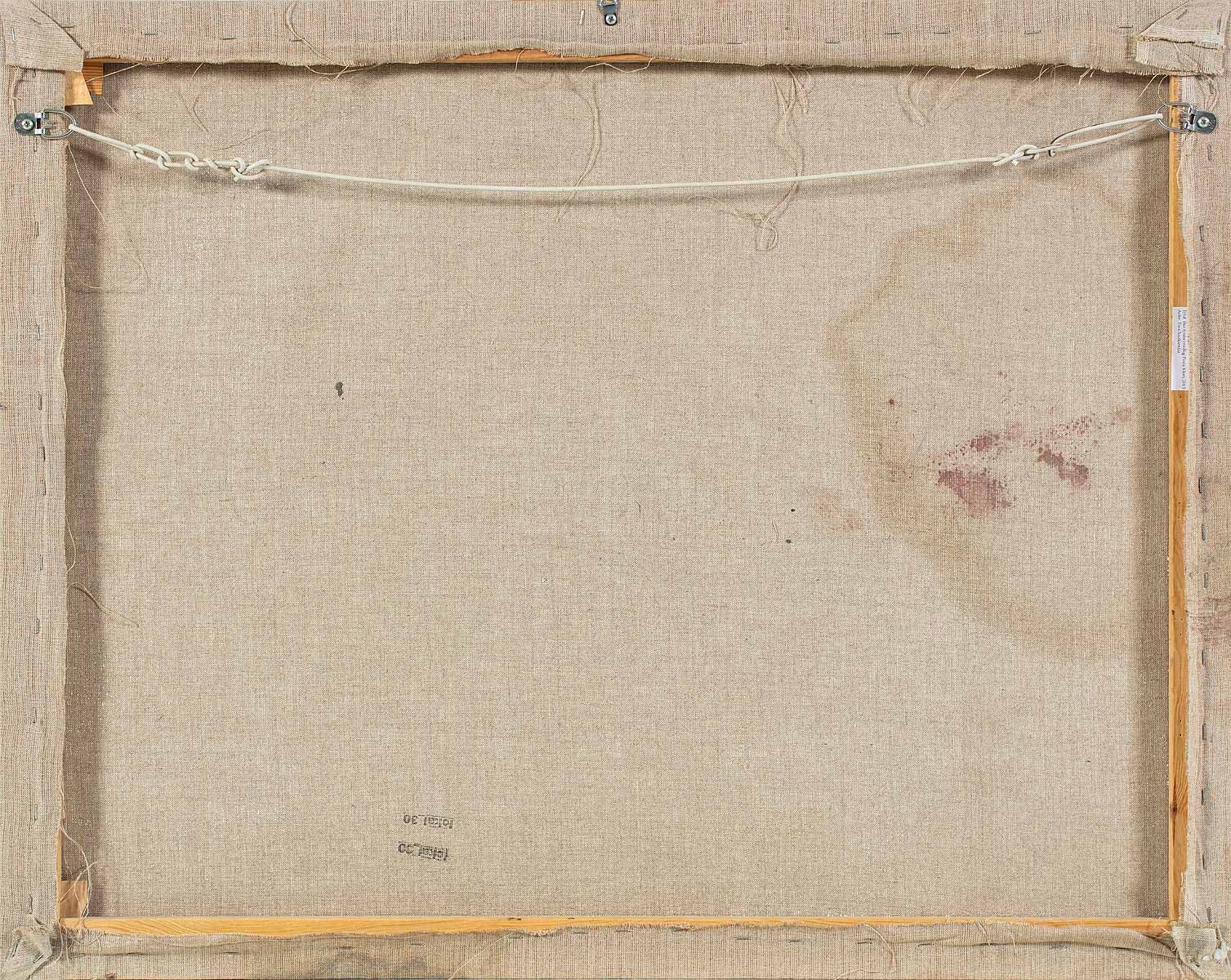
Signature: on the reverse side stamp Gallery lokal_30
Provenance
Gdansk, private collection (as of 2016). Gallery lokal_30.
Exhibited
Warsaw, lokal_30 Gallery, Filip Berendt. Ewa Juszkiewicz, Katya Shadkovska. Gauguin Syndrome, 23.09-19.11.2016. Bielsko-Biala, Bielska Galeria BWA, Ewa Juszkiewicz. Fall Tempts, 04.09-11.10.2015.
Reproduced
Rayzacher A. [ed.], Ewa Juszkiewicz. Upadek kusi [exhibition catalog], Bielska Galeria BWA, Bielsko-Biala 2015, pp. 48, 98, 100.
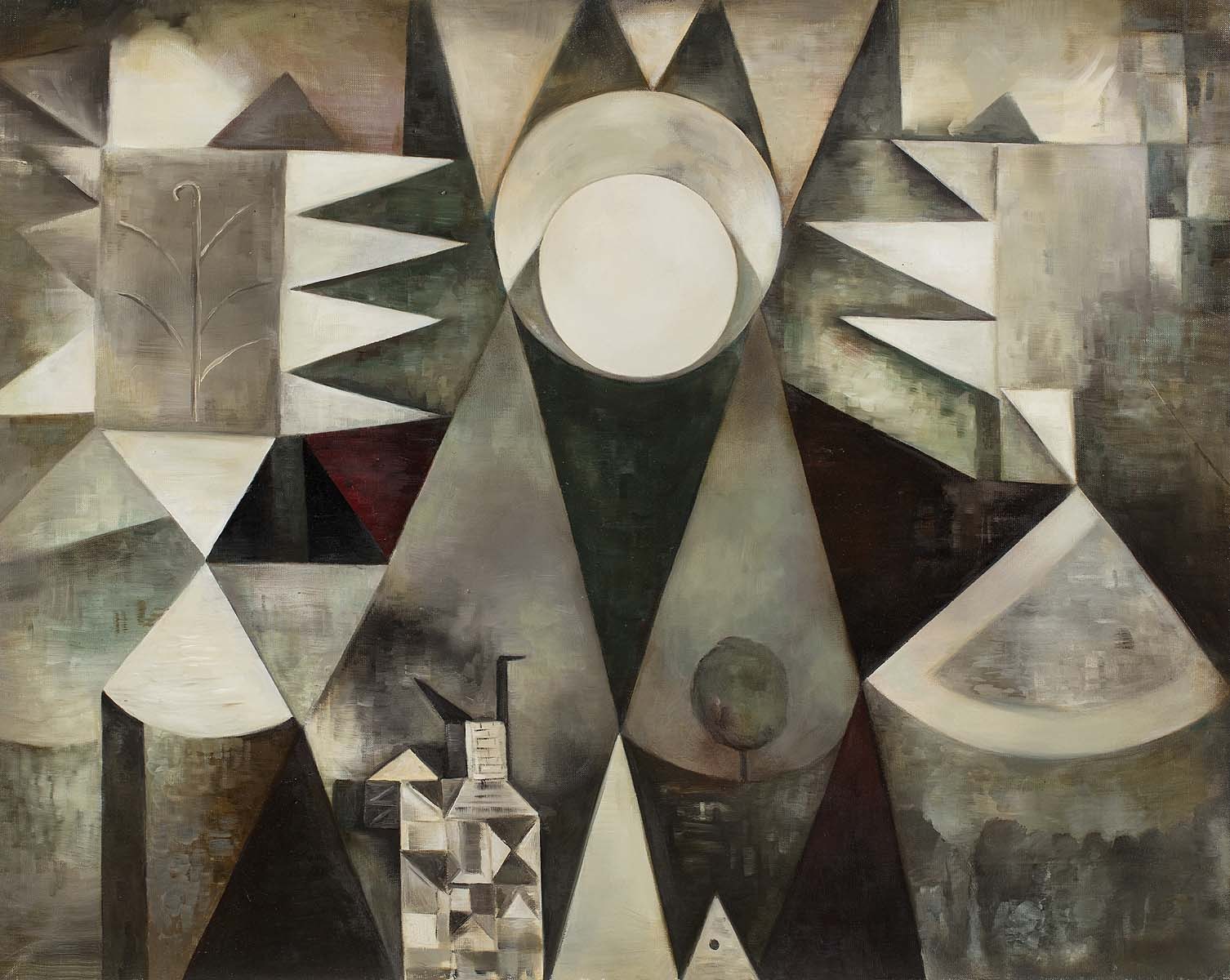
The series of works, to which the presented painting "Untitled (according to Paul Klee)" from 2015 belongs, is an important though not the main theme in the work of Ewa Juszkiewicz. In it, the artist reflects on the status of the lost work - lost due to war, looting or ideological violence. The starting point becomes archival, often fragmentary reproductions, which the painter treats not as material for reconstruction, but as a pretext for creating new images - afterimages, existing on the border between memory and imagination. Her practice is clearly conceptual in nature: she balances between the gesture of restoration and the awareness of irreversible loss, building tension between destruction and creation. In this way, Juszkiewicz not only evokes the history of art, but also reveals its fragility - she shows that a work can last not through its material presence, but through reinterpretation, rewriting, new life in a different context.
In a painting inspired by Paul Klee's watercolor "Landscape with the Rising Moon" (also known as "House and Moon"), the artist transforms an intimate, lyrical composition into a more disciplined, almost architectural structure. Geometrization of forms, a muted palette and clear divisions of the plane build a space suspended between landscape and abstraction, in which the central motif of the moon - a bright, almost pulsating circle - organizes the rhythm of the entire show. The original created by Paul Klee belonged to Sophie Lissitzky-Küppers (1891-1978), a German art historian and patron of the avant-garde. The work, along with thirteen other works from the collection, was loaned by the owner to the Landesmuseum in Hanover before she left for Russia in the late 1920s. In 1937, the painting was confiscated by the Nazis as part of the "degenerate art" campaign, and its fate has been unknown ever since. Other works from the collection ended up in private hands or disappeared. In this context, Juszkiewicz's painterly interpretation becomes more than a formal reconstruction - it is a visual afterimage, an attempt to restore presence to what has been erased from history. The painting functions as an echo of the lost work: it does not reproduce it faithfully, but transforms it into an autonomous composition in which memory and absence coexist, creating a tension between what is preserved and what is irretrievably lost.