


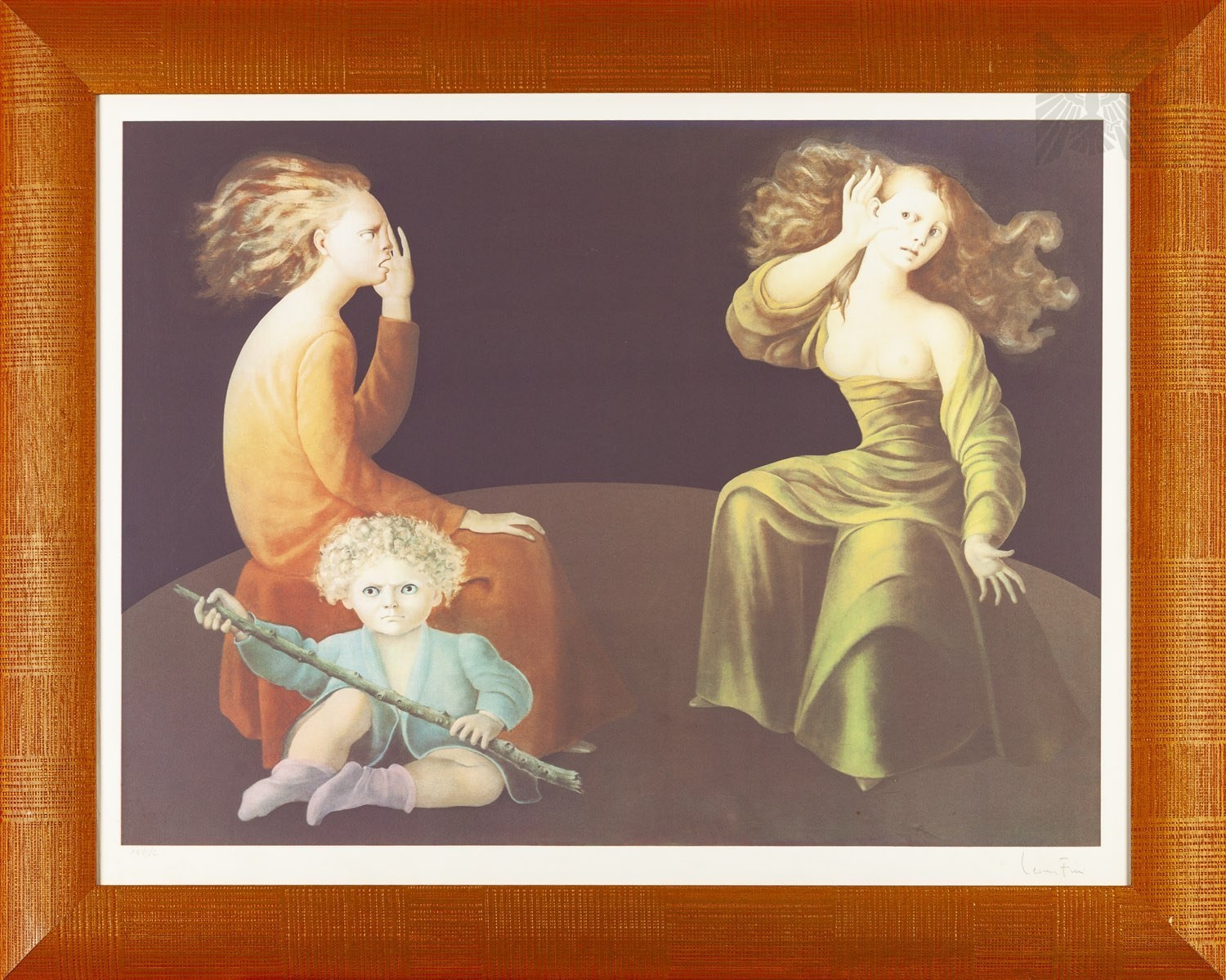
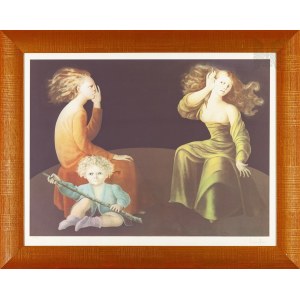
color lithograph on Arches Velin handmade paper;
Dimensions: 58 x 74 cm (inside frame)
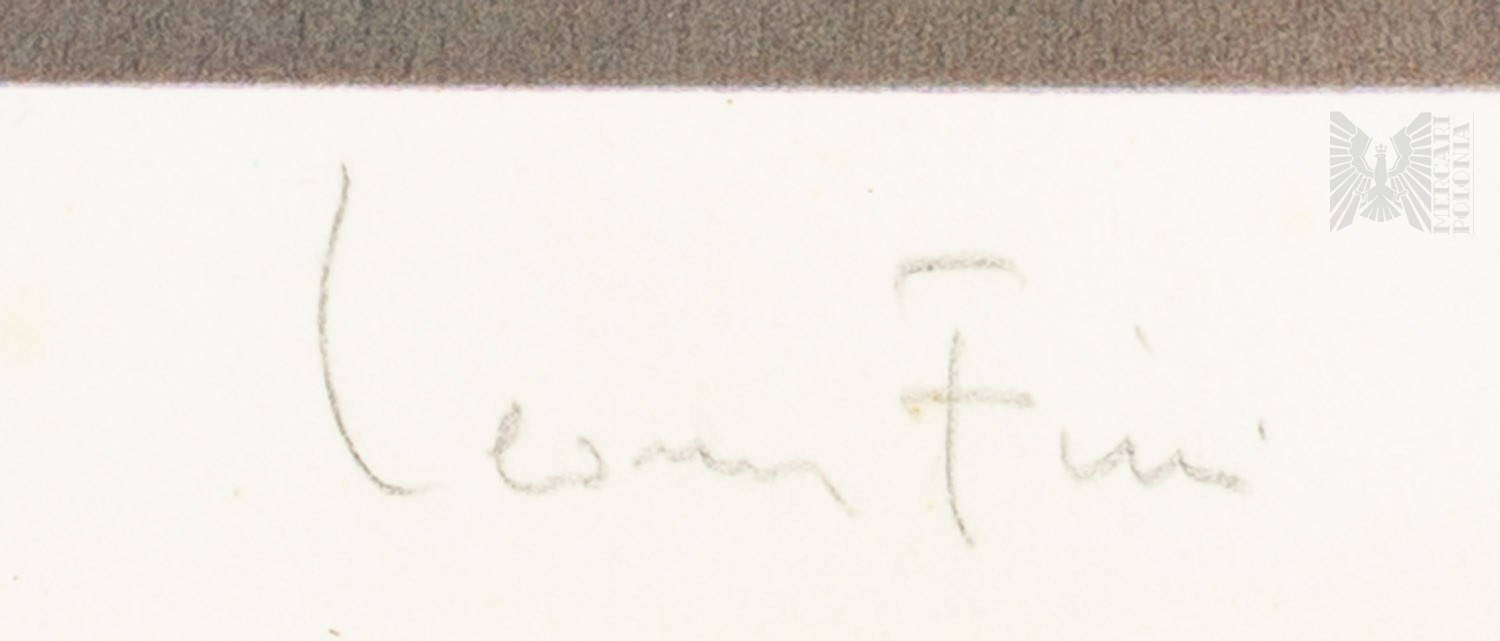
numbered in pencil lower left: 'XCVI/C', signed lower right: 'Leonor Fini'
Publisher: Guigné Paris (Éditions Guigné or Éditions d'Art de l'Ibis);
Produced at the famous Atelier Mourlot in Paris.
(Atelier Mourlot—founded in 1852 in Paris—was the world’s leading center for artistic lithography; the studio’s name alone guarantees the highest quality and prestige in the world of collecting.It was here that such giants as Picasso, Matisse, Chagall, Miró, and Braque worked. Fernand Mourlot invited artists directly to the studio, allowing them to experiment on the lithographic stone. Their lithographs are characterized by incredible depth of color and precision, capturing every stroke of the artist’s brush or pencil.
Leonor Fini (1907–1996) was no ordinary artist—she was a phenomenon. Born in Buenos Aires, raised in Trieste, and having come of artistic age in Paris, she became one of the most distinctive and independent figures in 20th-century art.
While most women in the Surrealist circle (such as Meret Oppenheim or Carrington) struggled with the role of “muses” to male masters like André Breton, Fini firmly rejected the very label of Surrealism. “I was never a Surrealist. My world is mine alone,” she used to say. She lived by her own rules: in her Paris apartment, she lived with a dozen or so cats (which she treated like deities) and two partners at the same time, forming one of the most famous love triangles of the era.
She was friends with Paul Éluard, Max Ernst, Georges Bataille, Henri Cartier-Bresson, Pablo Picasso, André Pieyre de Mandiargues, and Salvador Dalí and his wife Gala. She traveled around Europe in Cartier-Bresson’s car; during one of these trips, he took the famous photograph of Fini nude in a swimming pool. The photograph was sold in 2007 for $305,000 (a record price for one of his works). Her art is a blend of eroticism, oneirism, theater, and mythology. In Fini’s paintings and prints, women are not passive objects of desire—they are powerful, sphinx-like figures, goddesses, and priestesses who exert control over their surroundings.
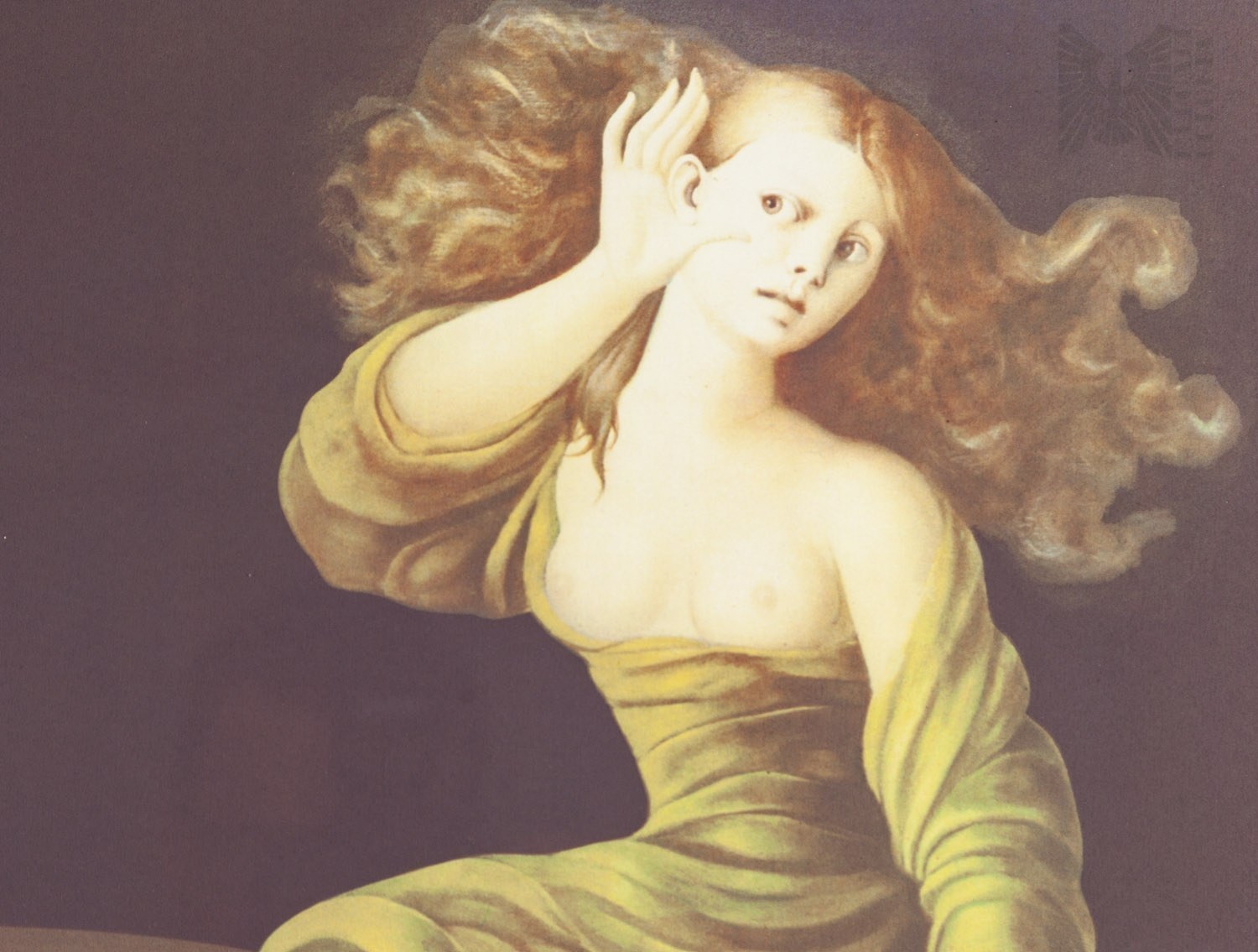
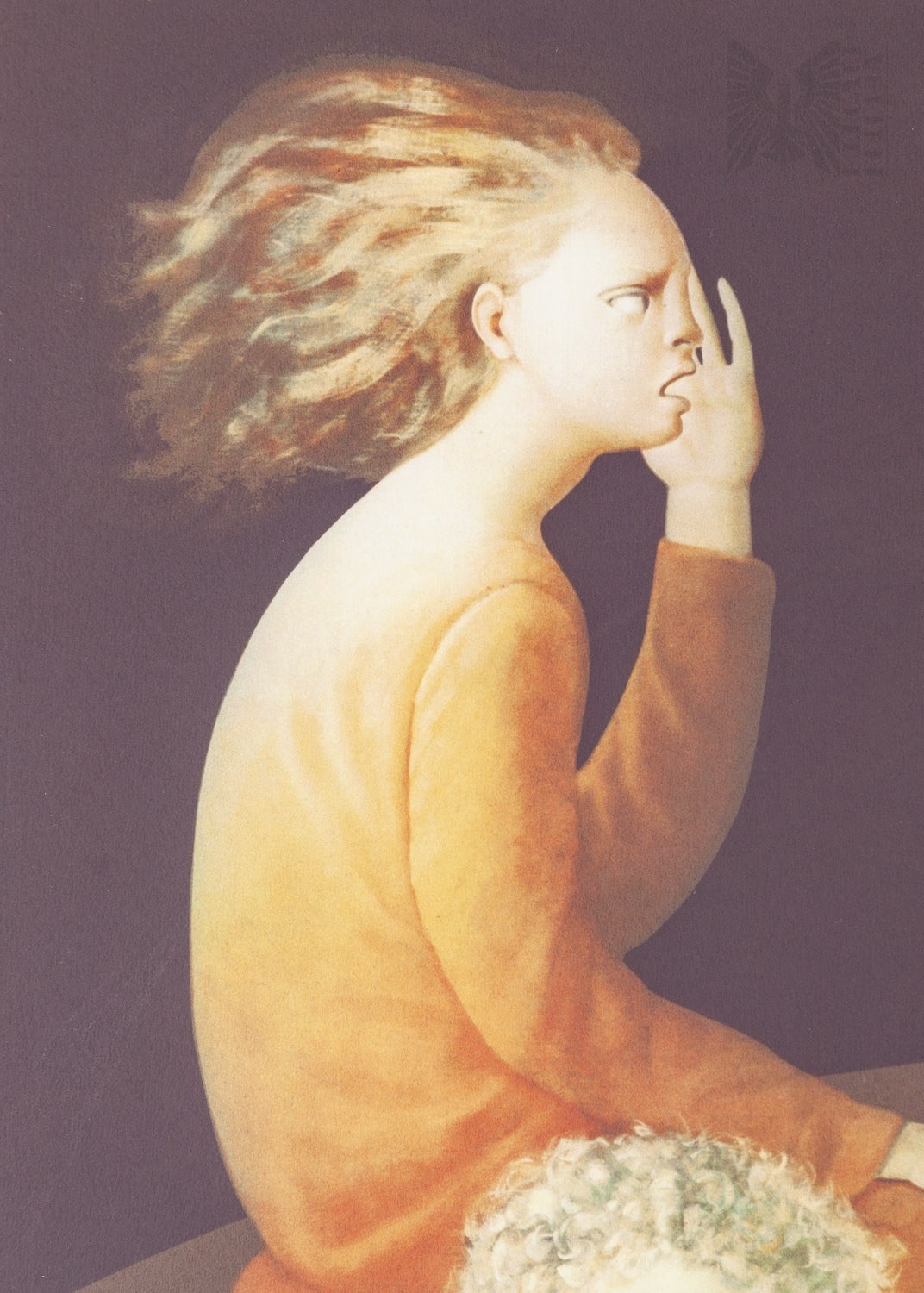
Her work—*The Chamber of Secrets*—is a perfect example of Leonor Fini’s characteristic ability to create an atmosphere of mystery, intimacy, and theatrical tension. The artist invites the viewer into a closed, private world where the boundary between dream and reality becomes blurred.











Paskutiniai peržiūrėti
Prisijunkite, jei norite pamatyti pozicijų sąrašą
Mėgstami
Prisijunkite, jei norite pamatyti pozicijų sąrašą