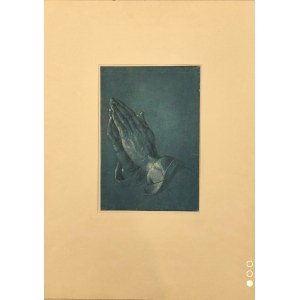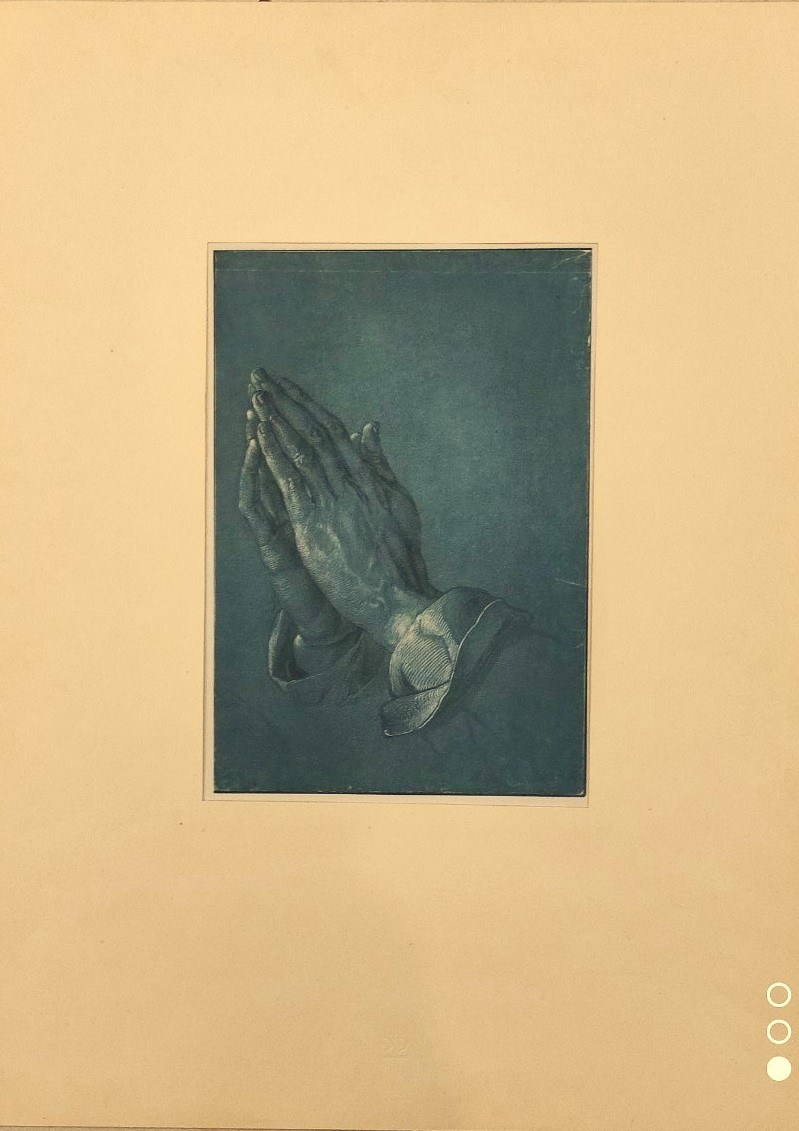
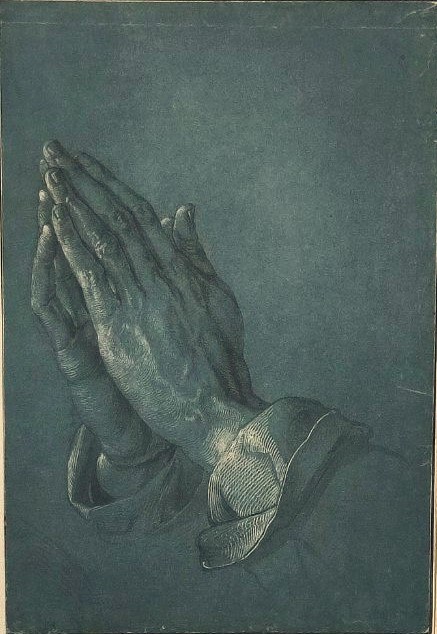
lithograph, paper, 30 x 20 cm in light of the original passe - partout (sheet 60 x 45 cm); produced in the 19th century by themuseumoffice "Albertina Facsymiles" in Vienna, a unique print from the only unique edition of Durer's prints published at the end of the 19th century. (Albertina is one ofthe most importantartmuseumsin Austria,holdingthe largest and mostvaluablecollection ofdrawingsand prints by AlbrechtDürer).
"Praying Hands" (original: "Betende Hände") is one of the most famous drawings by Albrecht Dürer, a Renaissance artist of German origin.
Albrecht Dürer's drawing "Praying Hands" was made around 1508. The work ispart ofa larger preparatory work for theHelleraltarpiece,whichDürerwascreating oncommission frommerchant Jakob Heller for theDominicanChurchin Frankfurt am Main.Although thealtarpiece itselfwascompletedin 1509, preparatory drawings, such as the "PrayingHands," werecreatedsomewhatearlier, while he was working on the design.
Dürer, a master of technique and precision, used hisink drawing andwatercolorskillsin this work. The composition is simple but very expressive, and its minimalism and monochromaticcolor palettefocus the viewer's attention on the detail of thehands and the emotions theymayexpress. Thework hasbecome anicon of religiousChristian artand isoften reproduced as a symbol of faith and spiritualcommitment.
The drawing is rendered in gray and blue tones, which addssubtletyanddepth. Thehandsare depicted withgreatattention todetail -you can seeeverywrinkleof the skin,the arrangement of thefingers and the shading,whichemphasizes theirthree-dimensionality. Thefoldingof hands in prayer symbolizesspirituality,humility and devotion.
Albrecht Dürer's drawing "Praying Hands" isalsoknown by othertitles.InGerman, itisoftenreferred to as **"BetendeHände"**, whichliterally means "PrayingHands."InEnglish, the drawing is sometimes referred to as **"Praying Hands "**. These alternativetitlesrefer to the samework, and theirvarietyis due totranslations intodifferentlanguages and interpretations of the gesture depicted in the drawing. Besides the obvious association with prayer, the gesture offoldedhandscansymbolizehumility and devotion. In some contexts, the gesture offoldedhandscanbe interpreted asa requestfor help,protection orblessing.It canbe a gestureexpressinga need for support during difficult times. The gesture ofprayinghands isoften a symbol of hope and faith insomethinggreaterthan everyday life.It canexpresshope fora betterfuture orfaith indivineprotection.
Regardless of religious connotations, the gesture offoldedhandscanbe seen as a universal sign of human humility andtogetherness.It canexpress feelings ofgratitude, sorroworsincerityina way thatpeople ofdifferent cultures and traditionscanunderstand.Each of these interpretations addsdepthtoDürer's drawingandunderscores its universal character,which appeals to peopleregardless of their religion or worldview.
The original of Albrecht Dürer's drawing "Praying Hands" is housed in the Albertina, an art museum in Vienna, Austria.TheAlbertina has one of the largest andmost important collections of prints in the world, and "PrayingHands"is one of its most valuableexhibits.This museumalsodisplays otherworks byDürer, such asthe famous "Great Passion" and "TheHare."