Metal, wood
Dimensions: height 132 cm x 36 cm, width 47 cm, depth
Dorota Banasik (b. 1961) is a Polish sculptor and set designer. From 1981 to 1988, she studied at the Academy of Fine Arts in Warsaw. She studied at the Department of Sculpture in the studio of Prof. Jerzy Jarnuszkiewicz—one of the most outstanding figures in postwar Polish sculpture—and at the Department of Set Design in the studio of Prof. Andrzej Sadowski. Available sources do not provide the name of her thesis advisor, but they do identify both professors as the artist’s most influential mentors.
The combination of sculpture and set design shaped her distinctive way of thinking about a work of art: as a form that not only exists in space but also actively organizes it. Banasik creates small-scale sculptures, decorative objects, statuettes, and unique pieces designed for interiors. Rhythm, economy of means, a clear silhouette, and the tension between solid form and empty space play a significant role in her work. The artist enjoys working with metal and bronze, bringing out both the raw quality and the decorative elegance of these materials.
Dorota Banasik was awarded first prize at the Biennale of Sacred Art in Częstochowa. She has exhibited her works at venues such as the Zapiecek Gallery in Warsaw. At the same time, she has developed her career in stage design, creating sets for theatrical productions staged in Warsaw, Łódź, and Poznań. She is also the designer of the interior of Warsaw’s Capitol Theater.
An important part of her body of work consists of her original commemorative statuettes, presented, among others, to distinguished Poles living abroad and to public figures during the Economic Forum. Her works combine the experience of a classically trained sculptor with a scenographic imagination and a particular sensitivity to the relationship between the artwork and its surrounding space.
Dorota Banasik’s body of work includes both figurative and symbolic bronze sculptures, as well as unique objects that straddle the boundaries between sculpture, design, and applied art. The artist does not treat an object merely as decoration—she imbues it with an individual personality, meaning, and a distinctive presence. As a result, her works function simultaneously as collectible pieces and original elements of contemporary interiors.
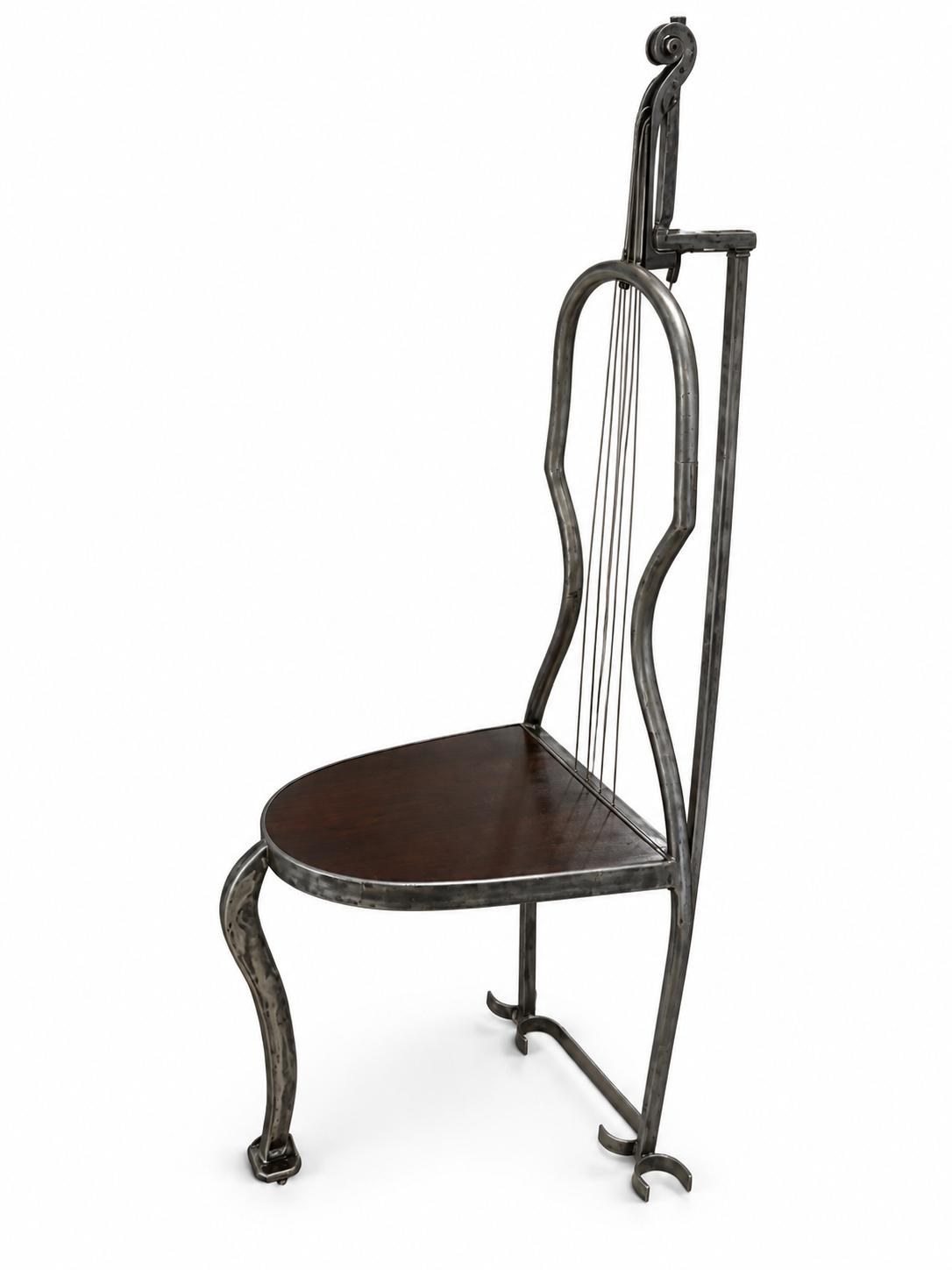
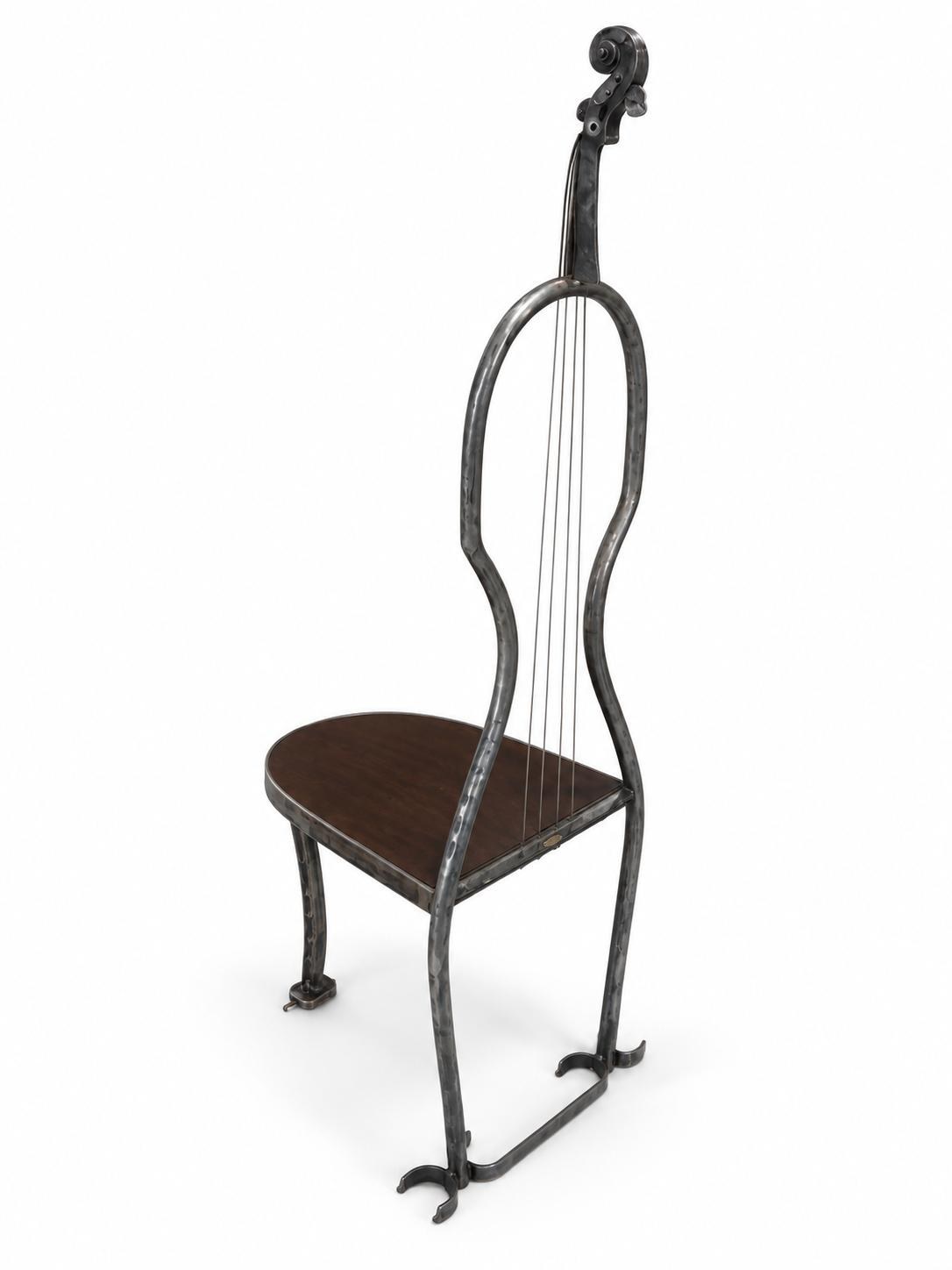
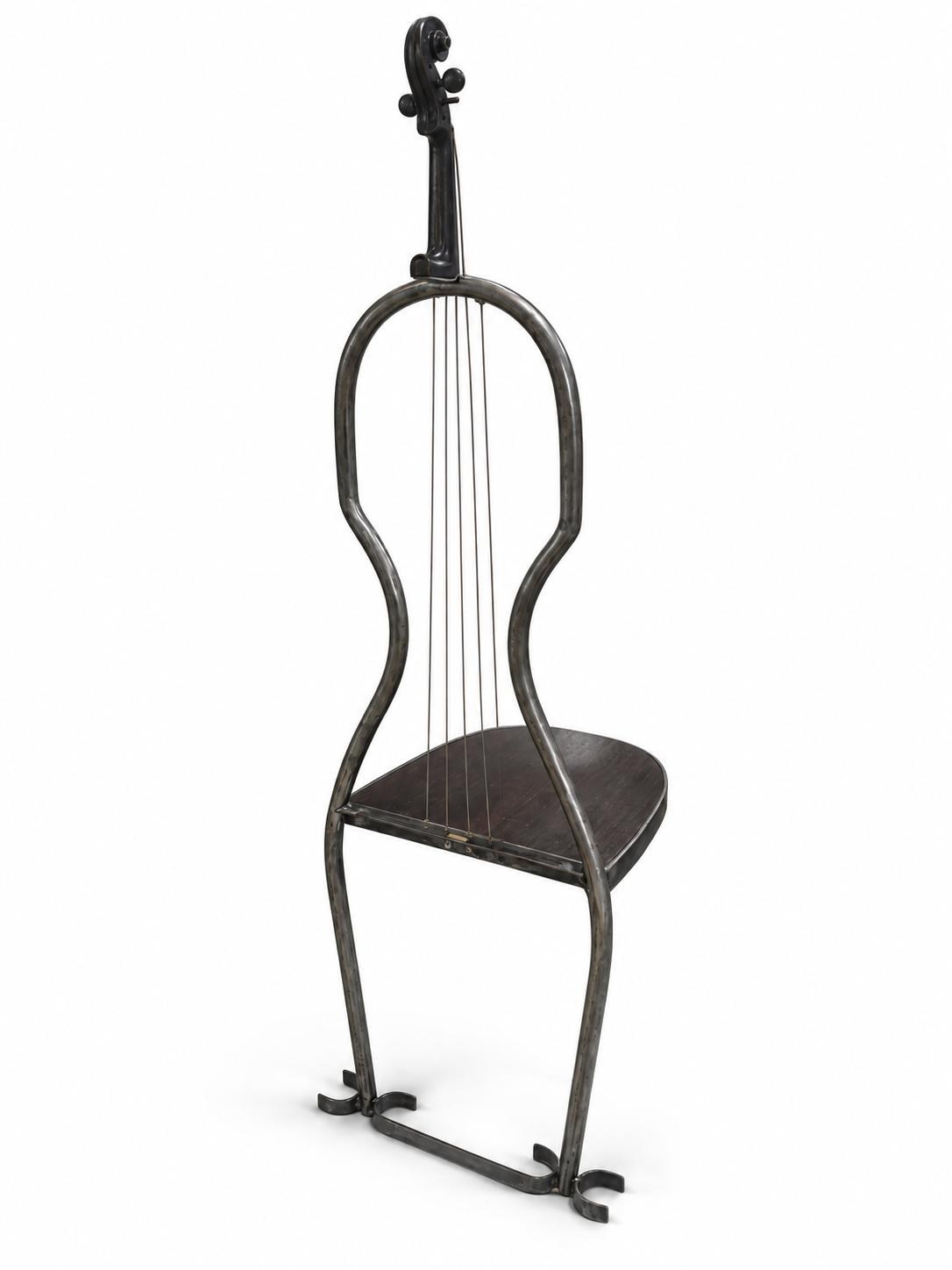
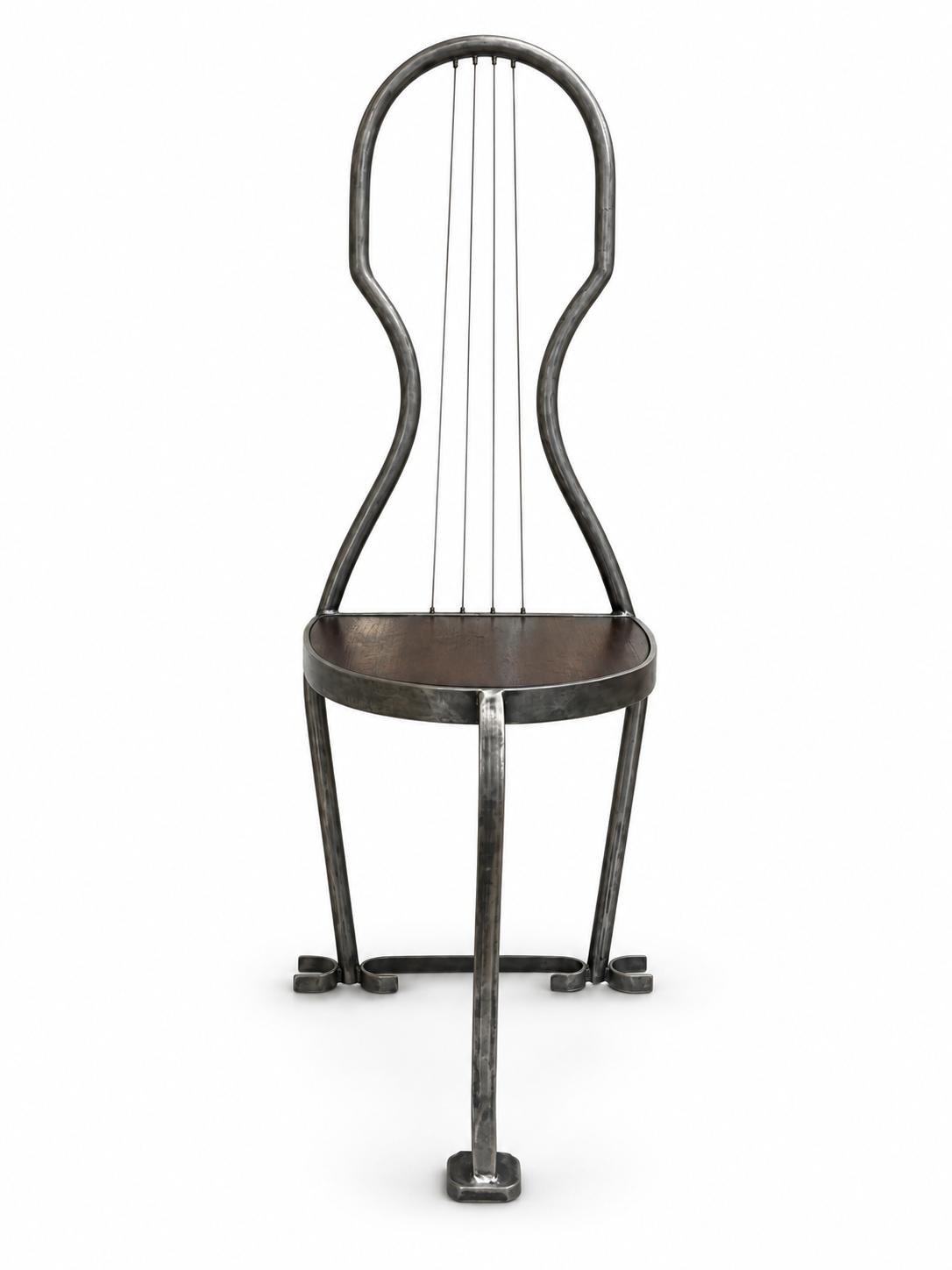
Kontrabs Chair—Sculpture
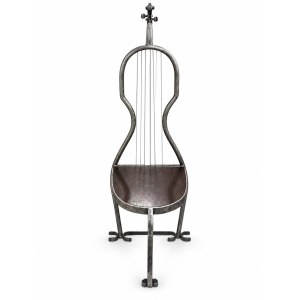
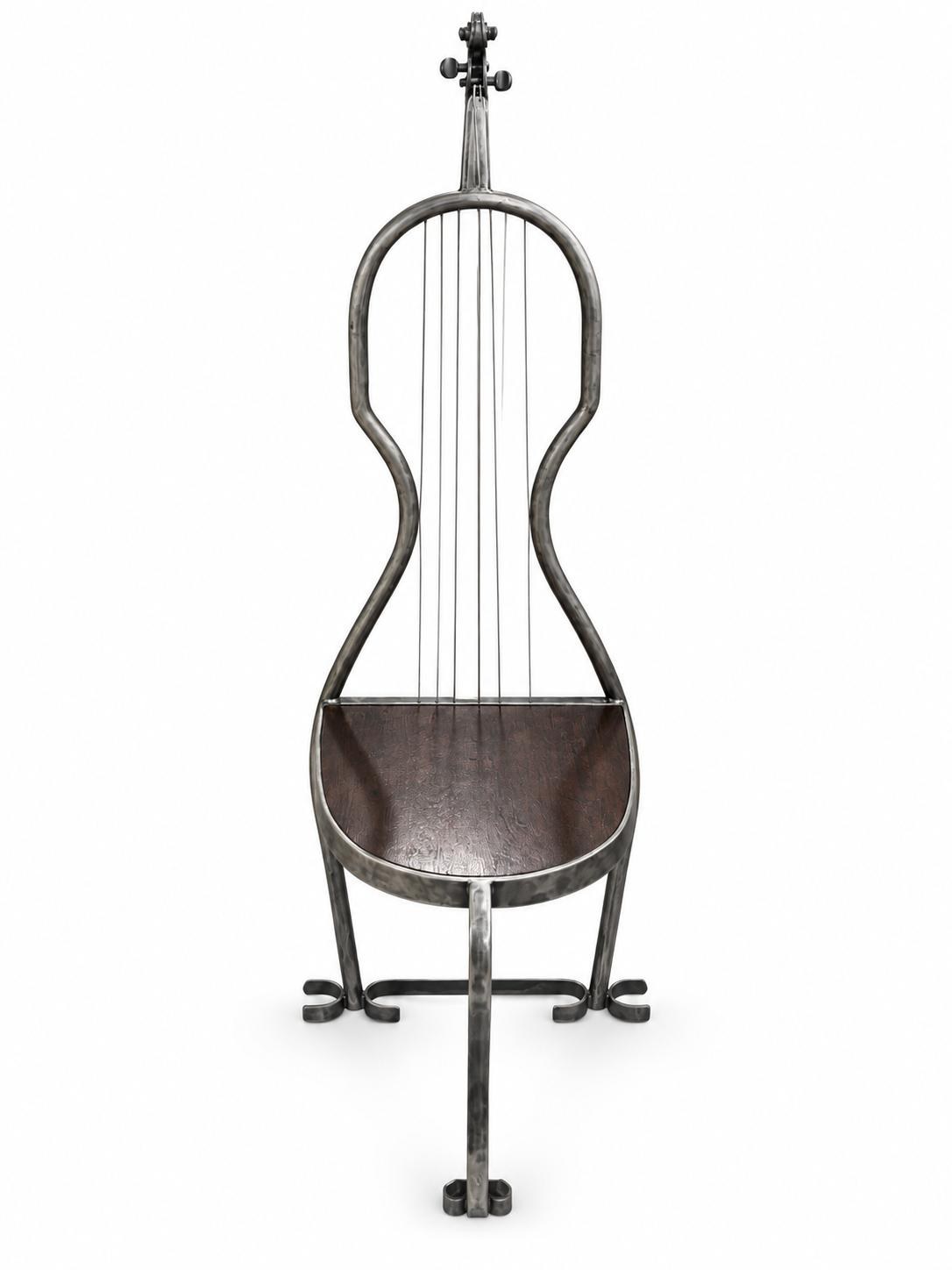
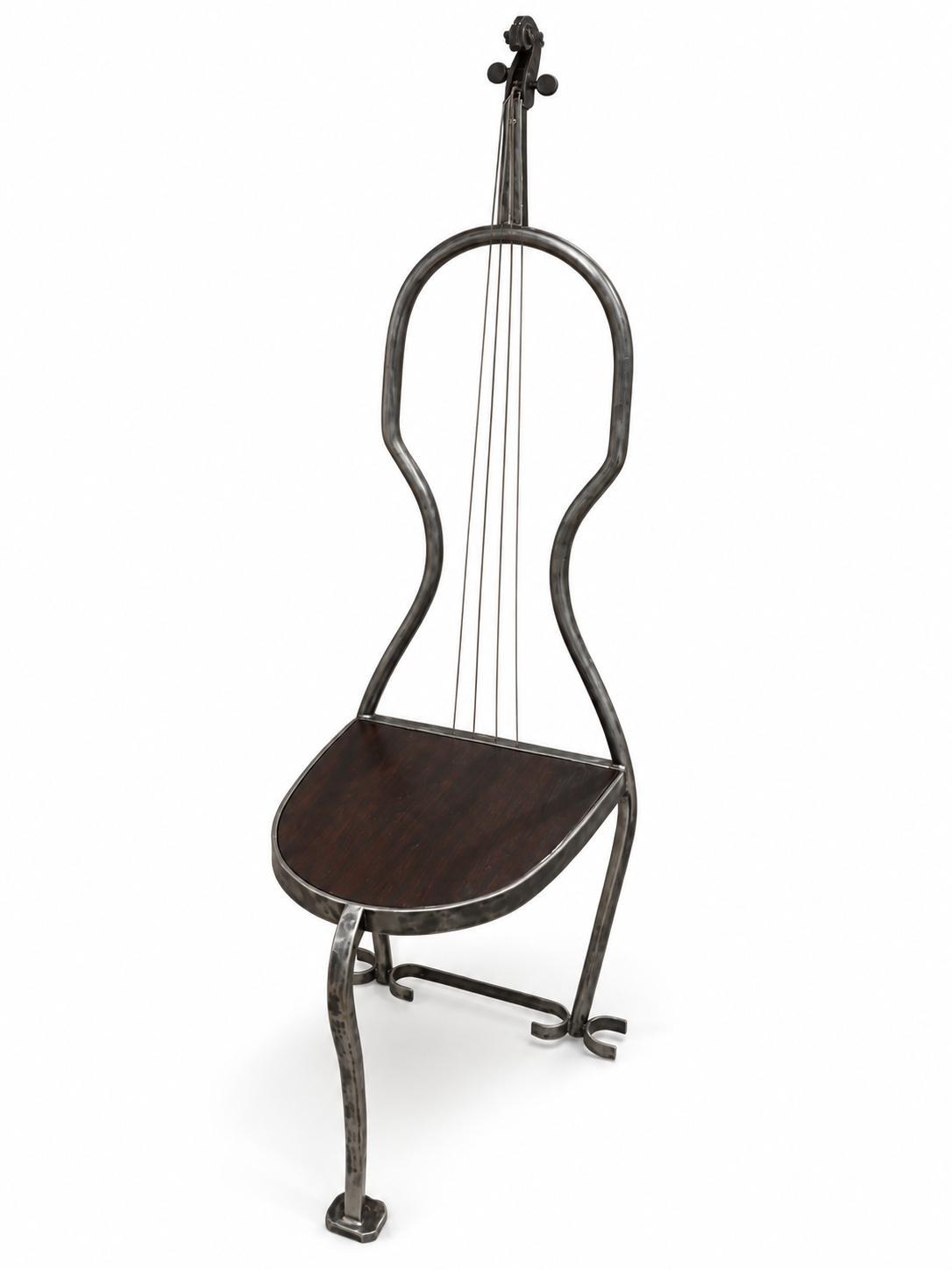
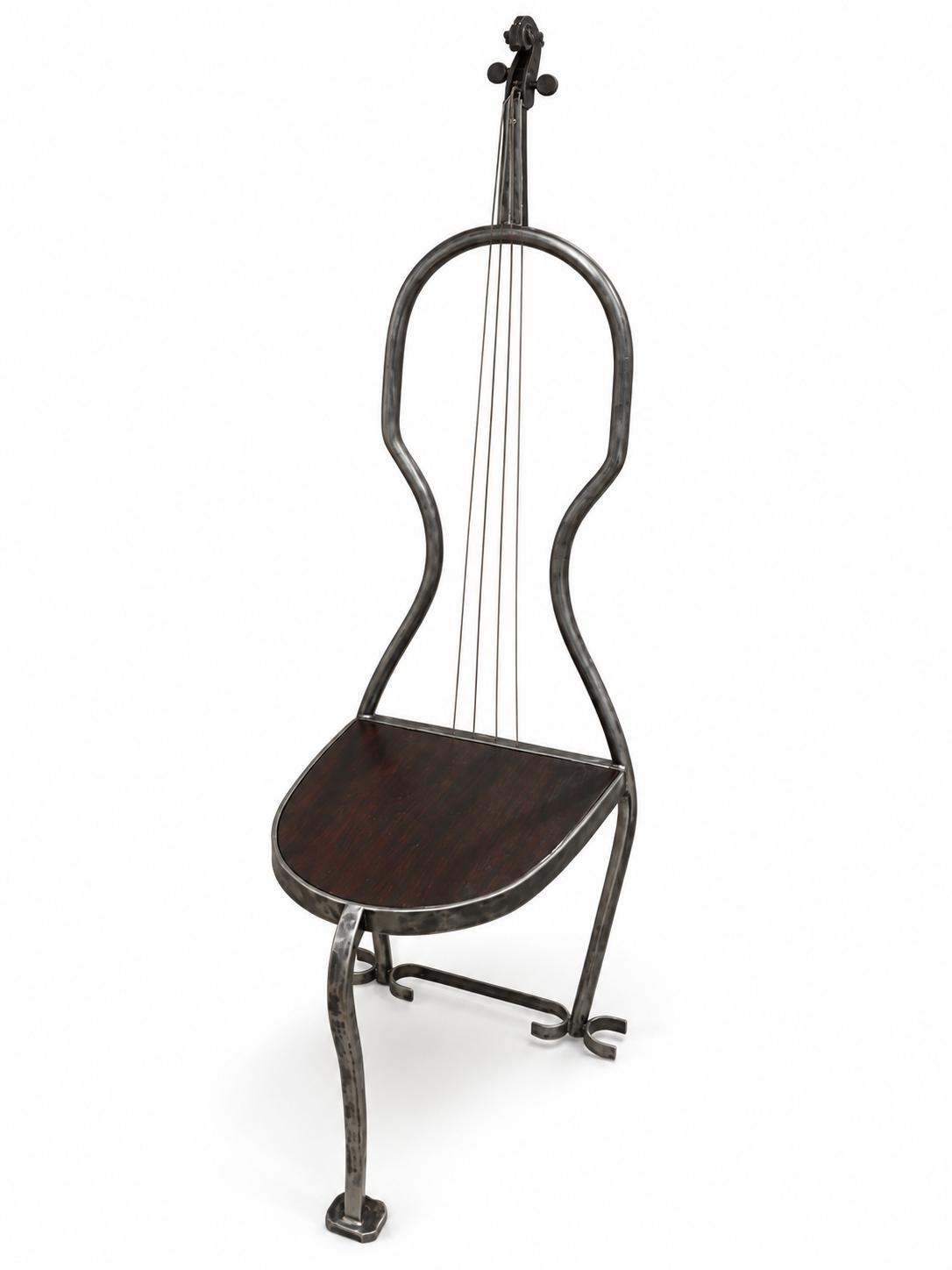
A unique functional sculpture by Dorota Banasik, in which an ordinary object has been transformed into a spatial composition full of character. The chair’s form evokes the slender silhouette of a string instrument—a cello or a double bass. The high backrest is topped with a decorative headstock featuring pegs, and the vertically arranged “strings” lend the piece a sense of lightness, rhythm, and musical harmony.
The metal frame, with its hand-finished surface, is paired with a dark seat, whose warm hue balances the raw quality of the material. The smoothly curved lines of the backrest resemble the contour of a soundbox, while the delicately curved ends of the legs complement the sculptural character of the piece.
The piece straddles the line between art, collectible design, and a functional object. It can serve as a unique piece of furniture while also functioning as a standalone sculpture meant to be viewed from all angles. It will look particularly striking in a living room, library, study, music room, or a prestigious commercial space.
This is a unique offering for collectors seeking a one-of-a-kind piece—crafted with imagination, a perfect sense of proportion, and an awareness of space. Dorota Banasik’s chair-sculpture is not a mass-produced piece of furniture, but an original work of art that immediately captures attention and lends the interior a distinctive character.