

Rarer antoninianus of Victorinus (AD 269–271), struck in one of the southern Gallic mints, belongs to the coinage of the Gallic Empire issued after the death of Postumus and the brief reign of Marius. The coinage of Victorinus constitutes an important testimony to the continuation of this political structure under unstable conditions, while maintaining a comparatively higher silver content than contemporary issues of emperors such as Claudius II Gothicus or Quintillus, as confirmed by metallurgical analyses.
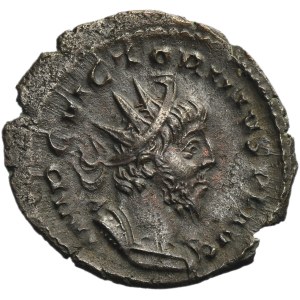
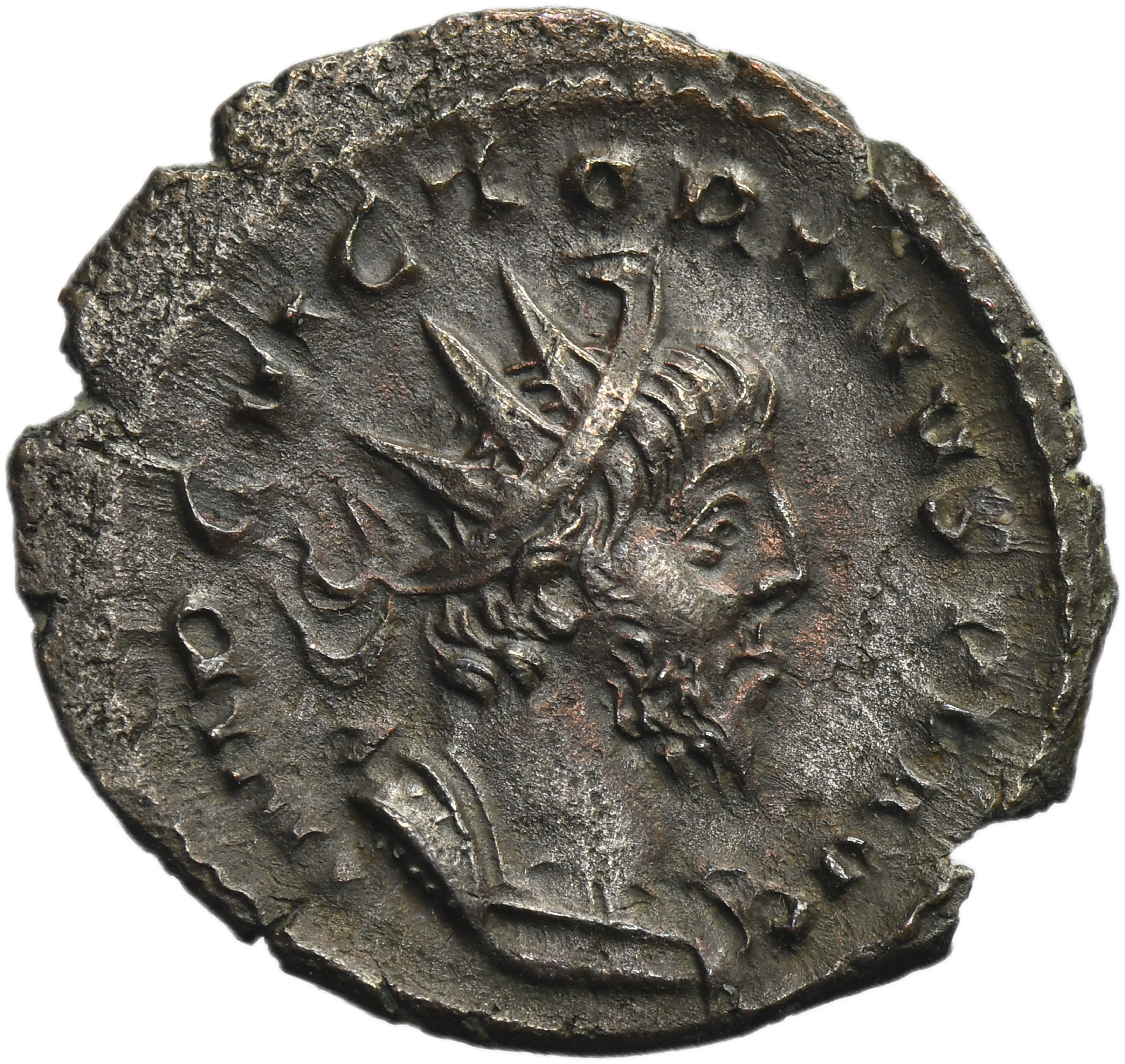
The obverse shows a radiate and cuirassed bust facing right, with the legend IMP C VICTORINVS P F AVG, presenting his full titulature as Pius Felix Augustus. The portrait style corresponds to Gallic issues of the period, characterized by expressive features and increasing stylization.
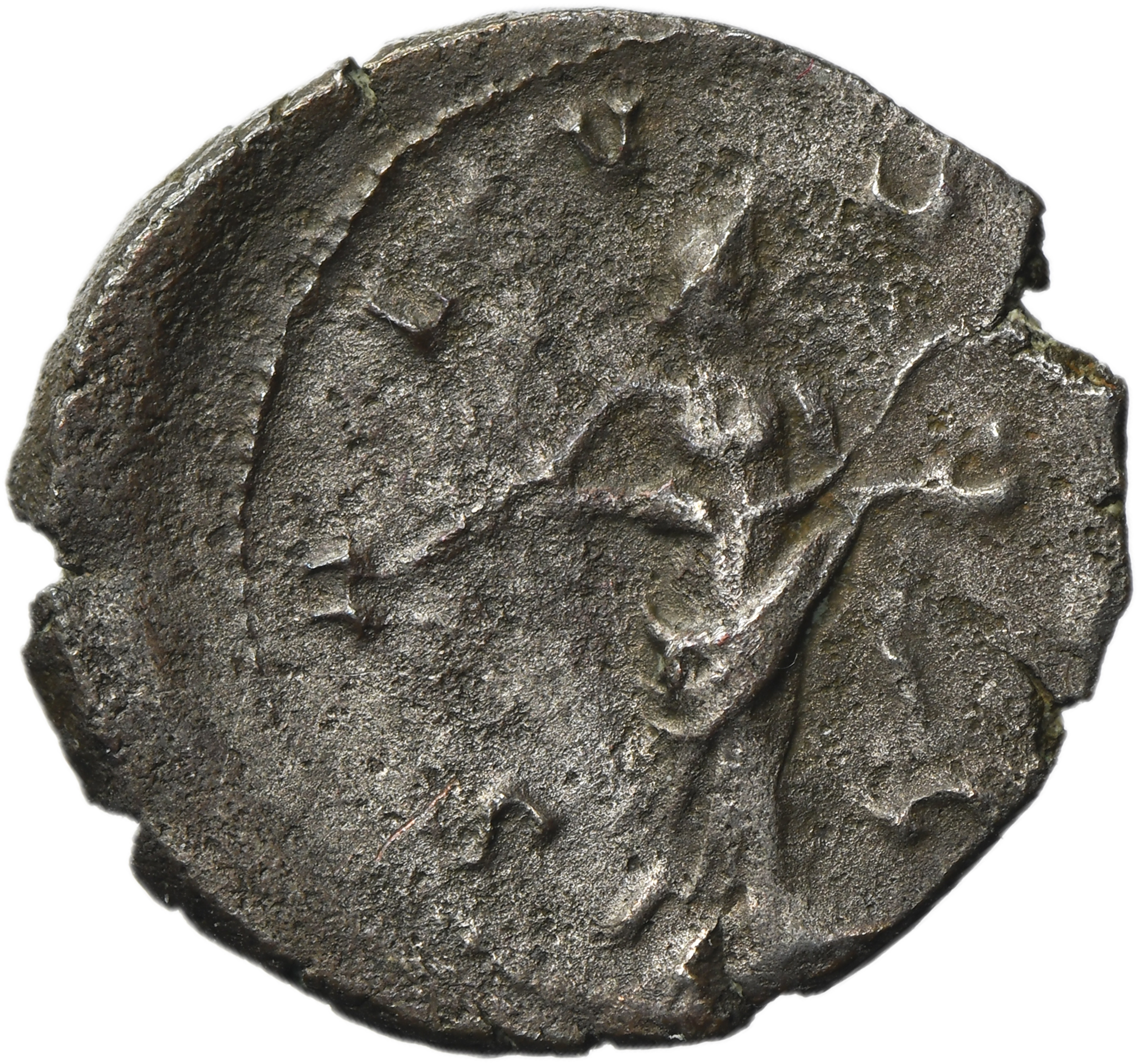
The reverse depicts Salus standing right, feeding a serpent held at her shoulder, with the legend SALVS AVG. Salus, as the personification of health and well-being, was a significant element of imperial iconography. The serpent, her traditional attribute, symbolizes renewal and protection, a meaning well attested in both Roman art and literary sources.
The legend SALVS AVG refers to the “health” and welfare of the emperor and the state, forming part of a broader propagandistic message aimed at presenting stability and continuity of rule despite the turbulent political circumstances.
Roman Imperial
Victorinus (269-271), Antoninianus 269-270, Southern Gallia
Obverse: radiate, cuirassed bust right
IMP C VICTORINVS P F AVG
Reverse: Salus standing to right, feeding snake held in arms
SALVS AVG
Diameter 22 mm, weight 3.65 g